

8 Best Vercel Alternatives in 2026 (Free & Paid)

Vercel's invoice arrived and the number didn't match your expectations. Again. Or maybe you just noticed that "commercial use" requires a paid plan — even for side projects with any monetization. Either way, you're not alone.
Thousands of developers are evaluating Vercel alternatives in 2026, and the options have never been better.
Summary
Vercel's pricing is unpredictable and its free tier prohibits commercial use — but you have options. Netlify and Cloudflare Pages are the strongest drop-in replacements for static and edge deployments, while Railway and Render shine when you need databases and backend services in one place. YouWare takes a different approach entirely: AI generates your React app and deploys it to Cloudflare automatically, no config required. The right choice depends on whether you need a hosting platform or a complete build-and-deploy workflow.
Why Developers Are Switching from Vercel
Vercel is genuinely great for deploying Next.js apps — it was built by the same team, after all. But several friction points push developers to look elsewhere:
Unpredictable pricing. Vercel's Pro plan starts at $20/user/month, but bandwidth overages and serverless function invocations can stack up fast during traffic spikes. Many teams encounter surprise bills.
Commercial use restrictions. Vercel's free tier explicitly prohibits commercial use. Even if your side project earns $10/month, you technically need a paid plan. That's a hard sell for indie hackers.
Next.js vendor lock-in. Vercel-specific features like Edge Functions, ISR (Incremental Static Regeneration), and certain Next.js optimizations work best — or only — on Vercel. Migrating away means rewriting parts of your app.
Limited backend support. Vercel is primarily a frontend and serverless platform. For persistent backend processes, managed databases, or background workers, you're stitching together multiple services.

What to Look for in a Vercel Alternative
Before picking a platform, clarify what matters most for your project:
- Deployment model — Do you need serverless edge functions, containerized workloads, or traditional server processes?
- Full-stack support — Do you need databases, background workers, or cron jobs alongside your frontend?
- Pricing transparency — Can you predict your monthly bill, or is it metered with potential overages?
- Framework compatibility — Does the platform support your stack (React, Next.js, Astro, SvelteKit) out of the box?
- Vendor lock-in risk — Are you adopting platform-specific APIs that make migration painful later?
8 Best Vercel Alternatives in 2026
YouWare
Best for AI-Generated React Apps That Deploy Automatically
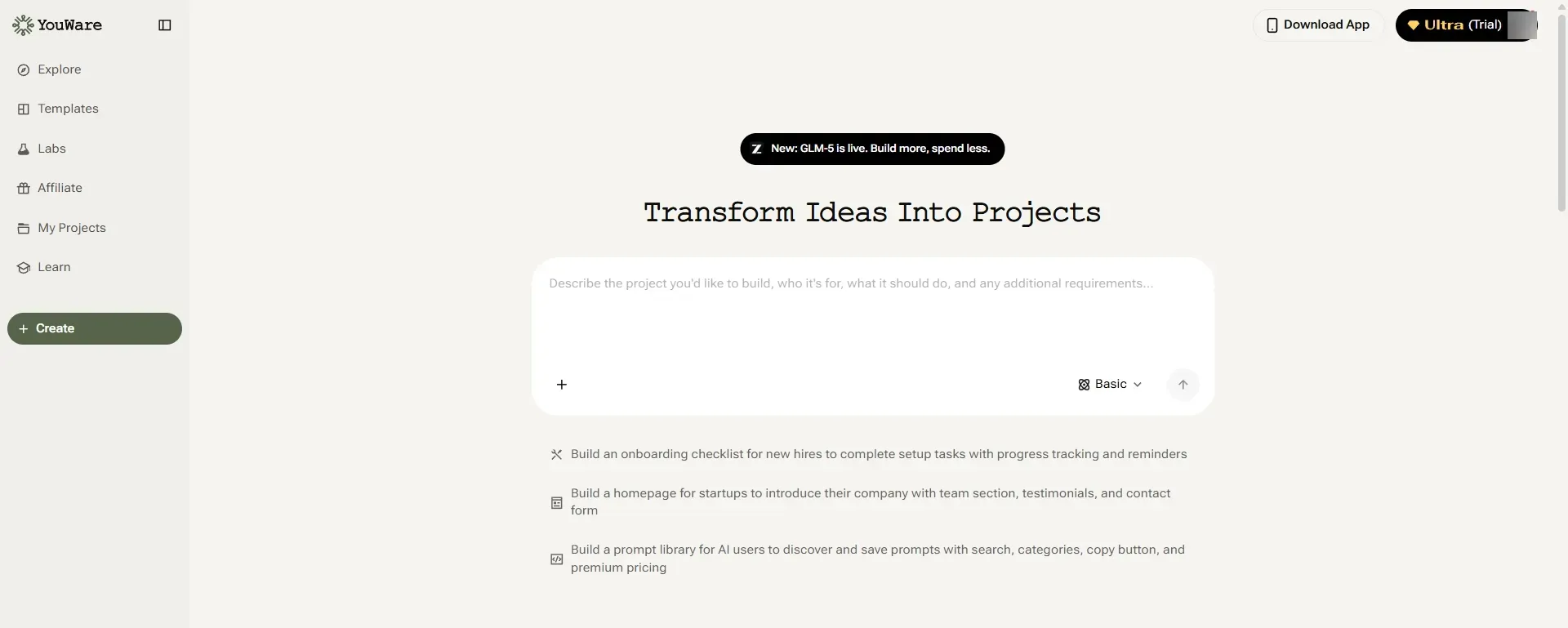
Let's start with a fundamentally different approach. If you're frustrated with deployment complexity — not just with Vercel's pricing, but with the whole configure-build-debug cycle — YouWare skips it entirely.
Describe your app in plain English. YouWare's AI code generator produces production-ready React code and deploys it to Cloudflare's edge network automatically. No Dockerfile, no CI/CD pipeline, no deployment YAML. You go from idea to a live URL in minutes.
It's a different mental model: instead of writing code and then figuring out where to deploy it, you describe what you want built and deployment is handled as part of the process. Whether you're building a SaaS product or a landing page, the workflow is the same — describe it, and it's live.
Key Features:
- AI generates React components from plain-text descriptions
- Automatic deployment to Cloudflare's global edge network
- YouBase built-in backend and database (no separate DB service needed)
- Visual editing with zero credit cost for UI tweaks
- CoView screen recording to describe bugs naturally
- Export your React source code (Pro and above)
Pricing: Free trial credits to get started. Pro plan at $20/month (3,000 monthly credits). Ultra plan at $200/month for power users.
"Previously needed two or three tools, now just you guys." — Eric, Hong Kong, Accounting Firm Partner
"This application I completed in a few hours. The performance gain is about 1 to 30 or more." — Assuman, Niger, Government Systems Developer
Pros
Cons
Netlify
Best for Static Sites and JAMstack Apps
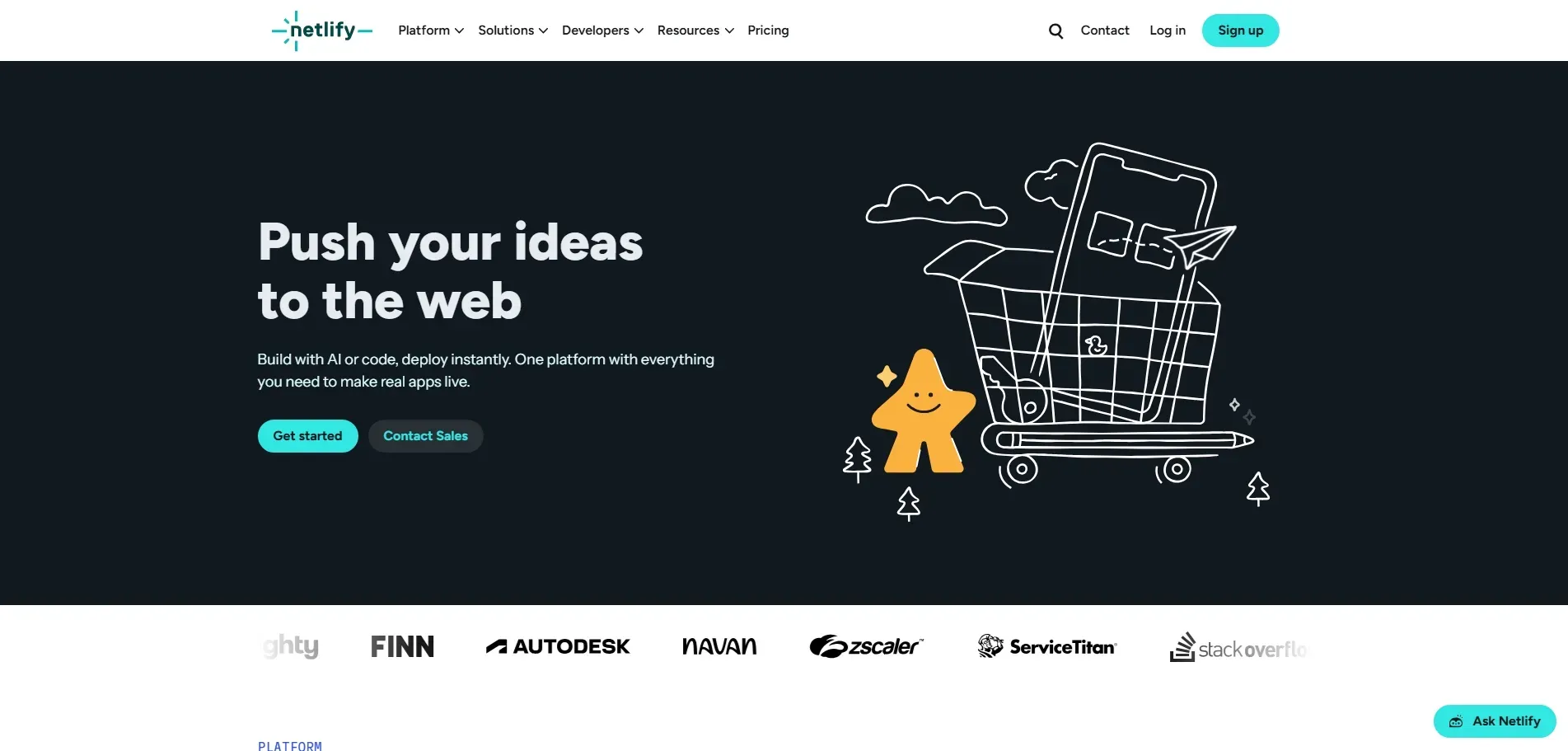
Netlify is Vercel's most direct competitor and the first alternative most developers reach for. It offers Git-based deployments, a global CDN, serverless functions, and a more generous free tier — with no commercial use restrictions.
Key Features:
- Automatic builds on every Git push
- Netlify Functions (serverless, AWS Lambda under the hood)
- Built-in forms, identity, and A/B testing
- 125GB/month bandwidth on free tier
Pricing: Free tier for static sites. Pro starts at $19/month per member.
Pros
Cons
Cloudflare Pages
Best for Edge Performance
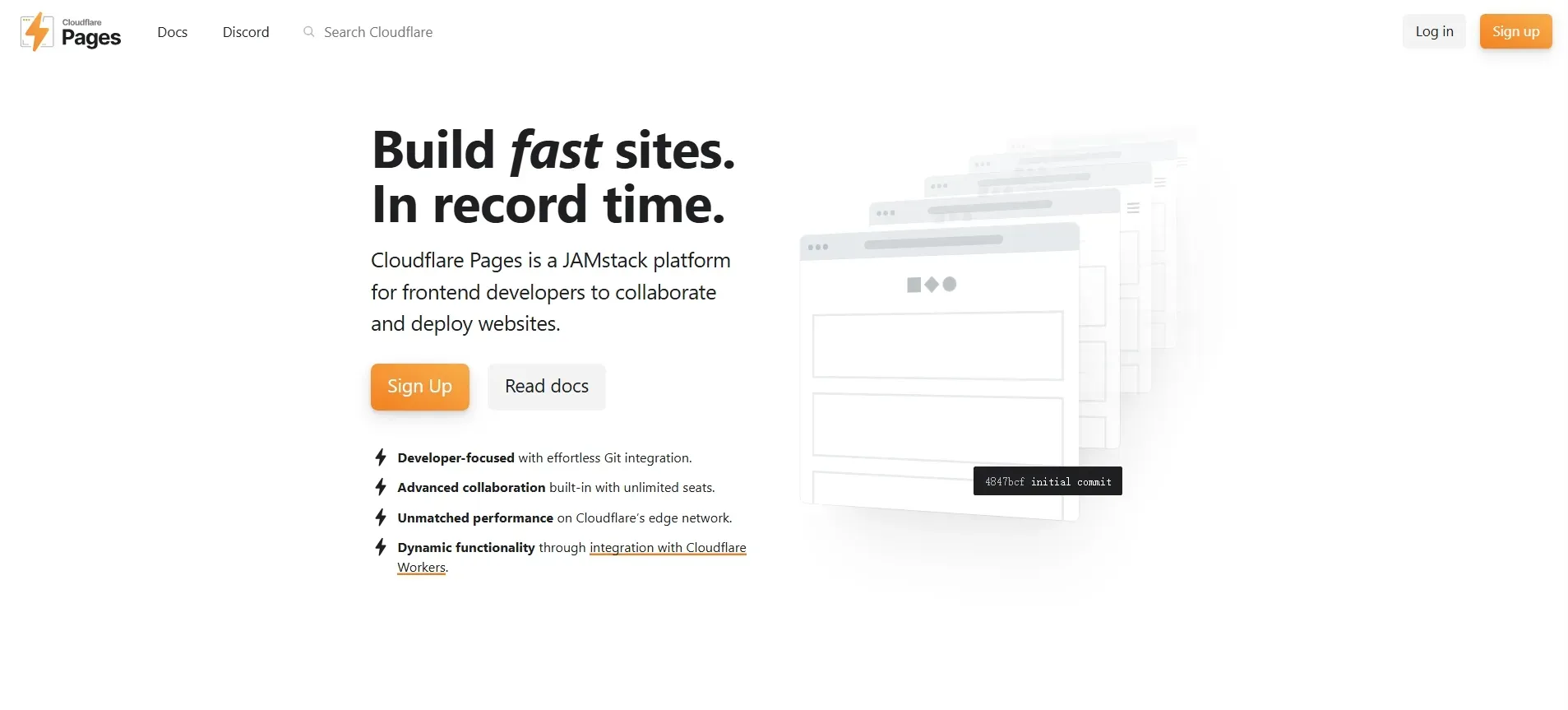
Cloudflare Pages deploys your site to 300+ edge locations worldwide, with Cloudflare Workers handling serverless execution at the edge. The result is some of the fastest global response times available.
The free tier is extremely generous: unlimited sites, unlimited bandwidth, 500 builds/month, and zero commercial use restrictions. For traffic-heavy apps, Cloudflare's pricing is far more predictable than Vercel's.
Key Features:
- 300+ global edge locations (faster global latency than most CDNs)
- Cloudflare Workers for edge serverless functions
- Unlimited bandwidth on free tier
- Direct GitHub/GitLab integration
Pricing: Free tier with unlimited bandwidth. Pro starts at $20/month for team features.
Pros
Cons
Railway
Best for Full-Stack Apps with Databases
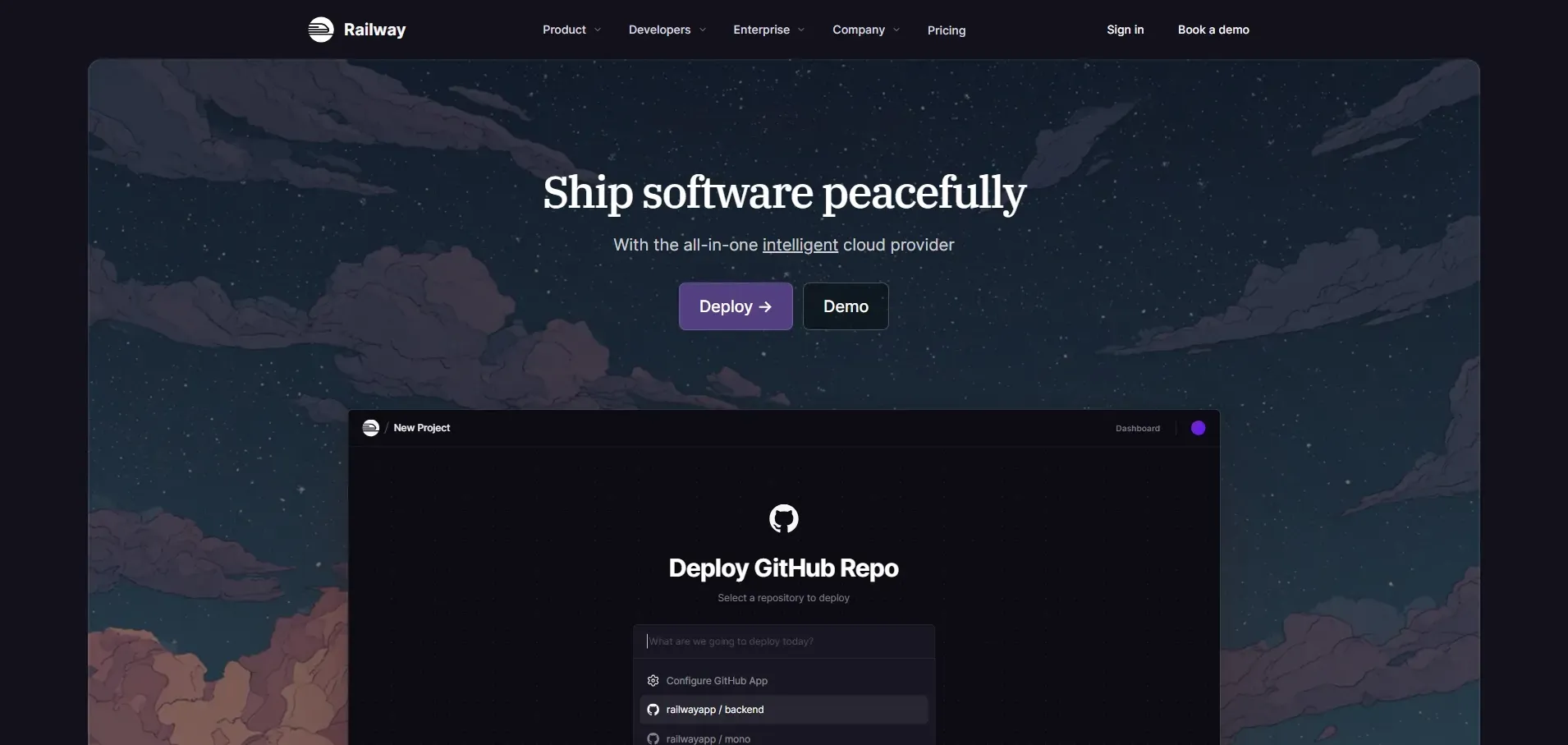
Railway is where deployment gets genuinely interesting for full-stack teams. While Vercel focuses on the frontend layer, Railway handles your entire stack: frontend, backend, PostgreSQL, Redis — all in one dashboard, all connected on a private network.
Key Features:
- One-click database deployment (PostgreSQL, MySQL, MongoDB, Redis)
- Private networking between services
- Scale-to-zero with transparent usage tracking
- GitHub integration with automatic deployments
Pricing: Hobby plan starts at $5/month with a $5 usage credit. Pro plan at $20/month.
Pros
Cons
Render
Best for Teams Migrating from Heroku
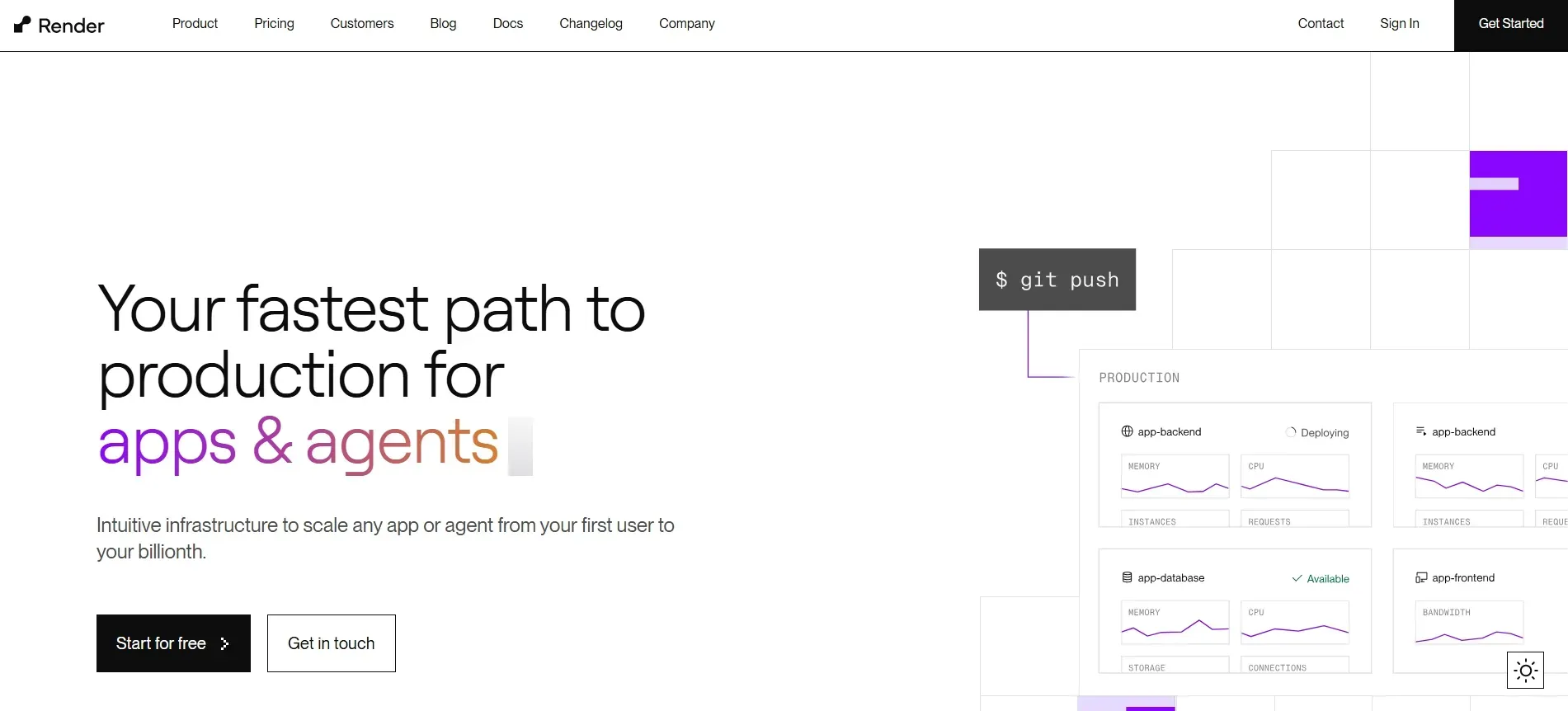
When Heroku eliminated its free tier in 2022, Render stepped in. It mirrors Heroku's workflow — deploy web services, databases, cron jobs, and background workers from a single platform — but with modern infrastructure and better pricing.
Key Features:
- Web services, static sites, background workers, cron jobs
- Managed PostgreSQL and Redis databases
- Auto-scaling based on traffic
- Docker container support
Pricing: Free tier for static sites. Web services start at $7/month.
Pros
Cons
Fly.io
Best for Global Low-Latency Apps
Fly.io runs your app on virtual machines at edge locations worldwide. Unlike traditional cloud hosting, Fly deploys close to your users — if 40% of your traffic comes from Southeast Asia, Fly runs instances there, not just in US-East-1.
Key Features:
- Run Docker containers at 35+ global regions
- Automatic placement close to user traffic
- Managed Postgres as Fly apps
- Scale to zero or keep persistent processes running
Pricing: Free allowances for small apps. Pay-as-you-go with VMs starting at ~$1.94/month.
Pros
Cons
DigitalOcean App Platform
Best for Budget-Conscious Teams
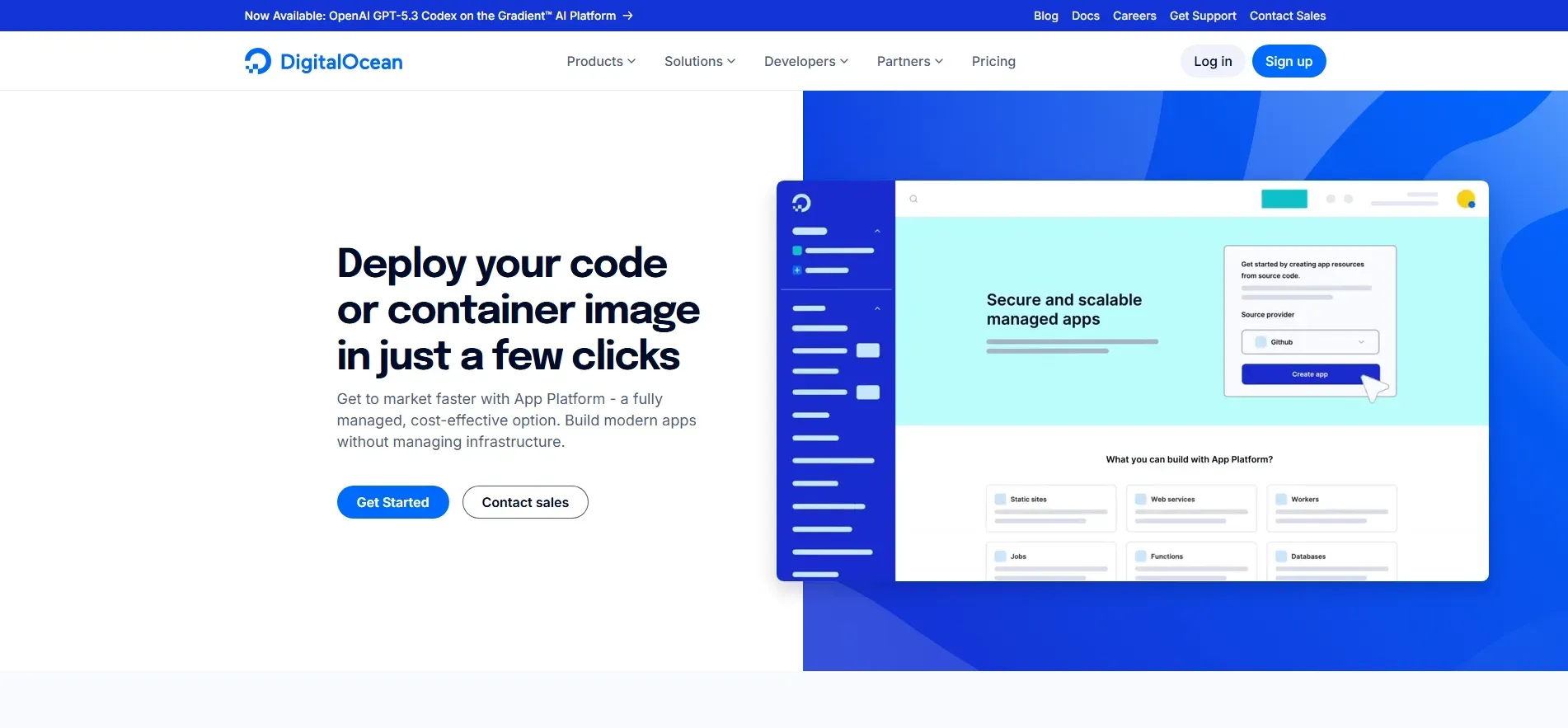
DigitalOcean App Platform sits between managed serverless and full server control. Deploy from GitHub, auto-scale on traffic, pay predictable flat-rate prices. It supports static sites, web services, workers, and databases.
Key Features:
- Deploy from GitHub or GitLab
- Supports Node.js, Python, Go, PHP, Ruby, and Docker
- Managed PostgreSQL and MySQL databases
- Free static site hosting
Pricing: Free tier for static sites. Web services from $5/month. Databases from $7/month.
Pros
Cons
AWS Amplify
Best for Enterprise Scale and AWS Ecosystem
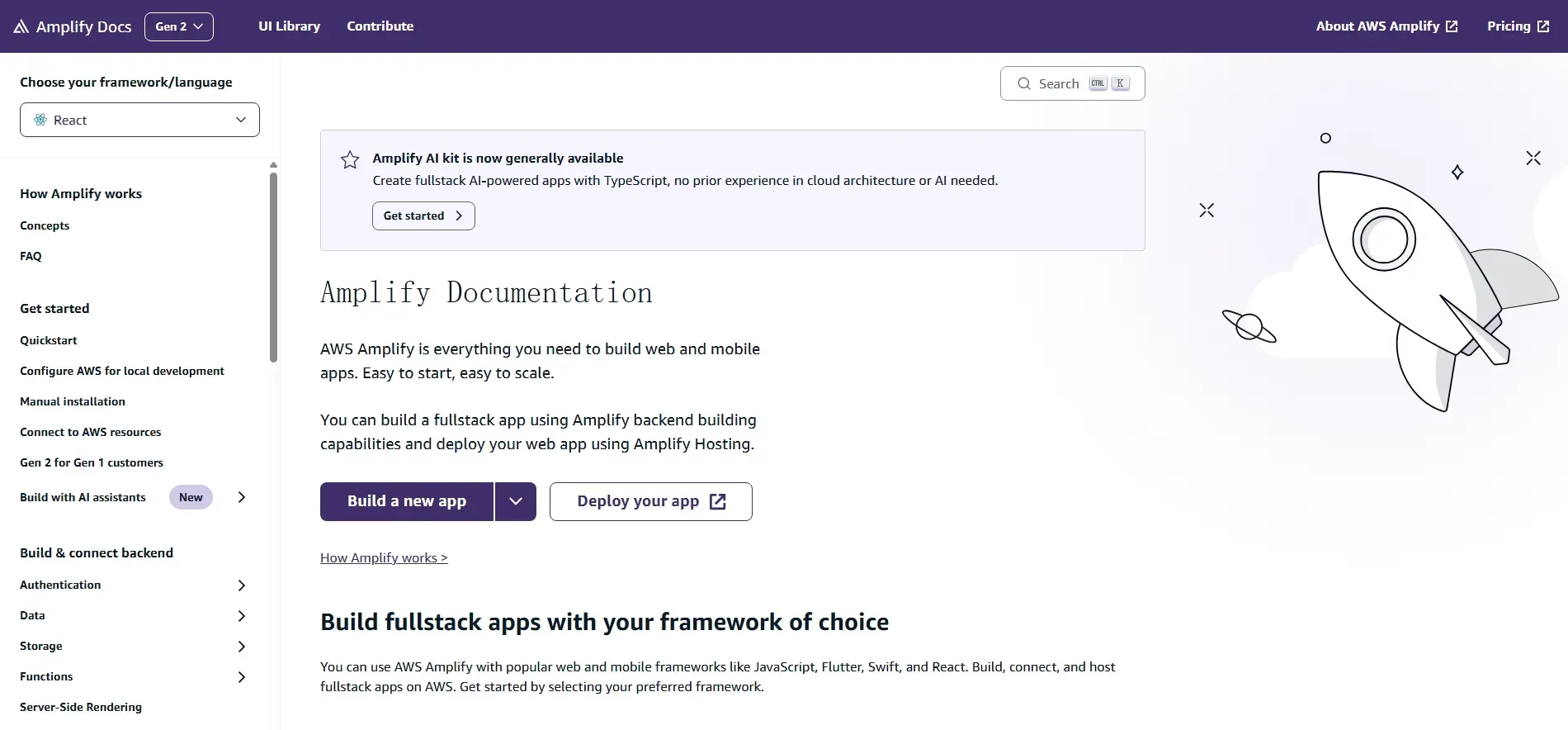
If your organization already runs on AWS, Amplify is the path of least friction. It's AWS's managed full-stack platform: deploy from Git, use Cognito for auth, DynamoDB or AppSync for data, Lambda for serverless functions — all within the AWS ecosystem.
Key Features:
- Framework-agnostic (Next.js, Nuxt, Angular, React, and more)
- Built-in authentication via AWS Cognito
- Auto-scaling backed by AWS global infrastructure
- Integration with the full AWS services catalog
Pricing: Usage-based. Generous free tier for smaller apps.
Pros
Cons
Quick Comparison: Vercel Alternatives at a Glance
| Platform | Free Commercial Use | Built-in Database | Edge Deploy | Full-stack | Starting Price |
|---|---|---|---|---|---|
| YouWare | ✅ | ✅ YouBase | ✅ Cloudflare | ✅ | $20/mo |
| Netlify | ✅ | ❌ | ✅ CDN | ❌ | $19/mo/user |
| Cloudflare Pages | ✅ | ❌ | ✅ 300+ PoPs | ❌ | $20/mo |
| Railway | ✅ | ✅ Postgres/Redis | ❌ | ✅ | $5/mo |
| Render | ✅ | ✅ Postgres | ❌ | ✅ | $7/mo |
| Fly.io | ✅ | ✅ Postgres | ✅ 35+ regions | ✅ | ~$2/mo |
| DigitalOcean | ✅ | ✅ Postgres/MySQL | ❌ | ✅ | $5/mo |
| AWS Amplify | ✅ | ✅ DynamoDB | ✅ CloudFront | ✅ | Usage-based |
| Vercel | ❌ (paid only) | ❌ | ✅ Edge | ❌ | $20/mo/user |
The last row is Vercel itself for reference — notice how its free tier prohibits commercial use, a restriction none of the alternatives share.


Skip the deployment setup entirely
Try YouWare FreeHow We Chose These Vercel Alternatives
We tested each platform hands-on — deploying a Next.js app and a full-stack project with a database — and scored them across four dimensions:
- Deployment model — Does it support serverless, containers, or edge execution? We checked whether each platform could handle both static assets and dynamic server-side workloads.
- Full-stack readiness — Can you run databases, background workers, and cron jobs alongside your frontend without stitching together third-party services?
- Pricing predictability — We compared what a small team (3 developers, ~50K monthly pageviews) would actually pay. Flat-rate pricing scored higher than usage-based billing with potential overages.
- Developer experience — Time from
git pushto live URL, quality of error messages, and how much platform-specific configuration was required.
We excluded platforms with recent reliability incidents, those without active maintenance (no commits in 6+ months), and niche tools that only support a single framework. For a deeper look at how deployment platforms compare on performance benchmarks, the Cloudflare Workers performance comparison provides useful third-party data on edge execution latency.
FAQ
Is Netlify a drop-in replacement for Vercel?
For most static sites and JAMstack apps, yes. Netlify supports similar capabilities: Git-based deploys, serverless functions, CDN distribution, and preview deployments. The main difference is that Vercel has deeper Next.js optimization (ISR, Edge Middleware). If your app relies heavily on Vercel-specific Next.js features, expect minor refactoring when migrating to Netlify.
Which Vercel alternative has the best free tier?
Cloudflare Pages has the most generous free tier for production workloads: unlimited bandwidth, unlimited sites, 500 builds/month, and no commercial use restrictions. Netlify is also strong, offering 125GB bandwidth and 125K serverless function invocations per month. For full-stack apps that need a database, Railway gives you a $5 usage credit on its Hobby plan.
What is the difference between Vercel and Railway?
Vercel is optimized for frontend and serverless deployments — it excels at deploying Next.js apps from a Git repository. Railway is a more complete platform that lets you run your frontend, backend APIs, and databases together with private networking between services. If you have a pure frontend or serverless app, stick with Vercel (or alternatives like Netlify). If you need your full stack managed in one place, Railway is the stronger choice.
Can I deploy a Next.js app to Cloudflare Pages?
Yes, Cloudflare Pages has solid Next.js support, though some Vercel-specific features — certain ISR configurations and Edge Middleware behaviors — may need adjustments during migration. For most standard Next.js apps, Cloudflare Pages works well and often delivers faster response times due to Cloudflare's 300+ global edge locations.
How is YouWare different from Vercel?
They serve different workflows. Vercel is a deployment platform: you write code, push to Git, and deploy. YouWare is an AI app builder: you describe what you want in plain English, AI generates production-ready React code, and your app deploys automatically to Cloudflare's edge. YouWare is best for building new web apps without managing infrastructure or deployment configs. If you have existing code to deploy, a traditional platform like Netlify, Cloudflare Pages, or Railway is the right tool.
Conclusion
Vercel is excellent at what it does — but it's not the only path to a deployed web app.
For most teams replacing Vercel, Netlify is the safest starting point: familiar workflow, generous free tier, no commercial use restrictions. For raw global performance, Cloudflare Pages wins. For full-stack apps that need databases alongside the frontend, Railway or Render save the headache of stitching together separate services.
And if you're starting something new and want to skip the build-configure-deploy cycle entirely? YouWare's AI app builder lets you describe your React app and get a live Cloudflare-deployed URL — no config file required.
Build your next app without the deployment headaches
Start Free
