Vibe Coding: The No-Code Revolution Powered by AI (and How to Share Your Creation)

Vibe coding shifts programming from writing code to guiding an AI with natural language prompts, allowing developers to "forget that the code even exists" and focus on ideas.
What is Vibe Coding?
In February 2025, former Tesla AI director Andrej Karpathy declared a programming paradigm shift: "There's a new kind of coding I call vibe coding."
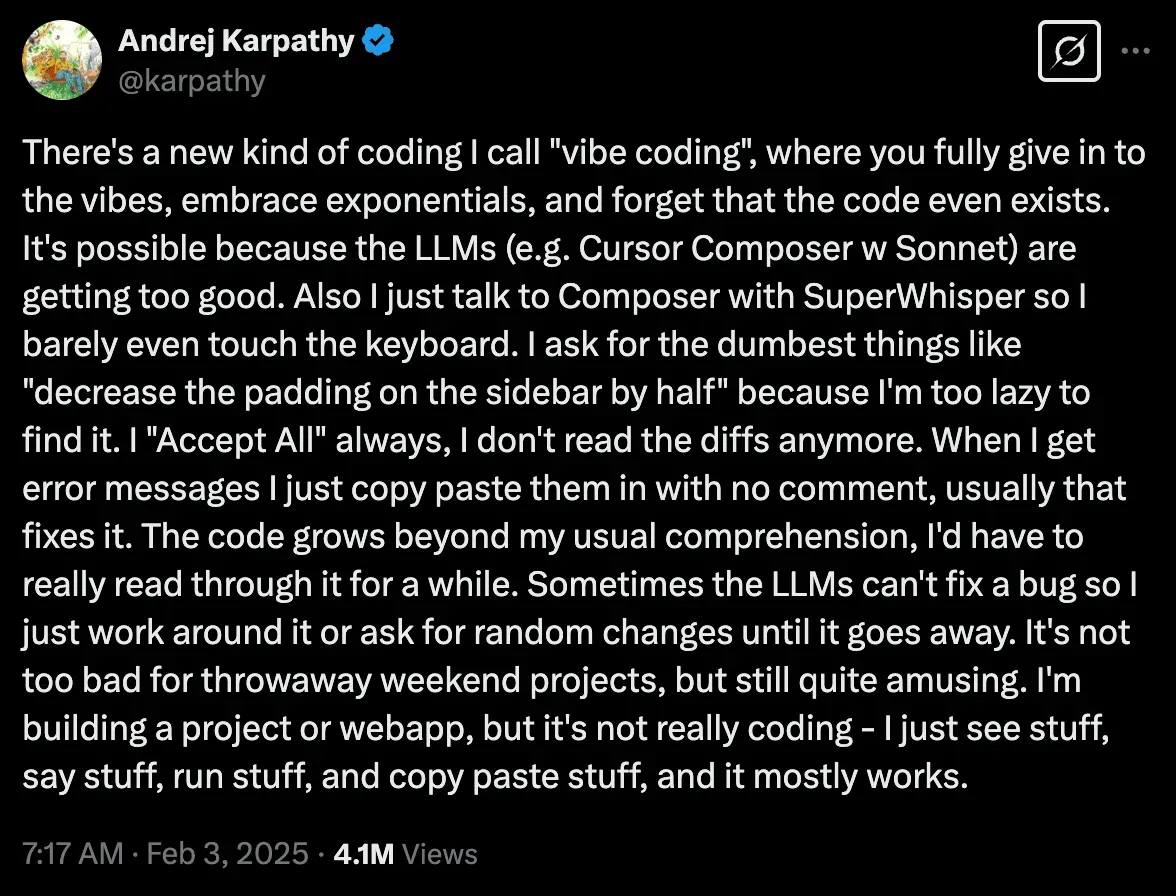
Vibe coding (or vibecoding) is an AI-driven programming approach where developers describe what they want in natural language and let AI do the coding.
Instead of carefully crafting every line of syntax, a vibe coder provides high-level instructions (often just a few sentences) to a large language model (LLM), and the AI generates the software solution from those instructions. This practice has quickly become a Silicon Valley buzzword, promising to lower the barrier to software creation and radically speed up development by offloading the heavy lifting to AI.
Enabling Amateur Programmers
One of the most revolutionary aspects of vibe coding is how it enables amateurs and non-engineers to create software with minimal expertise. People who previously couldn't write a single line of code are now building apps by collaborating with AI. As Karpathy quipped, "The hottest new programming language is English" underscoring that just articulating your idea can be enough to produce working code.

The experience of vibe coding can feel nothing short of magical. Instead of a steep months-long learning curve, newcomers can get a functional app running in an afternoon, which is highly encouraging and builds confidence.
Crucially, vibe coding is broadening who can participate in software creation. People with ideas but no programming background can now implement those ideas themselves. This trend suggests that a new class of creators is emerging: everyday professionals, students, and hobbyists who can build their own tools with the help of AI. The pool of who can develop software is expanding beyond career programmers, which could lead to a boom in fresh ideas and customized solutions created by non-traditional developers.