Is Vibe Coding Reliable? What 1,000 AI-Generated Apps Taught Us About Quality

Key Takeaways
Vibe coding has reached 92% adoption among US developers, but research analyzing over 1,000 AI-generated applications reveals a critical reliability gap: 45% of AI-generated code contains security vulnerabilities, and bug density runs 1.7x higher than human-written code. The productivity gains are real—developers report 3-5x speed increases—but production reliability requires structured human oversight and platforms with built-in security guardrails. YouWare addresses these concerns by providing enterprise-grade authentication, secure credential management, and human-in-the-loop development that maintains code quality while preserving the speed benefits of AI-assisted development.
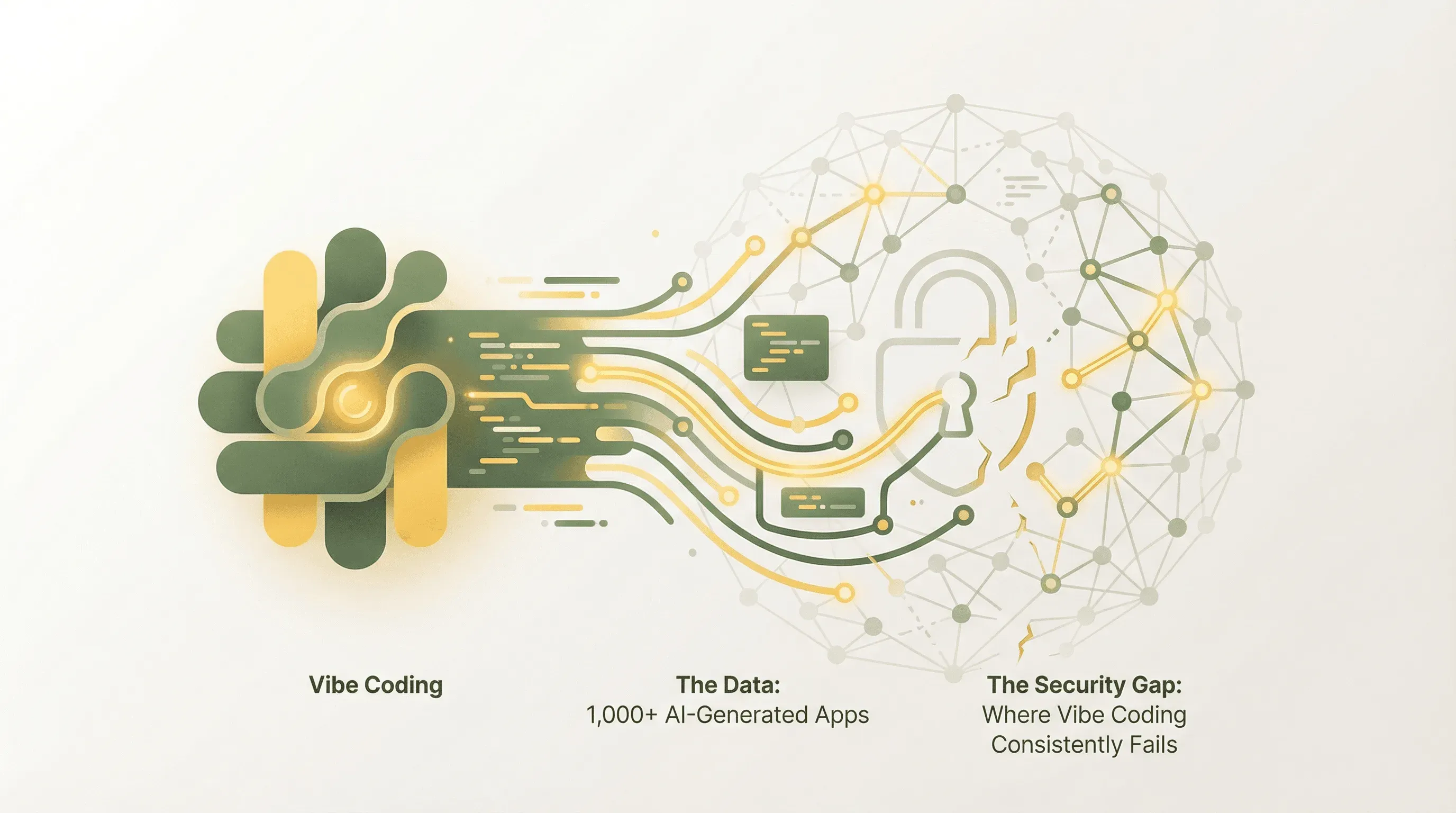 Vibe coding has achieved 92% adoption among US developers, but research reveals significant reliability concerns that teams must address
What Is Vibe Coding and Why Does Reliability Matter?
Vibe coding, a term coined by AI researcher Andrej Karpathy in February 2025, describes the practice of building software by describing what you want in natural language rather than writing code manually. The AI handles the implementation details while developers focus on intent and requirements. According to ByteIota's industry analysis, this approach has achieved remarkable adoption: 87% of Fortune 500 companies now use vibe coding platforms, and 41% of all global code—approximately 256 billion lines in 2024—is now AI-generated.
 AI-powered code generation represents a paradigm shift in software development, but the quality gap remains significant — Source: Pixabay
The reliability question matters because the stakes have changed dramatically. When 21% of Y Combinator Winter 2025 startups have codebases that are 91% or more AI-generated, code quality isn't an academic concern—it's a business survival issue. The Sonar State of Code Developer Survey found that 42% of developers' code is currently AI-generated, with expectations to reach 65% by 2027. This rapid scaling amplifies both the benefits and the risks.
The Data: What 1,000+ AI-Generated Apps Reveal About Code Quality
The most comprehensive analysis of vibe coding quality comes from multiple independent research studies conducted throughout 2025 and early 2026. The findings paint a consistent picture: AI-generated code works, but it works differently than human-written code—and that difference has measurable consequences.
 Research shows AI-generated code exhibits 1.7x higher bug density than human-written code — Source: Pixabay
According to CodeRabbit's December 2025 analysis, AI-generated code exhibits 1.7x higher bug density than human-written code—10.83 issues per pull request compared to 6.45 for human developers. This isn't necessarily a condemnation of AI capabilities; it reflects a different development pattern. AI tends to generate more code faster, which naturally introduces more opportunities for defects.
The Veracode 2025 GenAI Code Security Report, analyzing output from over 100 large language models, found that 45% of AI-generated code contains security vulnerabilities despite appearing production-ready. The report identified Java as particularly problematic, with security failure rates exceeding 70%. Google's 2024 DORA report corroborated these concerns, documenting a 7.2% decrease in delivery stability with AI use and a 4x increase in code duplication.
| Metric | AI-Generated Code | Human-Written Code |
|---|---|---|
| Bug density per PR | 10.83 issues | 6.45 issues |
| Security vulnerability rate | 45% | Lower baseline |
| Code acceptance rate (Copilot) | 30% | N/A |
| XSS vulnerability likelihood | 2.74x higher | Baseline |
As this data demonstrates, the gap isn't in functionality—AI-generated code generally works—but in the non-functional qualities that determine production readiness.
The Security Gap: Where Vibe Coding Consistently Fails
Security represents the most critical failure mode in vibe-coded applications. The Tenzai security research study, which tested 15 applications built by the five leading vibe coding tools, found 69 vulnerabilities across the test suite, with several rated as critical. Perhaps most concerning: none of the tested tools implemented CSRF protection across any of the 15 applications.
The vulnerability patterns are remarkably consistent. According to ByteIota's analysis, AI coding tools fail to defend against cross-site scripting (XSS) in 86% of code samples and log injection in 88% of cases. The authentication picture is equally troubling: 57% of AI-generated APIs are publicly accessible, and 89% rely on insecure authentication mechanisms.
There is nuance in this data, however. The Tenzai study noted that all five tested vibe coding tools successfully avoided exploitable SQL injection and XSS vulnerabilities in their generated applications—suggesting that AI has learned to handle the most well-documented attack vectors. The failures cluster around more subtle security requirements: authorization logic, session management, and defense-in-depth measures that require understanding of threat models rather than pattern matching.
The Human Factor: Why AI Guidance Alone Leads to Performance Collapse
A joint research study from Cornell, Princeton, MIT, and NYU published in February 2026 provides crucial insight into why vibe coding reliability varies so dramatically between projects. The researchers found that human-led vibe coding consistently improved over iterations, while AI-led coding often collapsed despite access to the same information.
 Human guidance proves essential for maintaining code quality in AI-assisted development — Source: Pexels
This finding aligns with the troubling pattern identified in the Sonar survey: 96% of developers don't fully trust AI-generated code to be functionally correct, yet 52% don't always check it before committing. The disconnect between skepticism and behavior creates a reliability gap that compounds over time. Each unchecked commit introduces potential defects that accumulate into technical debt.
The open source community has felt this impact acutely. As reported by TechCrunch, major projects like VLC and Blender are struggling with declining contribution quality. VLC's CEO described recent AI-assisted merge requests as "abysmal," noting that contributors appear to be submitting AI-generated patches without understanding the codebase context or reviewing the output.
How YouWare Addresses Vibe Coding's Reliability Challenges
The research consistently points to a specific set of failure modes: insecure authentication, exposed credentials, authorization gaps, and insufficient human oversight. YouWare was designed with these exact challenges in mind, providing built-in infrastructure that handles the security concerns AI consistently misses.
YouWare's YouBase Users module provides enterprise-grade authentication out of the box—email login with password management, Google OAuth integration, and temporary accounts for frictionless access. This directly addresses the ByteIota finding that 89% of vibe-coded applications rely on insecure authentication. Instead of trusting AI to generate authentication logic correctly, developers describe their user flow requirements while YouWare handles the secure implementation.
The Secrets module solves the credential exposure problem that plagues vibe-coded applications. API keys stored in Secrets are encrypted with enterprise-grade protection and accessed only server-side—never exposed to frontend code. When developers request "Call OpenAI API to generate summaries," YouWare generates secure backend code that properly isolates sensitive credentials, eliminating the common pattern of hardcoded keys in AI-generated frontend applications.
YouWare's human-in-the-loop approach aligns directly with the Cornell/Princeton/MIT/NYU research showing human guidance is essential for maintaining quality. The visual editing mode allows non-developers to make changes without touching code directly, reducing the risk of introducing vulnerabilities through poorly understood AI suggestions. Users describe intent through natural language prompts like "Add a dark mode toggle" or "Connect this form to a database," and the platform handles implementation details with proper security controls.
The Time Travel feature provides a safety net that accounts for the higher bug density in AI-assisted development. If AI-generated database logic causes data corruption, developers can restore the database to any previous state—a capability that transforms a potentially catastrophic failure into a recoverable incident.
Best Practices for Reliable Vibe Coding
The research points to specific practices that significantly improve vibe coding outcomes. Organizations achieving reliable results share common approaches that balance productivity gains with quality requirements.
 Implementing structured review processes can significantly improve vibe coding reliability — Source: Pixabay
Implement mandatory code review for AI output. The 52% of developers who don't always check AI-generated code before committing represent the primary source of accumulated defects. Treating AI output as a first draft rather than finished code transforms the reliability equation. The 30% acceptance rate for GitHub Copilot suggestions indicates that experienced developers already apply significant filtering—the key is making that filtering consistent and systematic.
Use platforms with built-in security infrastructure. The Tenzai finding that zero out of five major tools implemented CSRF protection suggests that relying on AI to generate security controls is fundamentally unreliable. Platforms like YouWare that provide authentication, authorization, and secure credential storage as platform features eliminate entire categories of vulnerabilities by removing them from AI's responsibility.
Maintain human ownership of architectural decisions. The research showing AI-led coding collapses over iterations while human-led coding improves points to a clear division of labor. Humans should define structure, requirements, and acceptance criteria; AI should handle implementation within those constraints. This mirrors how YouWare operates—users describe intent and business logic while the platform manages technical implementation.
Establish security testing as a gate rather than a check. According to ITPro's analysis of vibe coding security risks, the most effective organizations treat security scanning as a deployment prerequisite rather than an optional audit. Automated scanning catches the consistent vulnerability patterns in AI-generated code before they reach production.
Enterprise Adoption vs. Security Readiness: The Governance Gap
The 87% Fortune 500 adoption rate for vibe coding creates a governance challenge that many organizations haven't fully addressed. The Veracode research indicates that enterprise deployment has outpaced enterprise security adaptation, creating exposure that compounds with each AI-assisted commit.
The language-specific vulnerability rates deserve attention from enterprise security teams. Java's over-70% security failure rate for AI-generated code suggests that existing Java codebases face elevated risk from AI-assisted modifications. Organizations should consider language-specific review policies that account for these documented patterns.
The developer behavior data from Sonar reveals a training and culture gap. When 96% of developers distrust AI output but 52% commit it unchecked anyway, the problem isn't technical capability—it's workflow design. Effective governance requires making review the path of least resistance rather than an optional step.
Future Outlook: Self-Healing Code and Guardrail Agents
The vibe coding ecosystem is evolving rapidly to address documented reliability concerns. Emerging approaches include guardrail agents that automatically review AI-generated code for common vulnerability patterns, self-healing systems that detect and remediate issues in production, and improved training methodologies that emphasize security-first code generation.
 The future of vibe coding includes self-healing code and intelligent guardrail systems — Source: Pixabay
The research trajectory suggests that AI code generation will improve on security metrics as training datasets incorporate more security-focused examples. The Tenzai finding that current tools successfully avoid exploitable SQLi and XSS—the most heavily documented attack vectors—indicates that AI can learn to avoid vulnerability patterns given sufficient training data. The challenge is expanding that capability to cover the longer tail of security requirements.
For organizations evaluating vibe coding adoption today, the data supports a measured approach: use AI assistance for productivity gains while implementing human oversight and platform-level security controls to address the documented reliability gap. The technology delivers real value, but that value is maximized when deployed within appropriate guardrails.
FAQ
Is vibe coding safe for production applications?
Vibe coding can be production-safe with appropriate guardrails, but raw AI output is not production-ready. Research shows 45% of AI-generated code contains security vulnerabilities. Organizations achieving reliable results implement mandatory code review, use platforms with built-in security infrastructure like YouWare, and treat AI output as a starting point rather than finished code. The productivity benefits are real, but they require investment in quality assurance processes.
What types of vulnerabilities are most common in vibe-coded applications?
AI-generated code consistently fails on authentication (89% insecure), XSS defense (86% failure rate), log injection (88% failure rate), and authorization controls. The Tenzai study found zero CSRF protection across 15 applications built by five leading tools. Interestingly, AI handles well-documented attacks like SQL injection successfully, suggesting the problem is training data coverage rather than fundamental capability limits.
How does YouWare prevent the common security issues in vibe coding?
YouWare provides authentication, credential management, and database operations as platform features rather than AI-generated code. The YouBase Users module handles login flows with proper security controls. The Secrets module stores API keys with enterprise-grade encryption, accessed only server-side. This architecture removes security-critical code from AI's responsibility entirely, addressing the root cause of vibe coding's reliability issues.
Should enterprises ban vibe coding due to security risks?
Banning vibe coding is impractical given 87% Fortune 500 adoption and demonstrable productivity gains. The more effective approach is governance that accounts for documented risks: mandatory review for AI-generated code, platform-level security controls, language-specific policies (particularly for Java), and security scanning as a deployment gate. The goal is capturing productivity benefits while managing quality risks through process and tooling.
What's the difference between AI-led and human-led vibe coding?
Research from Cornell, Princeton, MIT, and NYU found that human-led vibe coding—where humans define requirements and architecture while AI implements—consistently improves over iterations. AI-led coding, where AI makes architectural decisions, often collapses despite access to the same information. This suggests vibe coding works best as an implementation accelerator under human direction rather than an autonomous development approach.
Conclusion
The data from over 1,000 AI-generated applications tells a nuanced story about vibe coding reliability. The productivity gains—3-5x speed increases reported by developers—are real and significant. So are the quality concerns: 45% security vulnerability rates, 1.7x higher bug density, and consistent failures in authentication and authorization controls.
The path forward isn't choosing between productivity and reliability; it's implementing the right combination of human oversight and platform-level guardrails. Platforms with built-in security infrastructure address AI's consistent blind spots, while structured review processes ensure human judgment catches what automation misses.
For teams evaluating vibe coding, the research supports cautious optimism. Use AI assistance for the speed benefits it genuinely provides, but invest in the review processes and security tooling that transform raw AI output into production-ready code. The technology works—it just works best when deployed with appropriate safeguards.

References
- Veracode 2025 GenAI Code Security Report - Primary industry research on AI code security vulnerabilities
- Tenzai: Bad Vibes - Comparing Secure Coding Capabilities of Popular Coding Agents - Security analysis of five major vibe coding tools
- Unite.AI: Why Human Guidance Matters inCollaborative Vibe Coding - Academic research from Cornell, Princeton, MIT, and NYU
- Sonar State of Code Developer Survey - Developer trust and behavior data
- TechCrunch: For Open Source Programs, AI Coding Tools Are a Mixed Blessing - Real-world impact on major open source projects
- ByteIota: Vibe Coding Adoption and Security Analysis - Industry adoption statistics and security metrics
- CodeRabbit AI Code Quality Analysis - Bug density comparison research
- ITPro: Vibe Coding Security Risks and How to Mitigate Them - Expert security recommendations