Softr vs Bubble: The Ultimate In-Depth Comparison for 2026
Bubble vs Softr Comparison (2026): Which No-Code App Builder Wins?
YouWare TeamMarch 17, 2026
6 mins read
Bubble vs Softr Comparison (2026): Which No-Code App Builder Wins?
Summary
Choosing between Bubble and Softr forces a difficult compromise. Bubble offers powerful full-stack capabilities but demands months of learning and unpredictable billing. Softr delivers speed "launch internal tools in hours" but sacrifices flexibility and database power. We break down the real differences: database architecture, learning curve, pricing traps, and scalability limits. By the end, you'll know exactly which platform fits your requirements, or discover why AI-powered builders like YouWare might eliminate this compromise entirely.
At a Glance: Bubble vs Softr Core Philosophies
To make an informed decision, you must first understand the architectural divide between these two platforms. They do not just offer different features; they operate on entirely different technical philosophies.
Bubble's Philosophy: Total Visual Control
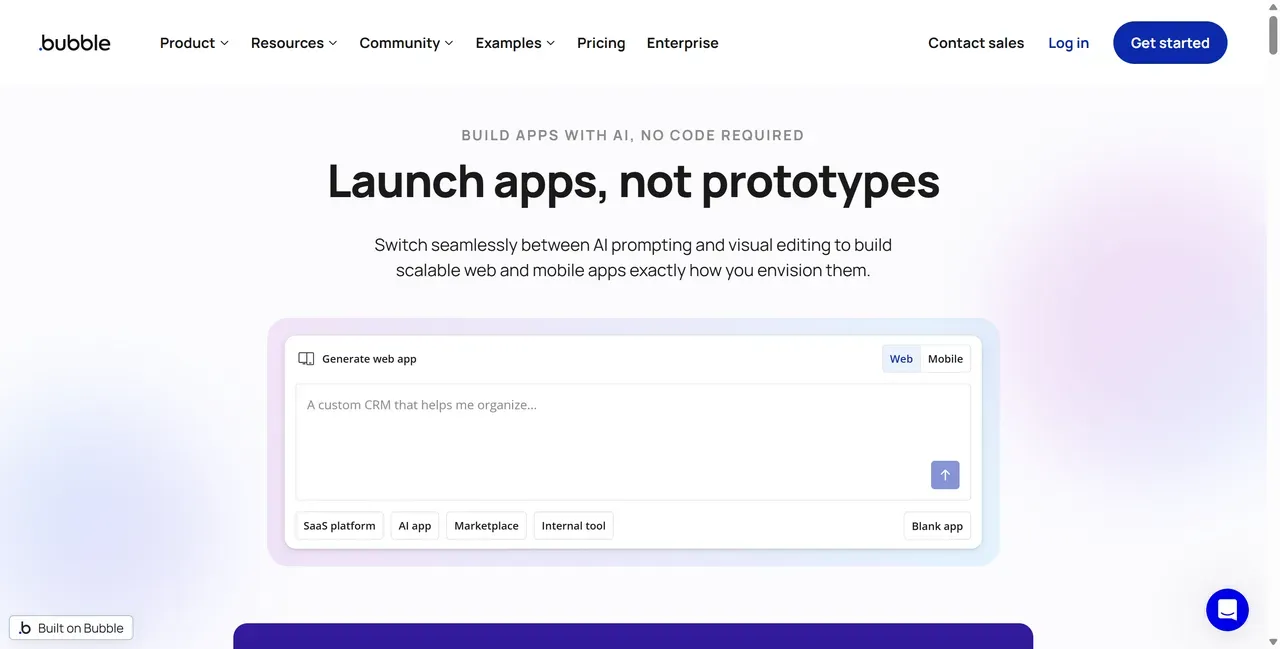
Bubble functions as a complete visual programming environment natively inside your browser. It provides a blank canvas, a proprietary relational database, and absolute control over every pixel and logical workflow. If you can map out the logic, you can build it. It acts as the ultimate powerhouse for custom software.
Softr's Philosophy: Your Data, Fast UI
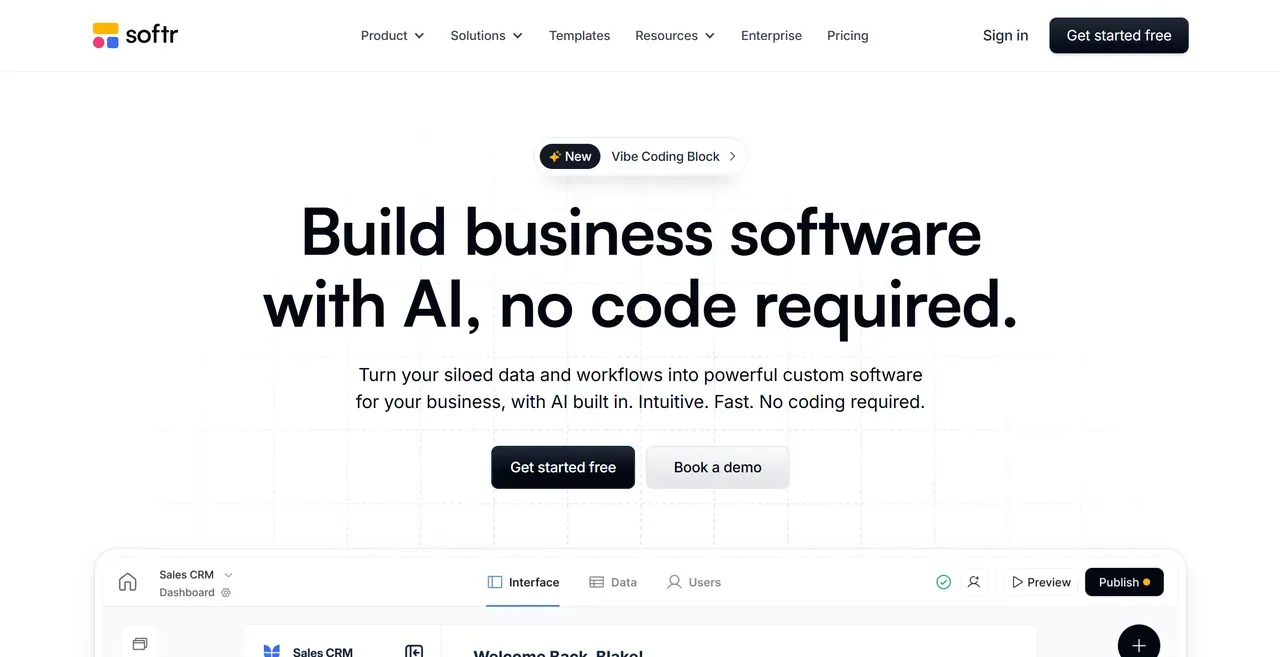
Softr takes the opposite approach. It operates strictly as a presentation layer. Its core philosophy assumes your data already exists somewhere else—most likely in Airtable or Google Sheets. Softr simply snaps a beautiful, highly responsive interface over that external data using pre-configured blocks.
Deep Dive into Bubble: The Complex Giant
Bubble powers thousands of complex, profitable SaaS businesses. It handles heavy lifting that most no-code tools simply cannot touch.
The Good: Bubble provides true full-stack capabilities. You get a native database built to handle millions of rows, integrated user authentication, and an API connector that can communicate with any modern web service. You control the exact X and Y coordinates of every button and input field.
The Bad: You pay for this power with your time. The learning curve resembles a vertical cliff. Non-technical founders routinely spend three to six months just trying to build a secure, responsive minimum viable product.
Then comes the 2026 pricing reality. Bubble's transition to the Workload Units (WU) billing model has caused widespread frustration. WU measures server compute power. A single poorly optimized database search can drain your monthly allowance instantly. If your app experiences a sudden traffic spike, your predictable SaaS bill transforms into a massive financial liability.
Deep Dive into Softr: The Speed Machine
When evaluating Softr, speed to market remains its biggest selling point.
The Good: You can spin up functional internal tools, directories, or client portals in a single afternoon. Because you assemble pages using pre-built modular blocks, your application automatically looks professional and responds perfectly on mobile devices. It requires zero understanding of CSS Flexbox or database relationship mapping. If you know how to format an Airtable spreadsheet, you know how to use Softr.
The Bad: That speed comes with a severe flexibility tax. If your business logic requires a custom multi-step checkout, complex conditional formatting, or a unique UI component that Softr does not offer in its block library, you hit a brick wall. You are also heavily dependent on third-party services. If Airtable alters its API rate limits or experiences downtime, your Softr application breaks.
The 5-Point Showdown: Head-to-Head
We broke down the performance of both builders across five critical business metrics:
1. Learning Curve: Softr wins effortlessly. You measure the learning phase in hours. Bubble requires dedicated months of study, often forcing teams to hire expensive specialized agencies just to launch.
2. Database Power: Bubble dominates here. Its native database supports complex relational queries and backend workflows. Softr acts merely as a mirror for Airtable, suffering from occasional synchronization delays.
3. Design Flexibility: Softr restricts you to standardized templates. Bubble allows pixel-perfect manipulation, though making it responsive requires manual configuration.
4. Scalability: Softr handles internal operations and early-stage validation perfectly. Bubble easily scales to support complex two-sided marketplaces and micro-SaaS architectures.
5. Pricing Structure: Softr charges a predictable flat monthly rate. Bubble charges a base fee plus unpredictable server usage (WU), making budget forecasting incredibly difficult for growing startups.
The Verdict: Should You Choose Bubble or Softr?
Your final choice depends on your immediate business objective.
Choose Bubble if you are building a complex platform like an AI app builder, require heavy backend processing, and have either the budget to hire a developer or the months needed to master the platform yourself.
Choose Softr if you need to build a customer portal, an applicant tracking system, or a lightweight CRM. If your data safely resides in Airtable and you need an interface launched by Friday, Softr delivers.
Wait, Is There a Better Way?
Many founders read the comparison above and feel stuck. Softr lacks the necessary logic, while Bubble drains development time and operational budgets.
This exact friction is driving the shift toward AI-native code generation. Platforms like YouWare eliminate the compromise between speed and power entirely.
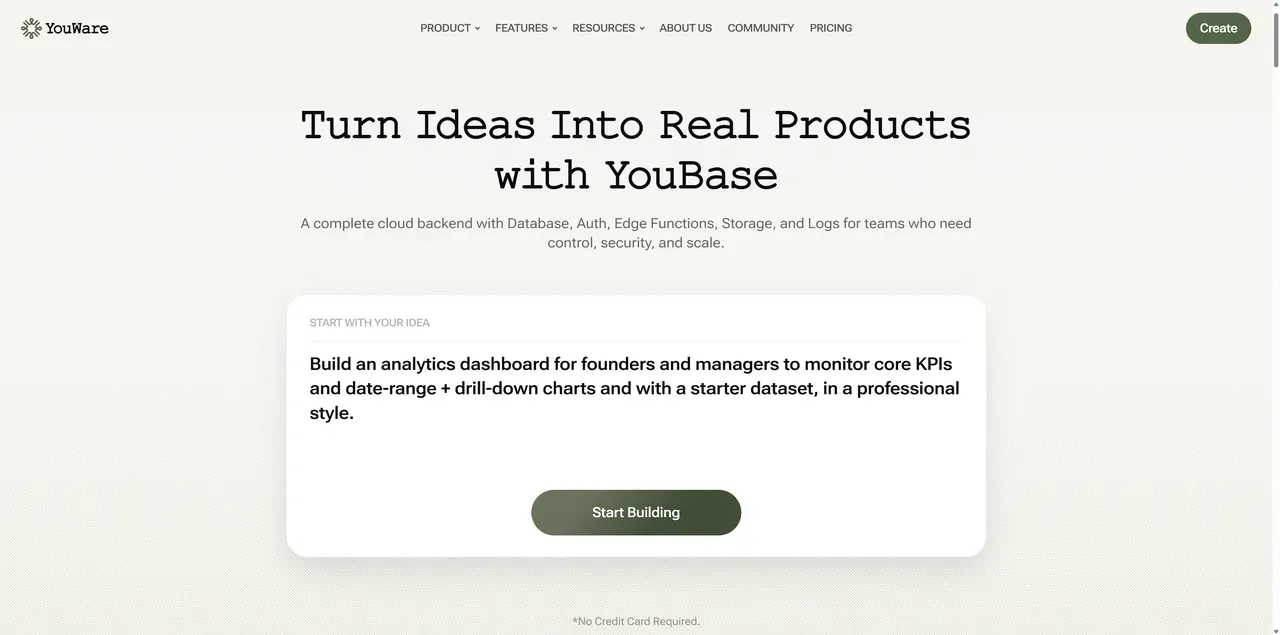
Instead of dragging blocks or wiring complex visual logic, you describe your application in natural language. YouWare generates production-ready React code in about 30 seconds.
Unlike Softr, it does not rely on fragile Airtable connections. It utilizes YouBase, a built-in enterprise-grade cloud backend featuring a native database, user authentication, and real-time data synchronization.
A petroleum engineer built a complex internal management system using YouWare and achieved the deep functionality typically reserved for Bubble, but deployed it in a fraction of the time. Similarly, teams across different industries spun up functional applications instantly—without limitations tied to external data sources.
To fix the unpredictable pricing associated with Bubble's WU model, YouWare implemented a transparent Credit system. You only pay for successful generations, and your credits are designed to scale with your needs.
Frequently Asked Questions
Which is better for beginners, Softr or Bubble?
Softr wins this category easily. A beginner can launch a functional site in an afternoon. Bubble requires months of technical training. However, if you want to bypass learning interfaces entirely, YouWare's conversational AI generates complete React applications in seconds.
Does Softr have its own database?
No. Softr is purely a frontend layer. It requires external data sources like Airtable or Google Sheets to function. Bubble and YouWare provide robust native databases out of the box.
Why is Bubble's pricing (Workload Units) so controversial?
Workload Units charge you based on server activity. Unoptimized queries or sudden traffic spikes consume WU rapidly, leading to massive, unpredictable monthly bills that many bootstrapped startups cannot afford.
Can I export the source code from Bubble or Softr?
Use Softr if your data is already in Airtable and you need a quick interface for internal tools or client portals. Use YouWare if you need to build from scratch, want full backend control, or need to deploy without vendor lock-in.