YouWare vs Bubble: Which App Builder Is Better in 2026?

8 mins read


YouWare and Bubble represent two different approaches to building applications without traditional coding. Bubble is a visual development platform that allows users to create full-stack web apps through a drag-and-drop editor, built-in database, and workflow logic. YouWare takes a different approach by generating applications from natural-language prompts, allowing builders to create working prototypes quickly. While Bubble focuses on visual workflow development and manual configuration, YouWare focuses on AI-driven app generation that turns ideas into apps faster.
YouWare vs Bubble: both aim to simplify app development, but for different builders. Bubble is a visual development platform where users design interfaces, manage data, and configure workflows manually. YouWare generates applications from natural-language prompts using AI-driven development. This guide breaks down their development approach, learning curve, backend setup, and pricing so you can pick the right tool for your next project.
Both YouWare and Bubble aim to simplify how applications are built, but they approach the problem from very different directions. Bubble has become one of the most well-known visual development platforms in the no-code ecosystem, allowing teams to design interfaces, manage data, and configure workflows without writing traditional code.
YouWare represents a newer generation of tools built around AI-driven development. Instead of assembling applications step by step inside a visual editor, builders describe what they want to create and let the platform generate the initial structure automatically.
Because of this difference, the choice between YouWare and Bubble is less about which tool is "better," and more about which workflow fits your project. Builders who want detailed control over workflows may prefer Bubble, while founders and designers looking for faster experimentation often prefer AI-driven tools.
The sections below break down how the two platforms differ in development approach, learning curve, backend setup, and pricing.
Start building your first AI app with YouWare.
Generate an app with AIYouWare
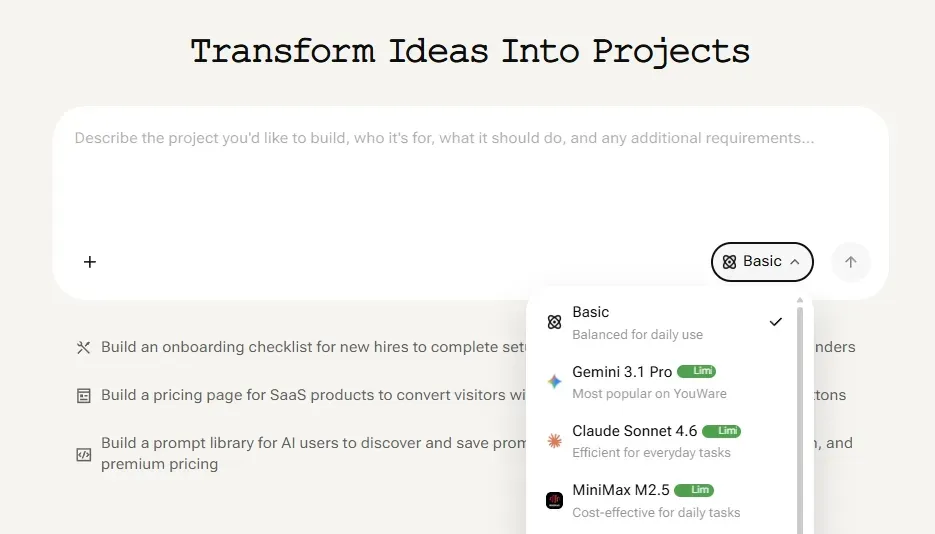
YouWare is an AI app builder designed to generate applications from natural-language prompts. Instead of starting with a visual editor or development environment, builders describe the app they want and the platform generates the interface, logic, and structure automatically.
This prompt-driven workflow reflects the shift toward AI-assisted development. Builders can iterate quickly on generated results rather than configuring every component manually.
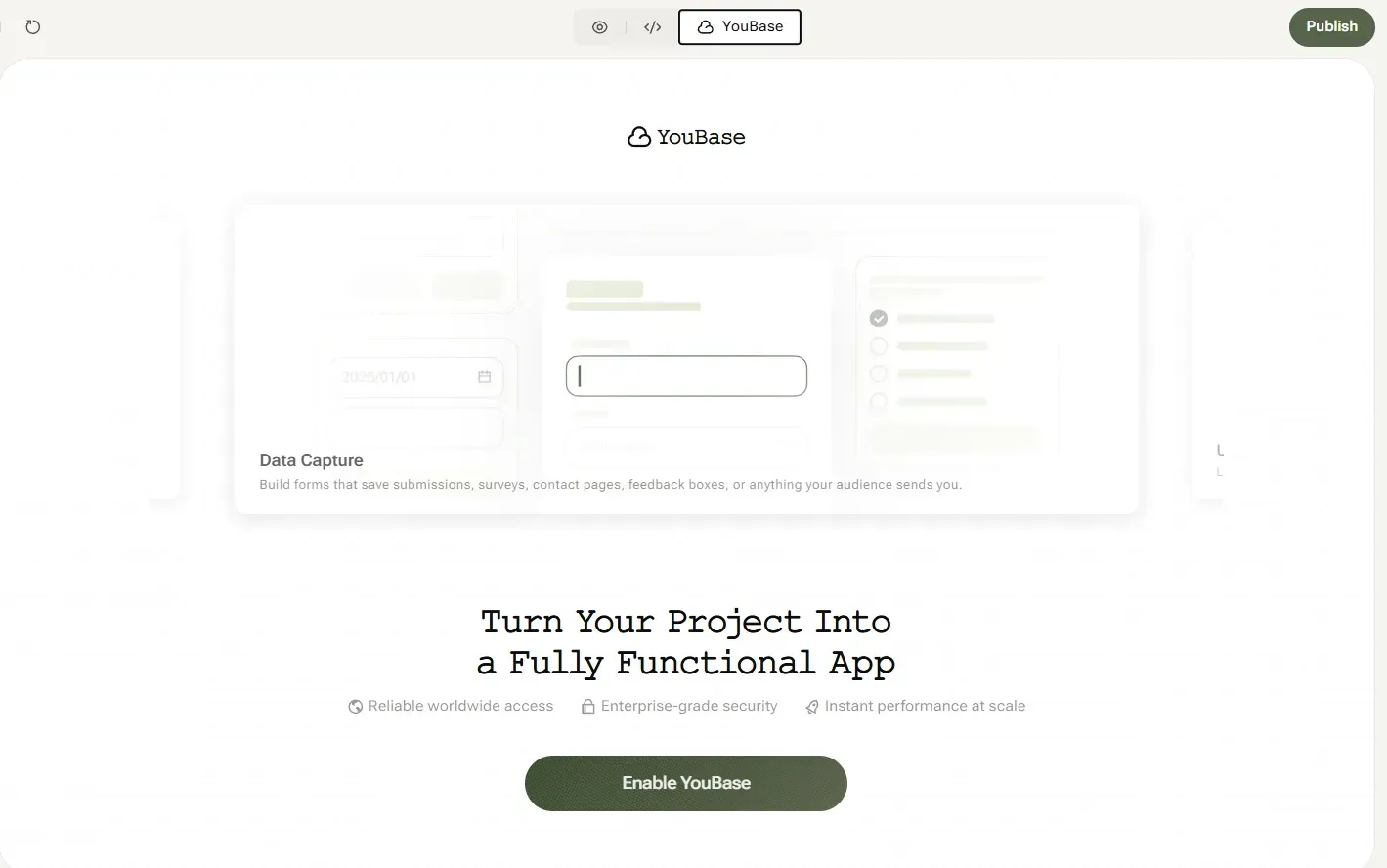
YouWare also includes YouBase, a built-in backend that handles common infrastructure such as databases, authentication, storage, and environment secrets. By managing these pieces automatically, the platform allows founders and creators to focus more on the product idea than the technical setup.
Bubble
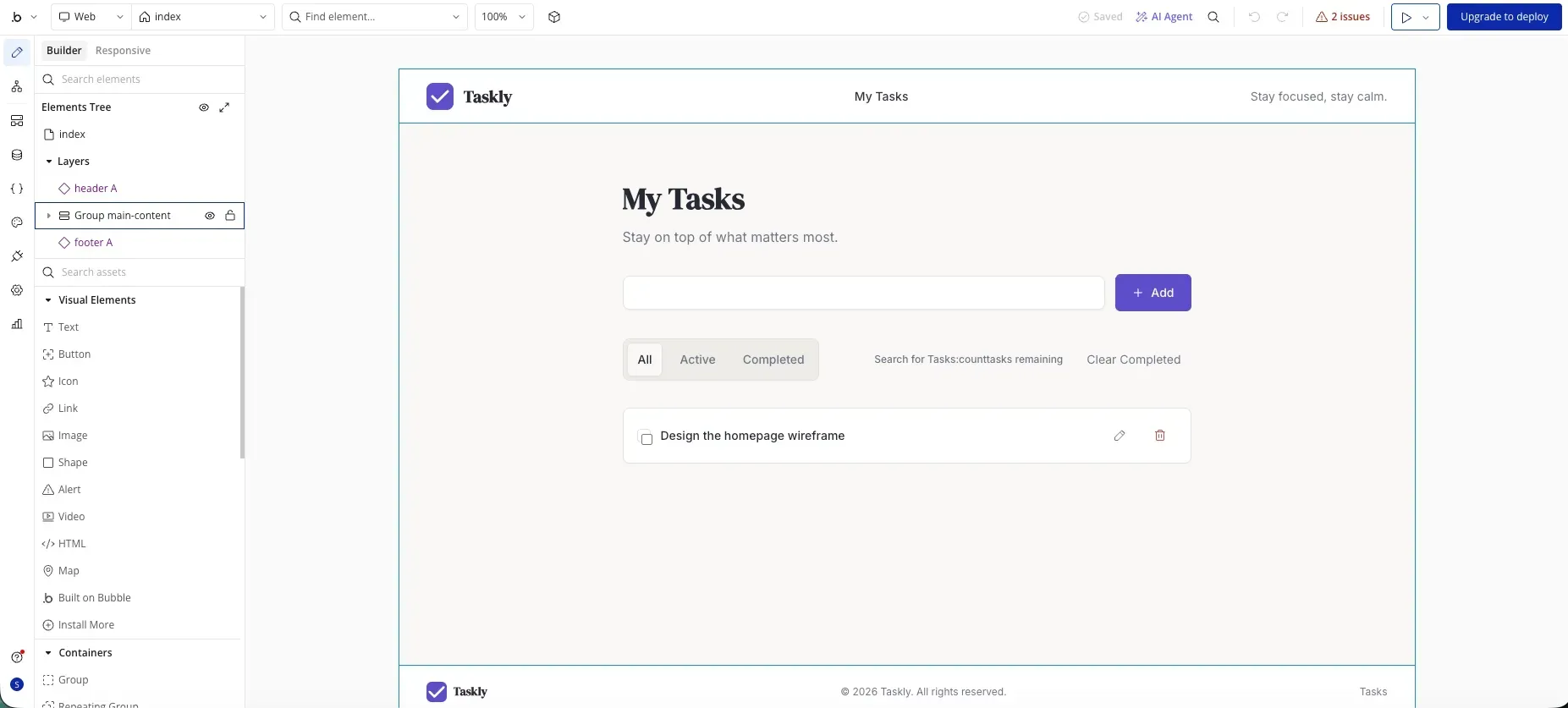
Bubble is a visual development platform that enables users to build web applications without traditional coding. Builders use a drag-and-drop editor to design interfaces, configure data structures, and define application behavior through workflows.
Bubble's architecture is commonly described around three layers: design, data, and logic. The visual editor controls the interface, the built-in database stores structured data, and workflow logic defines how the app responds to events.
Because of this architecture, Bubble can power a wide range of applications, including SaaS products, marketplaces, internal dashboards, and subscription services. Its plugin ecosystem and large community have also made it one of the most established tools in the no-code space.
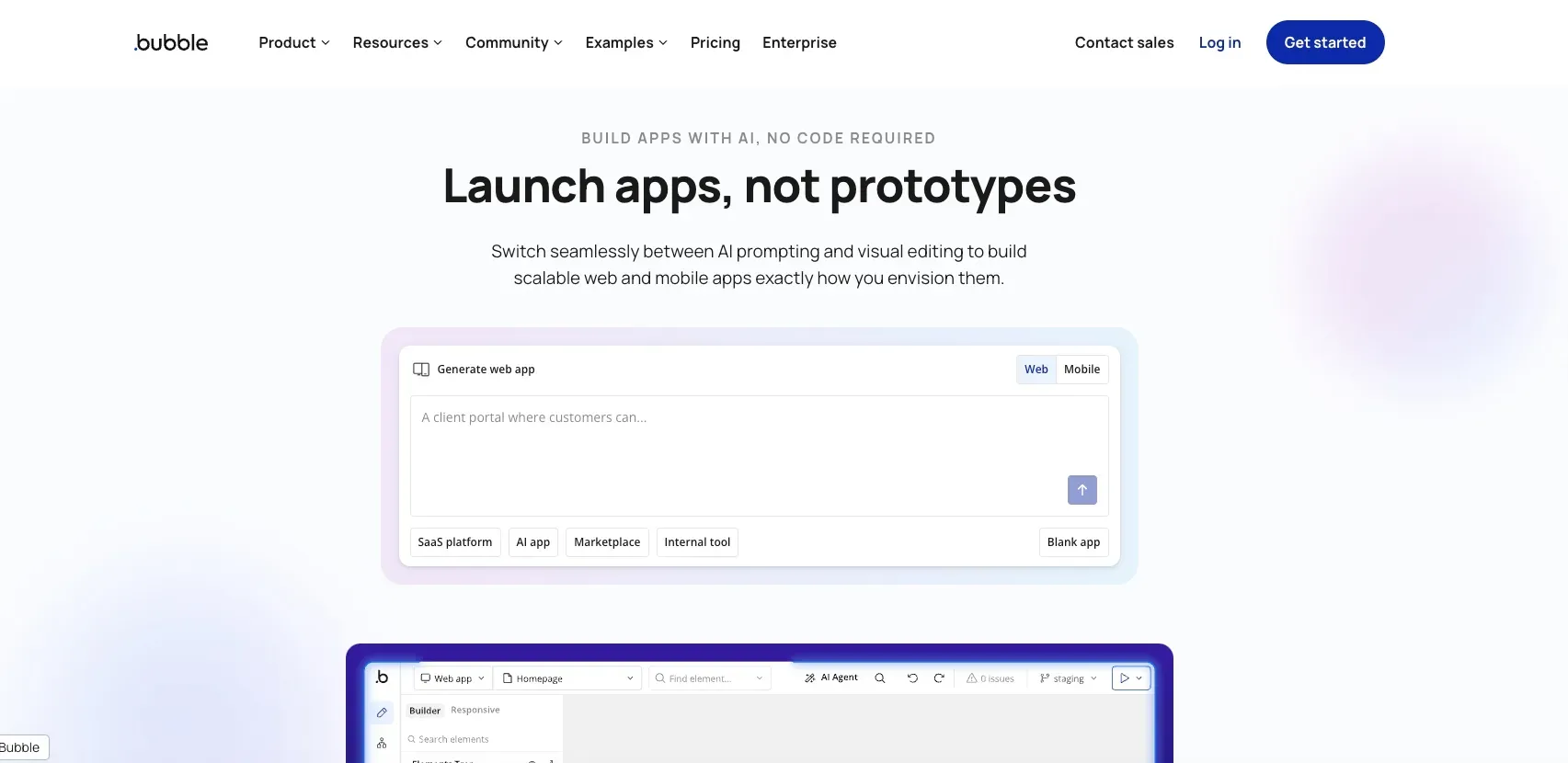
Bubble remains one of the most established visual development platforms in the no-code ecosystem. However, the rise of AI app builders has introduced a different way to create software.
Instead of configuring workflows and databases manually, these tools generate applications directly from prompts. Because of this shift, many builders searching for Bubble alternatives are beginning to explore AI-driven platforms like YouWare.
In practice, the comparison between YouWare and Bubble reflects a broader shift in how people build applications. Bubble focuses on visual workflow configuration, while YouWare focuses on AI-driven app generation that turns ideas into working prototypes much faster.
Although both platforms aim to simplify application development, the experience of building with them is quite different.
The biggest difference lies in how apps are created. With YouWare, builders typically start with an idea expressed in natural language. The platform interprets that description and generates a working application structure automatically — including AI-generated code — allowing rapid experimentation. Bubble follows a visual workflow model. Builders design pages, define data structures, and create logic through a graphical interface. While this avoids traditional coding, users still need to understand how the workflow system operates.
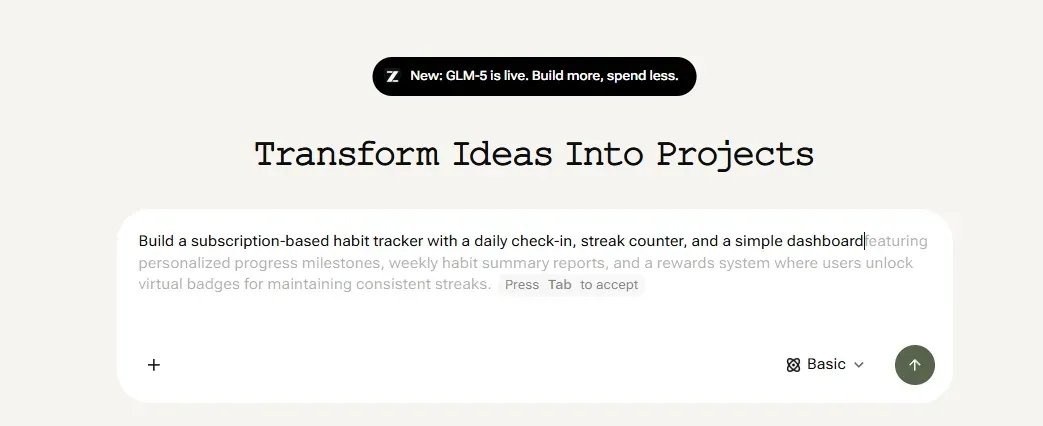
The learning experience also varies. YouWare's prompt-driven workflow allows builders to focus on describing the product rather than learning a complex configuration system. This often lowers the barrier for founders, designers, or non-technical creators. Bubble has a more structured learning curve. Users must understand how workflows, data types, and interface elements interact inside the platform before building larger applications.
Backend infrastructure is handled differently on each platform. YouWare includes a built-in backend called YouBase, which automatically manages databases, authentication, and storage. This allows builders to launch many early-stage applications without setting up external services. Bubble also provides a built-in database and backend workflows, but these elements are configured manually inside the visual editor.
The platforms also differ in how applications are deployed. YouWare supports workflows where builders can export code or integrate external infrastructure, which can offer flexibility as projects evolve. Bubble applications usually run inside the Bubble platform itself. Hosting and runtime are managed within the Bubble ecosystem, simplifying setup but increasing platform dependency.
| Feature | YouWare | Bubble |
|---|---|---|
| Development style | AI-generated apps | Visual workflow builder |
| Backend | Built-in backend (YouBase) | Built-in database + workflows |
| Learning curve | Lower | Medium |
| Customization | Moderate | Very flexible |
| Pricing model | Simple subscription | Workload-based pricing |
| Starting price | Free / paid tiers ($20~/month) |
Pricing models differ between the platforms.
Bubble uses a workload-based pricing model, where cost depends on how many operations and workflows an application executes.
YouWare follows a simpler pricing structure focused on builder usage and AI generation, which can make early-stage costs easier to estimate.
Choosing between the two platforms depends mainly on how you prefer to build applications.
Choose YouWare if
YouWare is a strong option for builders who want to move quickly from idea to working prototype. Its AI-driven workflow is especially useful for founders, designers, and creators who prefer describing a product rather than configuring each piece of infrastructure manually.
This approach works well for testing startup ideas, building quick internal tools, or experimenting with new product concepts. If you want a no-code app builder that still produces real, exportable code, YouWare fits that description.
Choose Bubble if
Bubble is often the better choice for projects that require more structured workflows or complex application logic. Teams comfortable learning a visual development environment can build sophisticated web products without writing code.
Startups building SaaS dashboards, marketplaces, or internal systems often choose Bubble because its workflow engine provides precise control over application behavior.
If your goal is rapid experimentation with AI-generated apps, however, a prompt-driven workflow may be easier to start with.

Turn your product idea into a working app in minutes.
Start building with YouWareIt depends on the builder and the project. YouWare focuses on AI-driven app generation and rapid experimentation, making it a strong choice for founders and creators who want to move from idea to working prototype quickly. Bubble focuses on visual workflow development for structured web applications, giving teams more manual control over logic and data. If speed and simplicity matter most, YouWare is often the better fit. If you need detailed workflow configuration, Bubble may be more suitable.
AI builders and no-code platforms solve similar problems with different approaches. No-code tools like Bubble rely on visual configuration, where users manually design interfaces and define logic through a graphical editor. AI builders like YouWare generate applications directly from prompts, reducing the need for manual setup. Rather than replacing no-code builders entirely, AI-driven tools offer an alternative workflow that prioritizes speed and simplicity over granular visual control.
AI-driven tools such as YouWare often feel easier for beginners because the workflow is prompt-based — you describe what you want and the platform generates it. There is no need to learn a visual logic system or configure database schemas upfront. Bubble offers more structured control but requires learning how workflows, data types, and interface elements interact. For non-technical founders or designers, YouWare's approach typically has a shorter onboarding time.
Yes. Bubble can power complex web applications such as SaaS platforms, marketplaces, and internal tools using its visual workflow engine. Its built-in database, conditional logic, and plugin ecosystem give teams fine-grained control over application behavior. For projects that require detailed workflow configuration and long-term customization, Bubble remains one of the most capable visual development platforms available.
| Free / paid tiers ($59~/month) |