Claude Sonnet 4.6: Build Your MVP This Weekend (No Code)
Claude Sonnet 4.6 for Non-Technical Founders: Build Your MVP This Weekend
YouWare TeamAugust 06, 2026
18 mins read
Key Takeaways
Claude Sonnet 4.6, released February 17, 2026, now gives free users access to near-Opus-level AI coding capabilities—removing the biggest barrier non-technical founders face when launching startups. According to ZDNET, developers preferred Sonnet 4.6 over the previous frontier model Opus 4.5 roughly 60% of the time, with fewer hallucinations and better follow-through on complex tasks. Combined with no-code platforms like YouWare, non-technical founders can now build functional MVPs in a weekend instead of spending $10,000-$50,000 over several months. The democratization of AI coding means your business idea no longer needs to wait for funding, a technical co-founder, or months of learning to code.
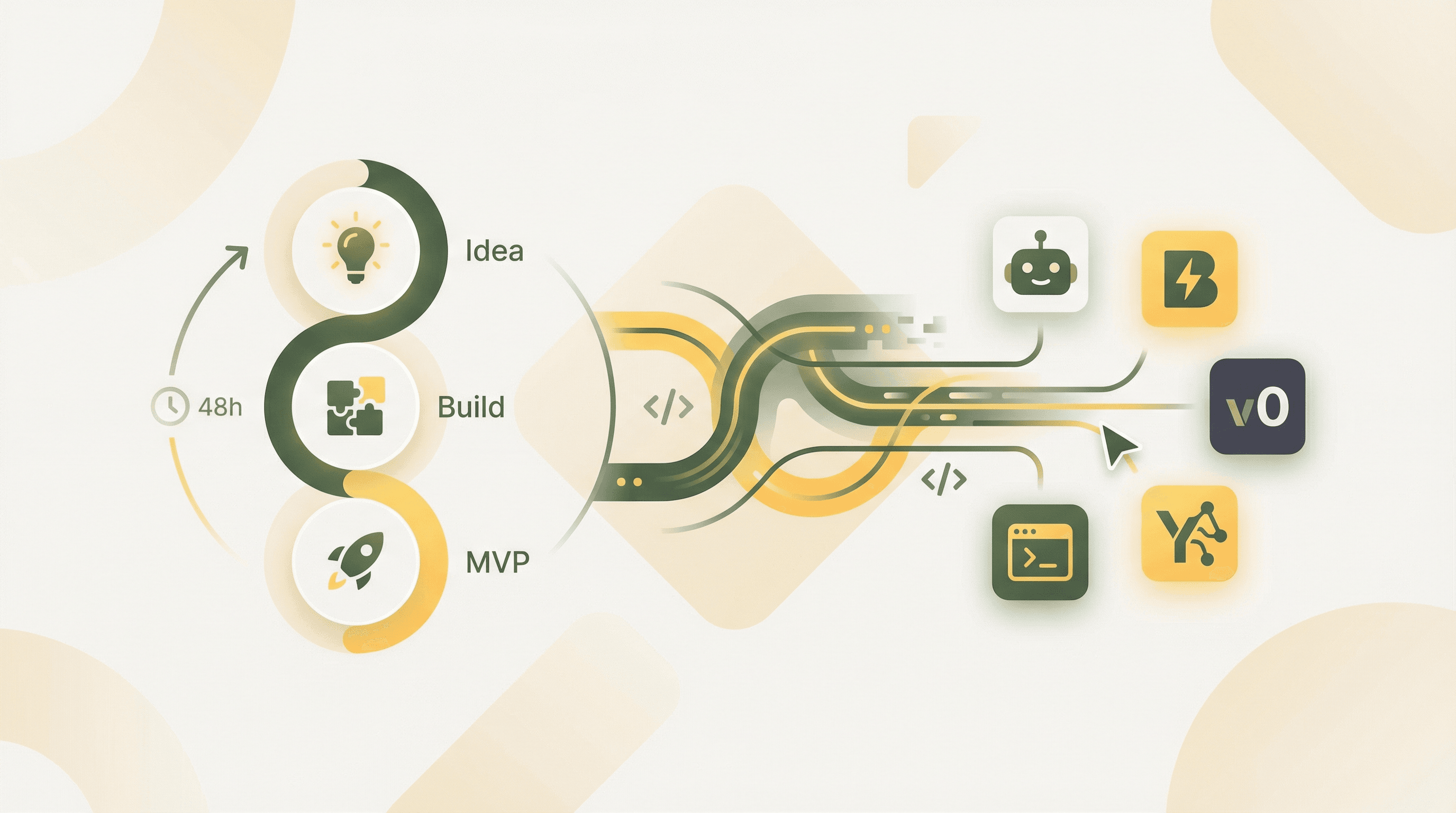
Claude Sonnet 4.6 democratizes near-Opus-level AI coding capabilities, enabling non-technical founders to build MVPs in a weekend
Introduction: The Weekend MVP Revolution
For years, non-technical founders faced an impossible choice: spend tens of thousands of dollars hiring developers, find an elusive technical co-founder, or spend months learning to code while competitors raced ahead. According to CB Insights research, 42% of failed tech startups needed complete platform rebuilds within 18 months, averaging $380,000 in wasted development costs—largely due to lack of technical expertise making early decisions.
That barrier shattered on February 17, 2026. Anthropic released Claude Sonnet 4.6 as the default model for both free and paid users, delivering what CNBC described as "much-improved coding skills" with 70% developer preference over its predecessor. For non-technical founders, this changes everything. YouWare enables you to describe your app idea in plain English and have a working prototype in minutes—not months.
This guide shows you exactly how to leverage Claude Sonnet 4.6 and modern no-code tools to go from idea to functional MVP this weekend, even if you've never written a line of code.
The Coding Barrier is Gone: What Claude Sonnet 4.6 Means for Non-Technical Founders
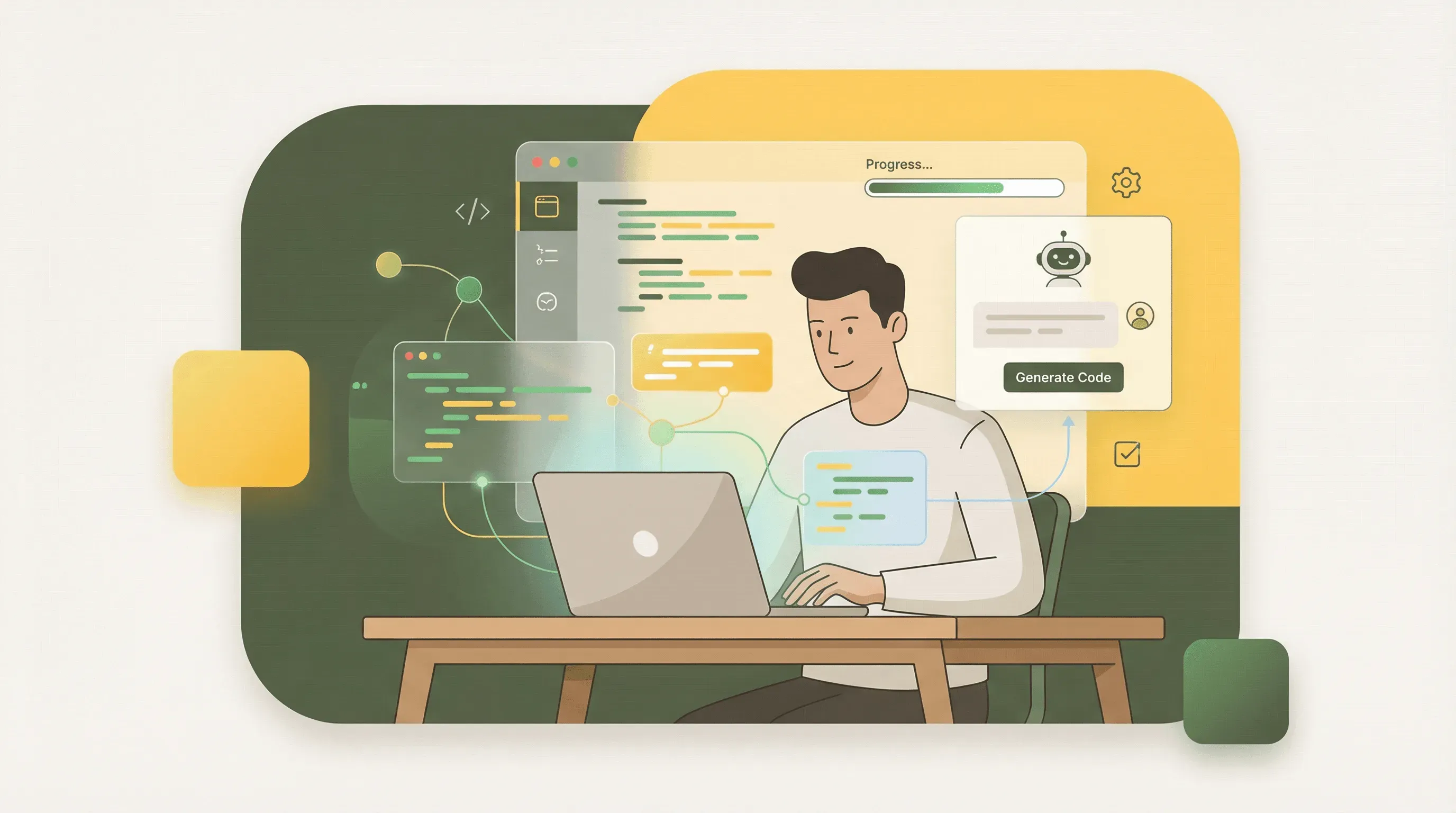
Non-technical founders can now converse with AI to build complete applications without writing code
Claude Sonnet 4.6 represents a fundamental shift in who can build software. Unlike previous AI models that required significant technical knowledge to use effectively, Sonnet 4.6 excels at understanding natural language instructions and translating them into working code with minimal guidance.
According to Mashable, the model features a 1 million token context window (in beta)—large enough to hold entire codebases, long contracts, or dozens of research papers in asingle request. For non-technical founders, this means you can describe your entire application concept, user flows, and business logic in one conversation without the AI losing context or making inconsistent decisions.
The improvements go beyond raw capability. ZDNET reports that Sonnet 4.6 produces fewer false claims of success, fewer hallucinations, and more consistent follow-through on multi-step tasks. When you ask it to build a user authentication system connected to a database, it actually completes the full implementation rather than stopping halfway or generating code that doesn't work together.
Perhaps most importantly, Claude Sonnet 4.6 is now available to free users. According to Claude.com pricing, the Pro plan costs $20/month ($17/month annually) for heavier usage, but the free tier provides meaningful access to these frontier-level capabilities. This democratization means testing your startup idea no longer requires any upfront investment in development resources.
Traditional MVP Development: The $50,000 Problem
Traditional MVP development costs $10,000-$50,000 and takes months—a barrier that AI is eliminating
Understanding what you're avoiding helps appreciate the AI alternative. According to Homenest Software's research, traditional MVP development costs fall into predictable ranges. Simple MVPs typically cost $10,000-$25,000 and take 4-8 weeks when hiring developers. Standard MVPs with more features cost $25,000-$50,000 and take 2-4 months. Complex MVPs can exceed $100,000 and take 6+ months.
These costs don't account for the hidden expenses that sink many startups. Research from EMaster Labs found that the average cost per bad tech hire for startups with 10-50 employees reaches $340,000, and 67% of failed startups cite hiring mistakes as a contributing factor. When you don't have technical expertise to evaluate developers, you're essentially gambling with your runway.
The talent shortage makes matters worse. According to Innoloft, by 2030 over 85 million jobs could go unfilled due to lack of skilled professionals, resulting in an $8.5 trillion talent shortage globally. Finding affordable, reliable developers is increasingly difficult even for well-funded startups.
The statistics paint a clear picture of why technical expertise matters. According to SEO Sandwich's analysis of startup data, startups with technical co-founders have a 23% higher success rate compared to those without technical leadership. Meanwhile, data from Stripe shows that 90% of startups fail overall, with solo founders achieving only ~30% success rate while co-founder teams with complementary skills achieve 50-70%.
The traditional path forces non-technical founders into a no-win scenario: delay launch while searching for a technical co-founder, burn through runway on developers whose work you can't evaluate, or build something yourself over months of painful learning. AI changes this equation entirely.
AI-Assisted Development: 55% Faster, Accessible to Everyone
AI coding assistants help developers complete tasks 55% faster while producing higher-quality code
The productivity gains from AI coding assistance are now well-documented. According to GitHub's research, developers using AI coding assistants complete tasks 55% faster—GitHub Copilot users finished a benchmark task in 1 hour 11 minutes compared to 2 hours 41 minutes for non-users.
A UK government trial found even more dramatic results: developers saved approximately one hour per day using AI coding assistants, equating to about 28 working days annually. For a non-technical founder learning to build, these time savings mean the difference between launching in weeks versus launching in a weekend.
Quality improvements match the speed gains. According to GitHub's code quality research, code written with AI assistants is 53.2% more likely to pass all unit tests, with improved readability and maintainability. The same study found 85% of developers feel more confident in their code when using AI assistants, and 88% experience a greater sense of flow while working.
These statistics come from professional developers. For non-technical founders, the impact is even more pronounced—AI transforms impossible tasks into manageable ones. You're not just coding 55% faster; you're coding at all when you previously couldn't.
The adoption curve reflects this value. According to Anthropic, Claude Code's annualized revenue run rate exceeded $2.5 billion by February 2026, with enterprise subscriptions quadrupling since the start of the year. This isn't experimental technology—it's become essential infrastructure for software development.
Weekend MVP Success Stories: From Idea to Revenue in 48 Hours
Real startups like Cuure went from weekend MVP to $100,000/month revenue using no-code tools
The weekend MVP isn't theoretical—it's happening repeatedly across the startup ecosystem. According to Maker Thrive's research, Cuure's founders built an MVP in one weekend using Bubble, then scaled to $100,000/month revenue and raised over €1 million in funding. They proved product-market fit before investing significant resources.
Formula Bot offers another instructive example. According to Ellenox, the tool was built entirely on Bubble as a weekend experiment, went viral within weeks attracting tens of thousands of users, and only required custom infrastructure after validating massive demand. The founders tested their hypothesis with almost zero upfront investment.
These success stories share common elements. The founders focused on solving one problem well rather than building feature-complete products. They used no-code and AI tools to eliminate technical barriers. They launched quickly to gather real user feedback rather than perfecting in isolation. They scaled infrastructure only after proving demand.
The no-code market has matured to support these outcomes. According to Gartner research via Kissflow, by 2025, 70% of new applications will use low-code or no-code platforms—up from less than 25% in 2020. Forrester projects the low-code/no-code market will approach $50 billion by 2028, growing 21% annually from $13.2 billion in 2023.
This isn't a niche approach anymore—it's becoming the default way to build software.
YouWare: The Complete Stack for Non-Technical Founders
YouWare combines AI-powered development with visual editing and built-in backend infrastructure
YouWare enables non-technical founders to go from idea to live application in minutes using natural language prompts. You describe what you want to build—"Create a recipe sharing app with search, user profiles, and save favorites"—and YouWare generates a complete web application in approximately 30 seconds. No coding required at any step.
The platform combines several capabilities that traditionally required different tools and technical expertise. AI-powered Code Mode lets you modify your application through natural language: "Add a dark mode toggle" or "Connect this form to a database." Visual Editing mode allows precise UI modifications without consuming AI credits—you click any element to edit text, images, colors, or layout. For founders who want to learn or customize further, the full code editor provides access to generated source code.
YouBase, the built-in backend infrastructure, eliminates the complexity of setting up servers and databases. The Database module creates tables and stores data through natural language prompts, with a Time Travel feature that lets you restore to any previous state if something goes wrong. The Users & Authentication module provides Email, Google OAuth, and Temporary Account login with zero backend setup—essential for any MVP that needs user accounts. The Storage module handles file uploads, and the Secrets module securely stores API keys for integrations.
MCP integrations extend YouWare's capabilities without complex code. Connect Figma to convert designs to pixel-perfect code section by section. Link GitHub for version control and AI-aware code generation that understands your existing codebase. Pull dynamic content from Notion. Integrate Supabase for more complex database needs. Add YouTube embeds, Google Maps, and dozens of other services through simple connections.
Publishing takes one click to deploy with a shareable URL (yourproject.youware.app). Pro and Ultra plans offer custom domains, data export, and advanced features for production-ready MVPs. The Remix feature lets you copy any public project as a starting point, modify it through natural language, and publish your customized version—the original remains unchanged.
For non-technical founders, YouWare represents the entire stack: AI development, visual editing, database, authentication, file storage, third-party integrations, and hosting—all accessible through plain English.
Step-by-Step: Building Your First MVP with AI + No-Code Tools
Building an MVP follows a clear workflow: ideate, build with AI, launch, and iterate based on user feedback
Building a weekend MVP requires focused execution across four phases. Each phase has clear deliverables and decision points.
Saturday Morning: Validate and Define (2-3 hours)
Start by writing a single sentence describing what your MVP does and who it helps. "A recipe sharing app that lets home cooks save and search recipes from friends" is better than "A social platform for food." Specificity drives better AI outputs and clearer user value.
List the three core features your MVP must have to test your hypothesis. For the recipe app: save recipes, search recipes, follow friends. Everything else—recommendations, meal planning, grocery lists—can wait until you've validated demand. The goal is learning, not launching a complete product.
Sketch rough wireframes on paper or in a simple tool. You don't need design skills—stick figures and boxes work fine. This helps you think through user flow and gives the AI clearer guidance when building.
Saturday Afternoon: Build Core Features (4-6 hours)
Open YouWare and describe your application in the project creation prompt. Include your core features and target user: "Create a recipe sharing app where home cooks can save recipes with ingredients and instructions, search by ingredient or name, and follow friends to see their recipes."
The AI generates your initial application in about 30 seconds. Review what it built and use natural language prompts to refine: "Make the recipe cards larger with photos" or "Add a search bar at the top of the main page."
Enable YouBase modules as needed. For user accounts, enable Users & Authentication and choose your login methods (Email is usually sufficient for MVPs). For storing recipes, enable Database and describe your data structure: "Create a recipes table with title, ingredients, instructions, photo, and author."
Connect your UI to the database: "When a user saves a recipe, store it in the database. Display all recipes on the home page." Test the flow by creating sample recipes and verifying they appear correctly.
Sunday Morning: Polish and Integrate (3-4 hours)
Use Visual Editing mode to refine your design without using AI credits. Adjust colors, spacing, fonts, and layout by clicking elements directly. This is where your paper wireframes guide improvements.
Generate images and content using Chat Mode. If you need recipe photos or icons, describe what you want and YouWare creates them. Assets automatically save to your project for reuse.
Add any necessary integrations through MCP connections. If you have Figma designs, convert them section by section. If you want to pull content from Notion, set up that connection. Keep integrations minimal for your MVP—you can add more later.
Test every user flow. Create an account, add content, search for it, log out, log back in. Find and fix issues before real users encounter them.
Sunday Afternoon: Launch and Learn (2-3 hours)
Click Publish to deploy your MVP with a shareable URL. Write a brief description of what you built and who it's for. Share the link with 5-10 people in your target audience—friends, online communities, or potential users you've identified.
Prepare three questions to ask early users. What did you expect that wasn't there? What was confusing? Would you use this again? Their answers guide your next iteration.
Document what you learned and what you'd change. This isn't the end—it's the first of many weekend iterations that refine your product toward market fit.
Common MVP Mistakes and How AI Helps You Avoid Them
Non-technical founders consistently make predictable mistakes when building MVPs. Understanding these patterns helps you avoid them.
Building too much before testing remains the most common failure mode. Founders spend months adding features nobody asked for while delaying the feedback that would reveal what users actually want. AI-assisted building inverts this pattern—you can build and launch so quickly that there's no temptation to perfect before testing. Build the minimum, launch, learn, iterate.
Choosing the wrong technology costs many startups their runway. According to CB Insights data, 42% of failed tech startups needed complete platform rebuilds averaging $380,000. Non-technical founders can't evaluate whether developers chose appropriate tools. No-code platforms eliminate this risk by abstracting technology choices—you describe what you want, and the platform handles implementation using proven approaches.
Underestimating backend complexity surprises founders who focus on visible features. User authentication, database design, file storage, and API security each present pitfalls that can derail projects. YouWare's YouBase handles this infrastructure through natural language, with sensible defaults and security built in. You get production-ready backend capabilities without making decisions you're not qualified to make.
Losing momentum to perfectionism kills more startups than bad products. When building is slow and expensive, founders feel pressure to get everything right before launch. AI-assisted development costs so little per iteration that perfection becomesunnecessary—just ship and improve. The weekend MVP mindset embraces "good enough to learn from" over "ready for scale."
Ignoring user feedback compounds other mistakes. If you don't talk to users quickly, you can't course-correct before resources run out. Fast building enables fast feedback loops. You can incorporate user suggestions the same day you receive them, testing whether changes improve outcomes before committing significant effort.
From Weekend Project to Real Business: Scaling Your AI-Built MVP
Weekend prototypes can scale into full businesses with proper infrastructure and growth strategies
Your weekend MVP isn't the end—it's a validation checkpoint. What comes next depends on what you learn from early users.
Signs you've found something worth pursuing include users returning without prompting, users asking for features (not just accepting what exists), users telling others about your product, and users willing to pay or commit time. Any of these signals suggests your hypothesis has merit and deserves continued investment.
Signs you need to pivot include users trying once and never returning, confusion about what the product does or who it's for, and feedback suggesting a different problem matters more than the one you're solving. Pivoting quickly is a feature, not a failure—you've learned valuable information at minimal cost.
Scaling technical infrastructure becomes necessary when you have proven demand. YouWare Pro and Ultra plans offer data export, database restore capabilities, and custom domains for production deployment. If you need capabilities beyond what no-code provides, you can access and export your code for further development—you're not locked in.
Building a team looks different when you can ship quickly yourself. Instead of desperately seeking a technical co-founder before you can test ideas, you can validate multiple concepts and approach technical talent with evidence of traction. "I built this MVP that has 500 active users" is a more compelling pitch than "I have an idea I can't execute."
Continuing to iterate matters more than any single feature decision. The companies that win are rarely first—they're the ones who learn fastest. AI-assisted development compresses learning cycles from months to days. Use that advantage to out-iterate competitors who are still debating what to build.
FAQ
Can I really build a working app in a weekend with no coding experience?
Yes, if you scope appropriately and use modern tools. YouWare generates complete web applications from natural language descriptions in approximately 30 seconds, with built-in database, authentication, and hosting. The limitation isn't time or skill—it's your willingness to launch something simple and iterate based on real feedback rather than building toward an imagined perfect product.
How does Claude Sonnet 4.6 differ from previous AI coding assistants?
According to ZDNET, developers preferred Sonnet 4.6 over the previous frontier model Opus 4.5 roughly 60% of the time, citing fewer false claims of success, fewer hallucinations, and better follow-through on multi-step tasks. The 1 million token context window means it can understand your entire project at once, and it's now available to free users—removing any cost barrier to testing its capabilities.
What happens when my MVP needs features beyond what no-code can provide?
You have several paths forward. YouWare provides full code editor access, so you (or a developer you hire) can customize the generated code. YouBase offers data export for migration to other platforms. The goal of a weekend MVP isn't building your final product—it's validating whether your idea deserves further investment. By the time you need custom development, you'll have user feedback and possibly revenue to guide those decisions.
How much does it cost to build and host an MVP with these tools?
YouWare offers a free tier for project creation and basic editing. Pro plans start at $20/month with YouBase access including database, authentication, and storage. Claude Sonnet 4.6 is available free with usage limits, or through Claude Pro at $20/month for heavier usage. Compare this to traditional MVP development costs of $10,000-$50,000 over months—AI-assisted building reduces both time and money by orders of magnitude.
What types of MVPs work best for weekend building?
Web applications with clear user flows work best: tools that solve specific problems, content platforms with simple create/read/update workflows, marketplaces connecting two user types, or SaaS products automating manual processes. Complex mobile apps, hardware integrations, or products requiring regulatory approval need longer timelines. Focus on "can I validate the core hypothesis with a web interface?"—you can always build mobile apps later if web testing proves demand.
Conclusion
The gap between having a startup idea and building a working product has never been smaller. Claude Sonnet 4.6 brings frontier-level AI coding to free users, eliminating the technical barrier that stopped countless non-technical founders from launching. Combined with platforms like YouWare that handle the full stack—AI development, visual editing, database, authentication, hosting—through natural language, you can test your business hypothesis this weekend instead of spending months and tens of thousands of dollars.
The weekend MVP approach isn't about building perfect products. It's about learning faster than competitors, validating ideas before they consume your runway, and iterating toward product-market fit with real user feedback. Every successful startup began with something simple that worked well enough to learn from.
Your idea has waited long enough. The tools exist. The barrier is gone. What you build this weekend might become the business that changes your life.



 Claude Sonnet 4.6 democratizes near-Opus-level AI coding capabilities, enabling non-technical founders to build MVPs in a weekend