Digital Business Card App for MWC 2026: Build & Network
How to Create a Digital Business Card App for MWC 2026 Networking
YouWare TeamAugust 06, 2026
14 mins read
Key Takeaways
MWC Barcelona 2026 (March 2-5) will attract over 109,000 attendees from 205 countries, making digital networking tools essential for maximizing connections. Traditional paper business cards fail at scale events—according to UPrinting, 88% are discarded within one week. Digital business card apps deliver 35% higher follow-up rates and enable instant CRM integration. While custom app development costs $40,000-$300,000, no-code platforms like YouWare let you build a fully functional digital business card app in approximately 30 seconds using natural language prompts.
Digital business card app displayed on smartphone at a tech conference setting
Why MWC 2026 Demands a Digital Networking Strategy
MWC Barcelona represents the world's largest mobile industry gathering, and the 2026 edition promises unprecedented networking opportunities. According to the GSMA's official report, MWC 2025 attracted 109,000 attendees from 205 countries, with 2,900+ exhibitors generating €561 million in economic impact for Barcelona. The 2026 event, scheduled for March 2-5, will focus on transformative themes including AI 4 Enterprise, AI Nexus, ConnectAI, and Intelligent Infrastructure.
What makes MWC particularly valuable for networking is the caliber of attendees. The GSMA reports that 21% of participants hold C-suite positions, while 50% are director level or above. Additionally, 56% represent industries adjacent to the mobile ecosystem, creating cross-sector collaboration opportunities. The 4YFN startup program alone hosted over 1,000 startups and 900 investors with €60 billion in collective funds during 2025.
At this scale, traditional networking approaches simply cannot keep pace. Walking the exhibition floors, attending keynotes, and participating in networking sessions means encountering dozens of potential contacts daily. Paper business cards create friction—fumbling through pockets, running out of cards, and hoping someone actually follows up. A digital solution eliminates these bottlenecks entirely, enabling instant contact exchange via QR code or NFC tap, automatic organization, and seamless follow-up tracking.
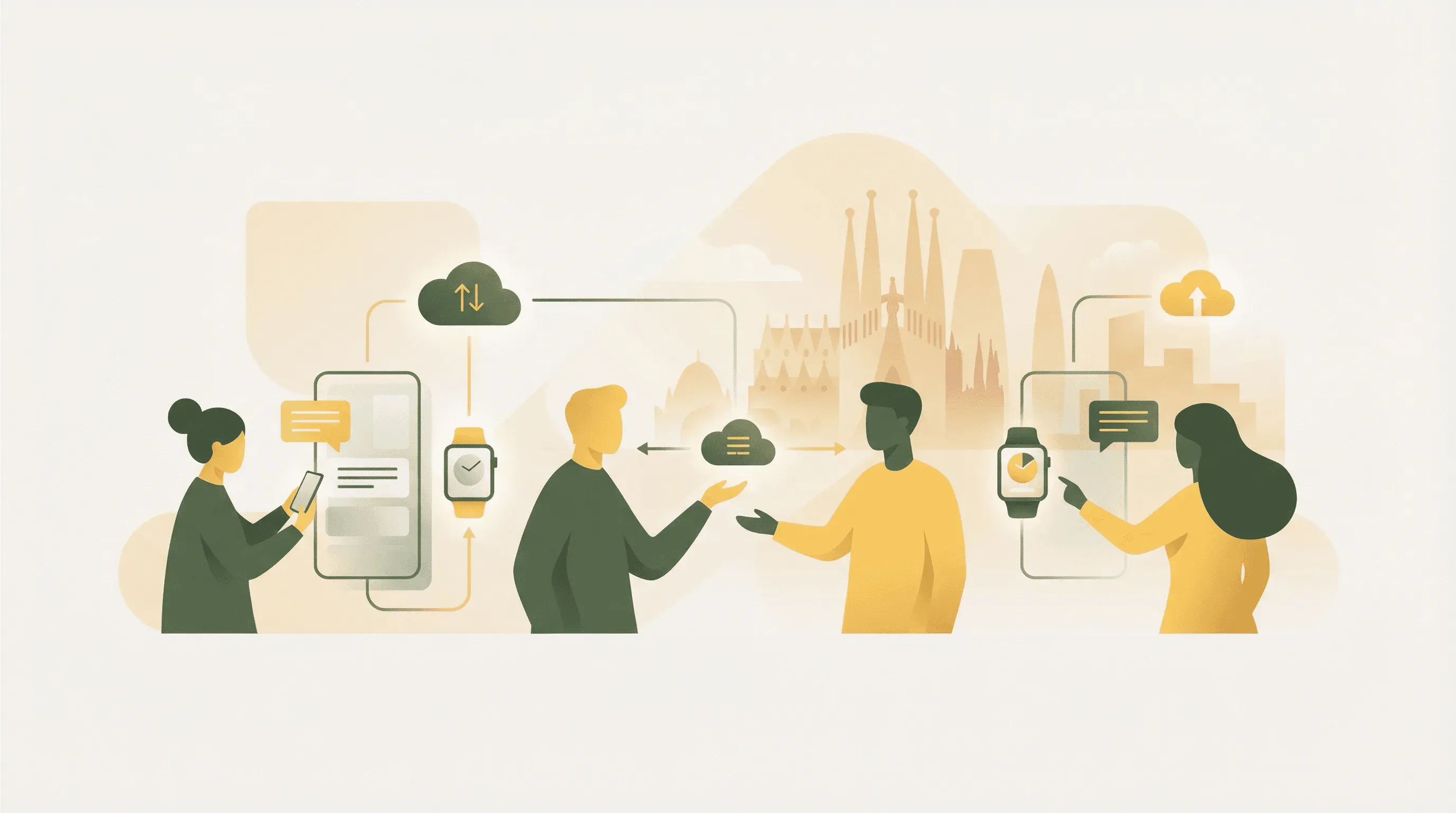
Professionals networking at a tech conference in Barcelona, exchanging digital contacts
The Environmental and Practical Case Against Paper Cards
The sustainability argument for digital business cards has become impossible to ignore. According to Wazzl's environmental analysis, approximately 7.2 million trees are cut down annually to produce paper business cards globally—trees that could otherwise absorb 70,000 tons of CO₂. Meanwhile, UPrinting research reveals that 27 million business cards are printed and circulated daily worldwide.
The waste problem extends beyond production. That same research shows 88% of paper business cards end up discarded within one week of exchange. Only 12% are retained long enough to potentially generate a follow-up conversation. For sustainability-conscious professionals attending MWC 2026—where environmental responsibility is increasingly part of corporate identity—paper cards send the wrong message about your values and priorities.
Digital business cards solve the retention problem through persistence and accessibility. When you share a digital card, the recipient gains a permanent, searchable record that syncs across their devices. They can access your contact information weeks or months later without digging through drawers or briefcases. According to Kado Networks, professionals using digital business cards report 35% higher follow-up rates compared to traditional paper exchanges.
Building Your Digital Business Card App with YouWare
Custom digital business card app development traditionally requires significant investment. According to industry analysis, building a feature-rich application costs between $40,000 and $300,000 depending on complexity, timeline, and feature requirements. This places custom solutions out of reach for individual professionals, small businesses, and startups preparing for events like MWC 2026.
YouWare fundamentally changes this equation by enabling anyone to build a complete digital business card application through natural language prompts—no coding required. You describe what you want, and YouWare generates a fully functional web application in approximately 30 seconds. The platform handles frontend interfaces, backend infrastructure, database storage, and user authentication automatically.
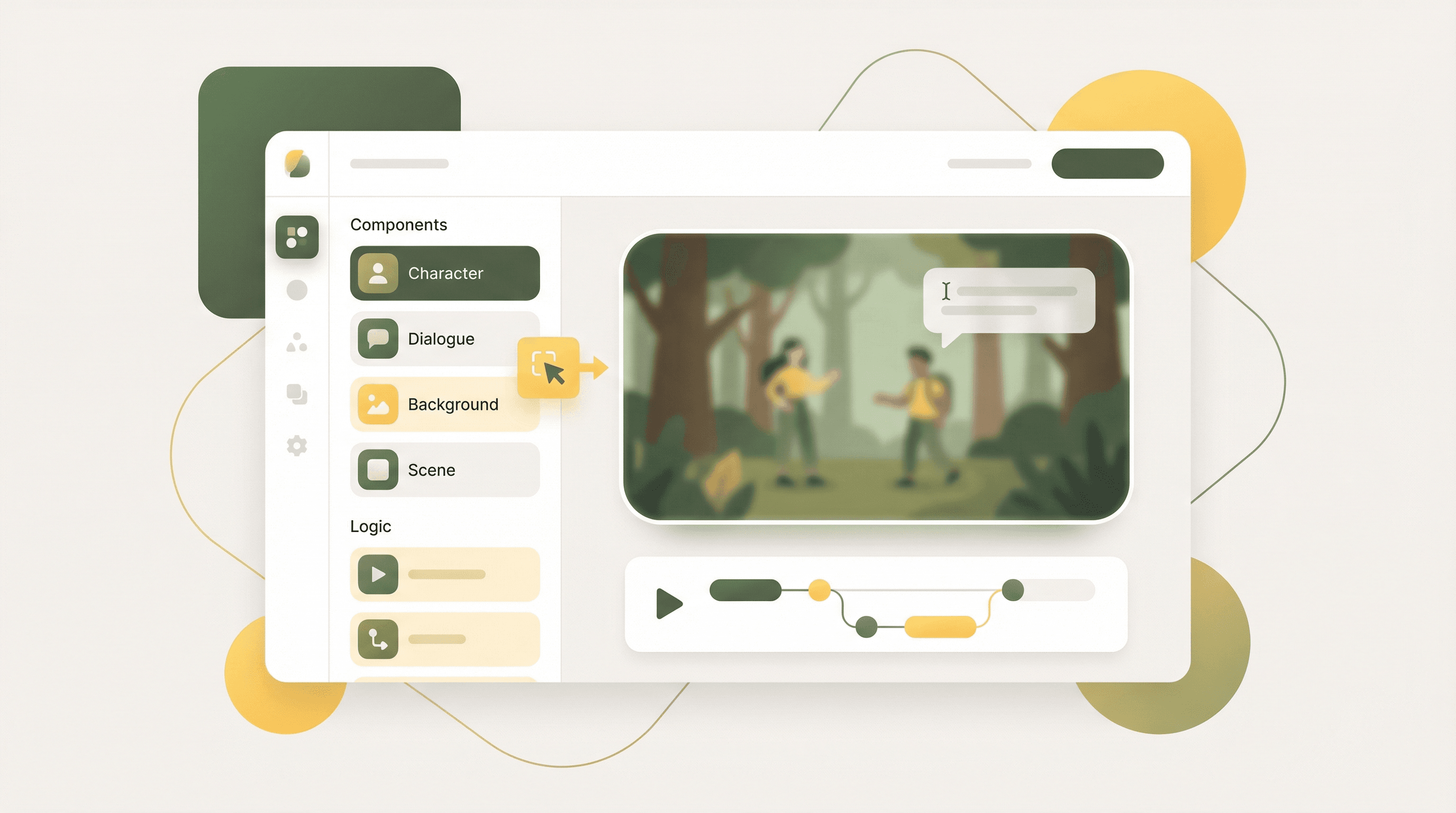
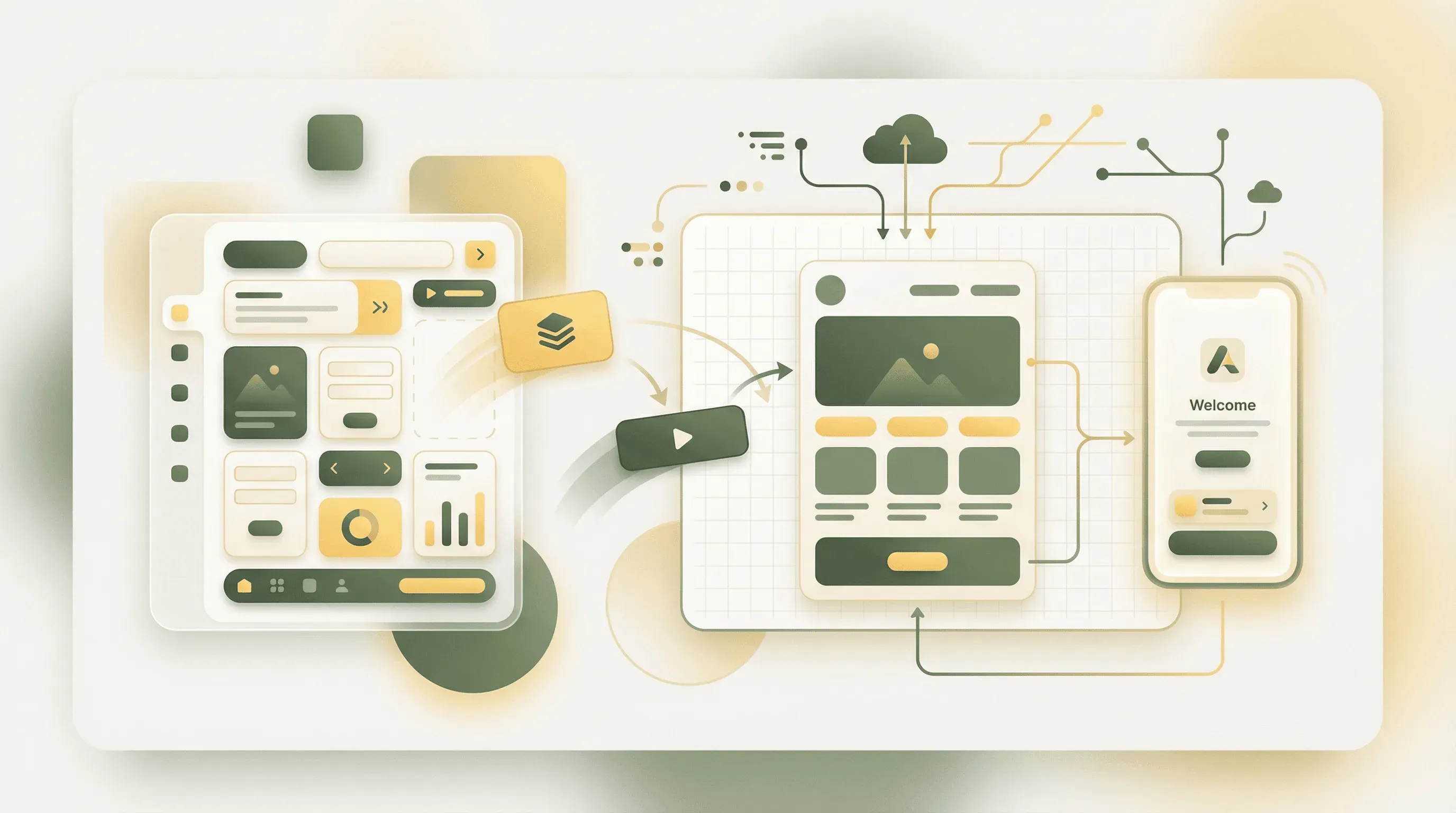
No-code visual interface for building apps with drag-and-drop components
Step-by-Step: Creating Your App
The creation process begins with a simple prompt. You might say: "Create a digital business card app with QR code sharing, contact form, and the ability to save connections to a database." YouWare interprets this request and generates the complete application structure, including responsive design optimized for mobile devices—essential for conference floor usage.
Once the initial generation completes, you refine through conversation. Request specific changes like "Add my LinkedIn profile to the card" or "Change the color scheme to match my company branding." YouWare's visual editing mode allows point-and-click adjustments for precise control over spacing, typography, and layout without touching code.
For users who want granular control, YouWare provides full source code access. You can edit HTML, CSS, and JavaScript directly while the AI assists with syntax and implementation. This hybrid approach means technical users can customize extensively while non-technical users achieve professional results through natural language alone.
Database Setup for Contact Management
Effective networking at MWC 2026 requires more than just sharing your information—you need to capture and organize the contacts you receive. YouWare's YouBase Database module provides persistent structured storage through simple prompts. Describe your data needs conversationally: "Create a database table for contacts with fields for name, company, role, email, phone, LinkedIn URL, and notes about our conversation."
YouBase handles the technical implementation automatically, creating properly structured tables with appropriate data types. The system includes pagination for browsing large contact lists, search functionality, and export capabilities for backing up your networking data. The Time Travel feature allows database restoration to any previous state, protecting valuable contact information from accidental deletion.
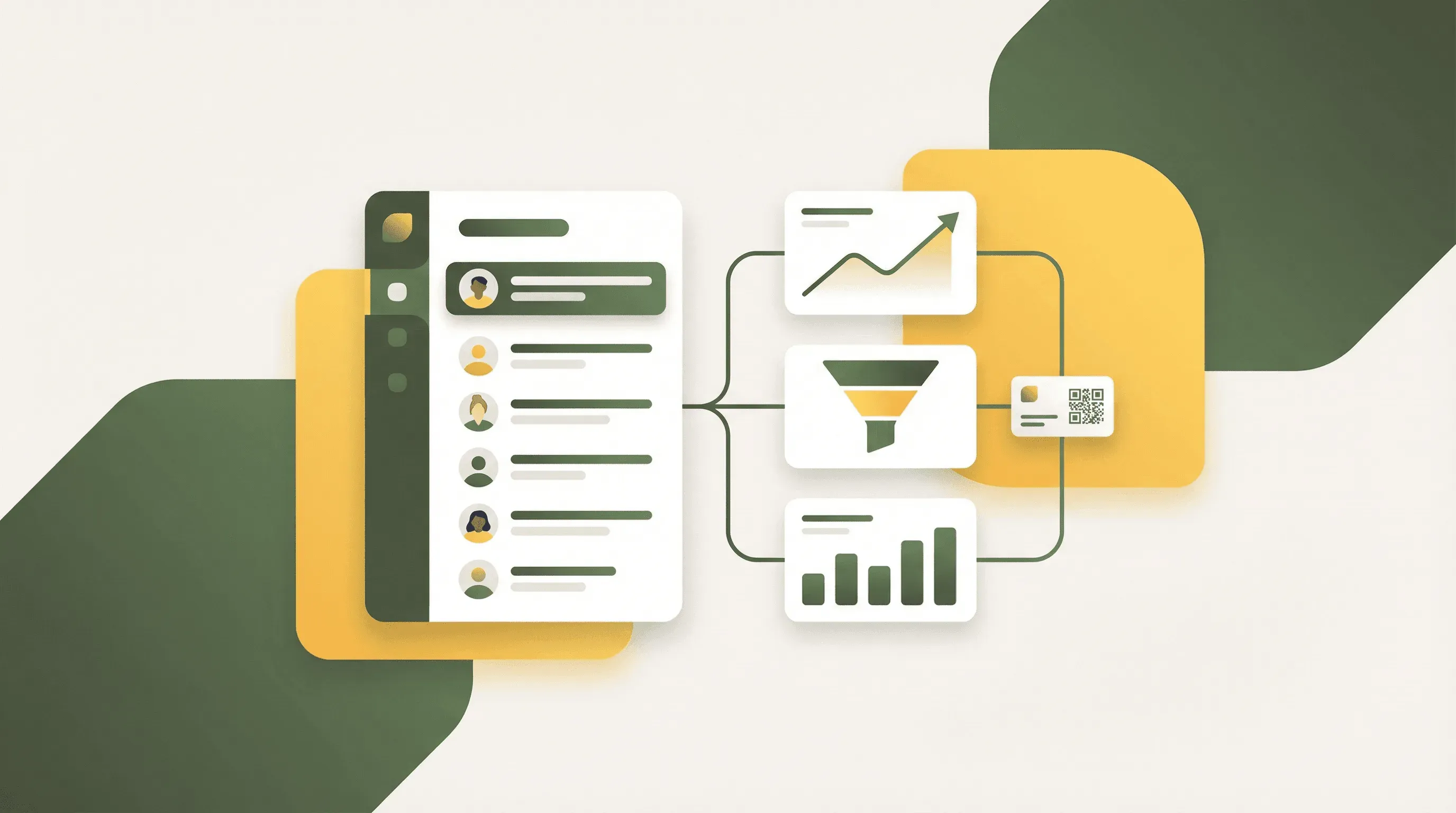
Contact database dashboard with lead tracking and networking analytics
For post-conference follow-up, database integration proves invaluable. According to NexaLink's networking research, following up within 24 hours increases the likelihood of converting connections into meaningful relationships by 7x. With your contacts organized in YouBase, you can query specific segments—perhaps everyone from a particular company or industry—and execute targeted follow-up campaigns.
The Mobilo Card Report reveals current follow-up preferences: 81.5% of professionals prefer email, 12.5% use LinkedIn, and only 1% leverage CRM systems. By building your own app with integrated database functionality, you gain the organizational benefits of CRM without the complexity or cost of enterprise platforms.
Adding User Authentication for Personalized Profiles
If you're building a digital business card solution for a team attending MWC 2026, user authentication becomes essential. YouWare's YouBase Users & Authentication module implements login functionality without backend development. Enable the module and configure your preferred authentication methods: email login with password management, Google OAuth for frictionless access, or temporary accounts for quick demos.
The user management dashboard provides analytics on account creation and usage patterns. For team deployments, administrators can block or unblock user access and monitor adoption. Each team member gets their own profile with personalized card information while sharing a consistent company branding template.
Authentication also enables advanced features like contact synchronization across devices. A salesperson can capture leads on their phone during exhibition hours, then access the same data from their laptop for evening follow-up emails. The system maintains data isolation between users while enabling aggregate analytics for team performance tracking.
QR Codes vs NFC: Choosing Your Sharing Technology
Digital business cards primarily rely on two sharing technologies, each with distinct advantages for MWC 2026 networking scenarios.
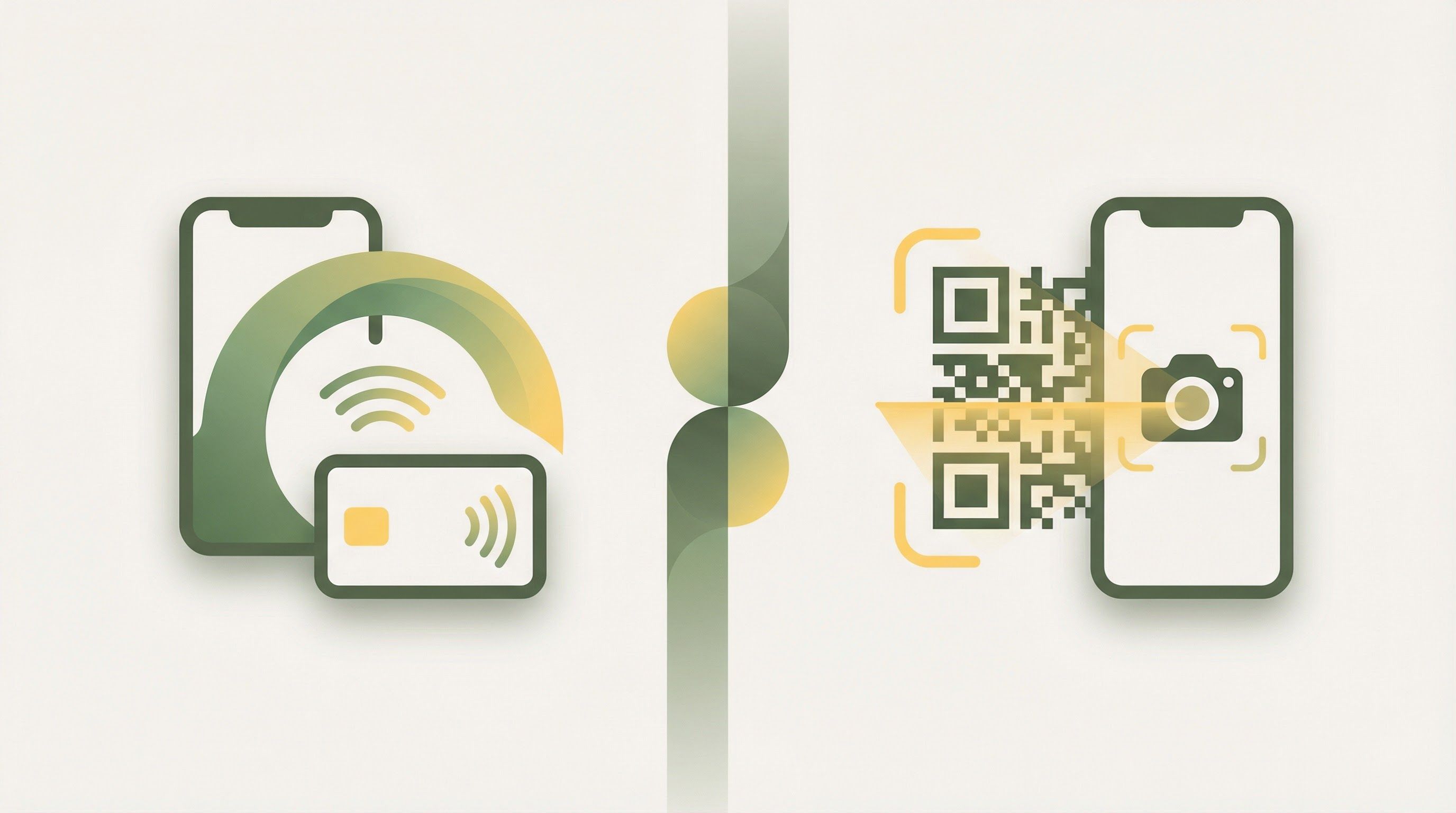
Comparison of NFC tap-to-share versus QR code scanning for contact exchange
QR codes work universally across all smartphones with cameras—which means virtually every attendee can receive your information. The recipient simply opens their camera app, points at the code, and taps the notification to save your contact. No app installation required on their end. According to the vCard specification, QR codes can encode complete contact information in the standardized VCF format that imports directly into phone contacts.
NFC (Near Field Communication) enables tap-to-share functionality where two devices physically touch to exchange data. The experience feels more personal and memorable—a brief physical interaction that reinforces the human connection. However, NFC requires compatible hardware on both ends, and some phone models have NFC disabled by default or positioned in non-obvious locations.
For MWC 2026, the optimal strategy combines both approaches. Display a QR code prominently on your digital card's screen share view, while also encoding your information on an NFC-enabled physical card or phone case. This ensures you can connect with anyone regardless of their device capabilities or technical comfort level.
Design Best Practices for Professional Digital Cards
Your digital business card represents your professional identity, and design decisions significantly impact first impressions during MWC networking. According to StrongQRCode's 2025 guidelines, effective digital cards balance information density with visual clarity.
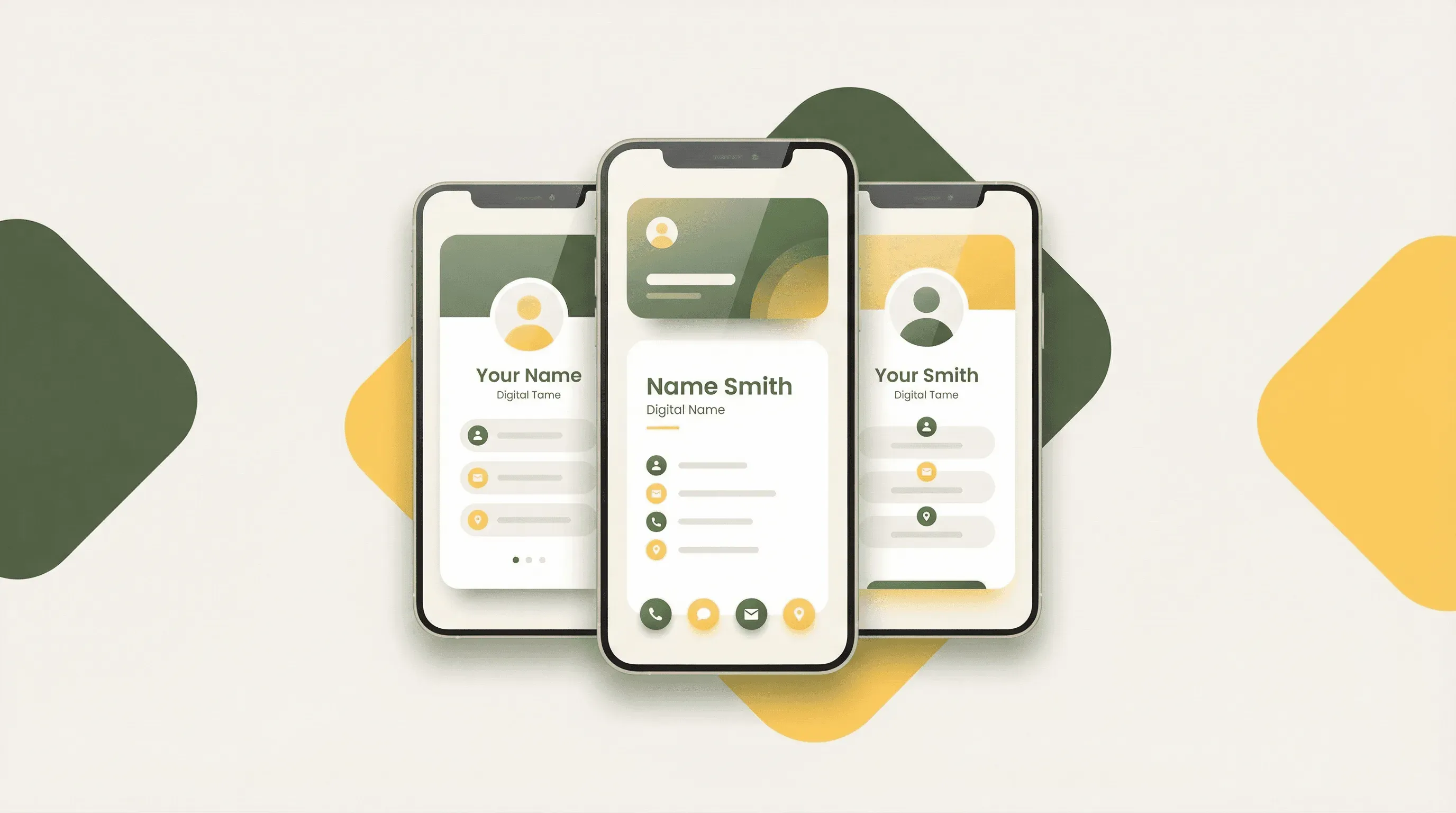
Professional digital business card designs displayed across multiple smartphone screens
Essential information includes your name, title, company, and primary contact method. Secondary elements—multiple phone numbers, physical address, extended social profiles—should be accessible but not dominant. The QR code needs sufficient size and contrast for reliable scanning in varied lighting conditions, including the sometimes challenging illumination of exhibition halls.
YouWare's visual editing mode simplifies design refinement through point-and-click adjustments. Change colors to match corporate branding, adjust typography for readability, and test layouts across different screen sizes. The platform automatically generates responsive designs, but verifying mobile appearance ensures your card looks professional when shared from a phone screen during face-to-face conversations.
Professional photography elevates your digital card significantly. Use a high-quality headshot that matches your current appearance—conference attendees will connect the digital image with the person standing in front of them. YouWare's Storage module handles image uploads, and you can update your photo before each major event to maintain recognition accuracy.
Cost Comparison: Custom Development vs No-Code Solutions
The economics of digital business card solutions vary dramatically based on approach. Understanding your options helps determine the right investment for MWC 2026 preparation.
Solution Type
Initial Cost
Monthly Fees
Customization
Data Ownership
Custom Development
$40,000-$300,000
Hosting + maintenance
Unlimited
Full ownership
SaaS Platforms (HiHello, Popl)
$0-$100 setup
$6-$15 per user
Limited templates
Platform dependent
YouWare No-Code
Credits-based
No per-user fees
Full customization
Full ownership
Existing SaaS solutions like HiHello ($8/month Professional), Popl ($7.99/month Pro), and Blinq ($2.99/month Premium) offer quick deployment but limit customization to predefined templates. Per-user pricing models become expensive for teams, and your data lives on their servers under their terms.
Custom development provides unlimited flexibility but requires significant upfront investment plus ongoing maintenance costs. For a startup preparing for MWC, committing $40,000+ to a business card app rarely makes strategic sense when those resources could fund product development or marketing.
YouWare occupies the middle ground—full customization without coding overhead. You build exactly what you need, own your data through YouBase, and avoid recurring per-user fees. The platform's Secrets module enables secure integration with external services like email automation or analytics without exposing API keys in frontend code.
Integrating CRM and Analytics for Post-Event Follow-Up
The real value of digital networking emerges after MWC 2026 ends. Converting conference connections into business relationships requires systematic follow-up, and your digital business card app can facilitate this process through thoughtful integration.
YouWare's MCP (Model Context Protocol) connections extend your app's capabilities without complex development. Connect to external services for enhanced functionality: link GitHub for version control and code backup, integrate Notion for content management, or configure custom API connections through the Secrets module. For CRM integration, you can build API calls to services like Salesforce, HubSpot, or Zoho directly within your YouWare application.
Post-conference, digital business card adoption rates have grown 42% according to WaveCNCT research, driven by pandemic-era contactless preferences that have become permanent habits. This means recipients increasingly expect digital contact exchange and are prepared to engage with your follow-up communications. The Mobilo Card Report suggests that while most professionals still rely on manual email follow-up, automation through CRM integration dramatically improves consistency and timing.
Building analytics into your app provides insight into networking effectiveness. Track how many times your card was viewed, which contacts engaged most frequently, and conversion rates from initial exchange to meaningful conversation. These metrics inform your networking strategy for future events and help identify high-value relationships worth prioritizing.
Preparing Your Digital Networking Toolkit for MWC 2026
With MWC 2026 scheduled for March 2-5, preparation should begin well in advance. Testing your digital business card app ensures smooth operation during the event, when technical difficulties would waste precious networking time.
Start by building your core application using YouWare. Describe your requirements comprehensively: "Build a digital business card app with my photo, contact information, QR code sharing, and a database to store connections I make at conferences. Include fields for name, company, email, phone, and conversation notes." Refine through iterative prompts until the design matches your professional brand.
Test the sharing experience with colleagues before the event. Verify that QR codes scan reliably under different lighting conditions and that contact information imports correctly into various phone contact apps. Check that your database captures entries properly and that you can search and filter your growing contact list effectively.
Prepare backup sharing methods for challenging situations. Export your vCard file for manual sharing via email or messaging apps. Screenshot your QR code for offline access if connectivity becomes unreliable in crowded exhibition halls. Consider an NFC-enabled physical card as a complementary option for face-to-face exchanges.
Finally, establish your follow-up workflow before arriving in Barcelona. Decide when you'll process new contacts, draft template messages for different attendee categories, and schedule dedicated time for meaningful outreach. The 7x improvement in relationship conversion from 24-hour follow-up only materializes if you execute consistently.
Frequently Asked Questions
How long does it take to build a digital business card app with YouWare?
YouWare generates a complete application in approximately 30 seconds from your natural language description. Refinement through additional prompts and visual editing typically requires 15-30 minutes for a polished result. Compare this to custom development timelines of 3-6 months and costs of $40,000-$300,000.
Can recipients save my digital business card without installing an app?
Yes. QR codes on digital business cards typically encode vCard (VCF) format data, which is a universal standard supported by iOS, Android, and desktop contact applications. Recipients simply scan the code with their camera app and tap to save—no special software required.
What happens to my contact data after MWC 2026 ends?
With YouWare's YouBase Database module, your contact data persists indefinitely in your account. You maintain full ownership and can export data at any time. The Time Travel feature allows restoration to previous states if needed, protecting your valuable networking contacts from accidental changes.
Is a digital business card environmentally better than paper?
Significantly. Paper business card production consumes 7.2 million trees annually according to Wazzl, and 88% of cards are discarded within one week per UPrinting research. Digital cards eliminate physical waste entirely while providing superior functionality through searchability, automatic updates, and CRM integration.
How do I handle networking in areas with poor internet connectivity?
Build offline-capable features into your YouWare app. Pre-generate static QR codes that encode your full contact information, allowing sharing without an active connection. For contact capture, design your app to queue entries locally and sync when connectivity returns. Screenshot your QR code as a failsafe backup.
Conclusion
MWC Barcelona 2026 offers extraordinary networking potential, with 109,000+ attendees representing the global mobile industry's decision-makers and innovators. Maximizing these opportunities requires moving beyond inefficient paper business cards toward digital solutions that enable instant sharing, automatic organization, and systematic follow-up.
Building your own digital business card app no longer requires enterprise budgets or development teams. YouWare enables anyone to create a fully customized solution through natural language prompts, complete with database storage, user authentication, and integration capabilities. The result: a professional networking tool tailored to your specific needs, ready for deployment before you arrive in Barcelona.



 Digital business card app displayed on smartphone at a tech conference setting