How to Build a Visual Novel Web App with AI (Step-by-Step Guide)

TL;DR
Building a visual novel web app with AI is now accessible to anyone, regardless of coding experience. The global visual novel market exceeds $1.2 billion and is growing at 11.2% annually, with 45% of indie developers already using AI tools to cut production time by 20%. Using YouWare, you can describe your visual novel concept in natural language, generate character art with AI image models, create branching dialogue systems, and publish a playable web app—all without writing a single line of code.
 AI-powered storytelling is revolutionizing how indie developers create visual novels
What Is a Visual Novel and Why Build One as a Web App?
Visual novels are interactive fiction games that combine storytelling with anime-style artwork, character dialogue, and player-driven choices that branch into multiple endings. Unlike traditional video games, visual novels prioritize narrative depth over gameplay mechanics, making them ideal for writers, artists, and storytellers who want to create immersive experiences without complex game development skills.
 Visual novels combine anime-style art with branching dialogue systems
The Visual Novel Database (VNDB) catalogs over 50,000 titles, demonstrating the genre's incredible diversity and lasting appeal. From romance and mystery to horror and science fiction, visual novels span every genre imaginable.
Building your visual novel as a web app offers distinct advantages over traditional desktop or mobile releases. Web-based visual novels are instantly accessible through any browser—no downloads, no app store approval processes, and no platform-specific development. According to Zipdo's industry analysis, Steam hosts 70% of visual novel players, but web deployment opens your creation to the remaining 30% who prefer browser-based or mobile experiences.
With YouWare, you can create a complete visual novel web app by describing your vision in natural language. The platform handles the technical complexity while you focus on what matters most: telling a compelling story.
The Visual Novel Market Opportunity in 2025
The visual novel industry represents a significant and growing market opportunity for indie creators. According to Zipdo's Visual Novel Industry Statistics, the global market was valued at $980 million in 2022 and exceeded $1.2 billion by 2024, with projections reaching $2.1 billion by 2027 at an 11.2% compound annual growth rate.
Several trends make this an ideal time to enter the market:
Indie developers are thriving. Over 30% of visual novel titles are now developed by independent studios, according to OpenPR market research. The number of indie VN developers grew 40% between 2020-2022, demonstrating strong momentum in the creator economy.
Mobile is driving accessibility. Mobile visual novels account for 35% of global downloads, with 60% of new releases adopting free-to-play models. This shift toward accessible, browser-friendly formats aligns perfectly with web-based visual novel development.
Crowdfunding validates demand. Visual novel developers enjoy a 65% crowdfunding success rate on platforms like Kickstarter and Patreon, significantly higher than the average Kickstarter success rate. This indicates strong community support for indie visual novel projects.
AI tools are democratizing creation. Perhaps most importantly, 45% of indie visual novel developers now use AI tools for writing and art, saving an average of 20% in production time. This represents a fundamental shift in how visual novels are made.
Traditional vs. AI-Powered Visual Novel Development
Understanding the difference between traditional and AI-powered development approaches helps illustrate why tools like YouWare represent such a significant advancement.
 Traditional development requires months of coding; AI tools compress this timeline dramatically
Traditional visual novel development typically involves learning specialized engines like Ren'Py—which has been used to create over 8,000 visual novels—or more complex tools like Unity. While powerful, these platforms require programming knowledge, and artists must either create all visual assets manually or commission them. According to WN Hub's industry analysis, development costs for indie visual novels typically range from $15,000 for smaller projects to over $100,000 for ambitious endeavors.
The average indie visual novel takes 6-9 months to develop, while commercial productions require 18-24 months. This timeline includes script writing, art creation, programming, testing, and debugging—all skills that traditionally required separate team members or extensive self-study.
AI-powered development with YouWare compresses thistimeline dramatically. Instead of learning Python scripting for Ren'Py or C# for Unity, you describe your visual novel in natural language: "Create a mystery visual novel set in a Victorian mansion with three main characters and five possible endings." YouWare's AI generates the foundational code structure, while integrated image generation models (including Midjourney and GPT-image-1) create character sprites and backgrounds.
| Aspect | Traditional Development | AI-Powered with YouWare |
|---|---|---|
| Coding Required | Python, C#, or JavaScript | None (natural language) |
| Art Creation | Manual or commissioned | AI-generated + refinement |
| Development Time | 6-24 months | Days to weeks |
| Cost Range | $15,000-$100,000+ | Minimal (platform subscription) |
| Technical Barrier | High | None |
| Publishing | Platform-specific builds | One-click web deployment |
The comparison demonstrates why AI-powered platforms are attracting so many new creators to the visual novel space.
Essential Components of a Visual Novel Web App
Before diving into the step-by-step guide, it's important to understand the core components that make up any visual novel:
Narrative Engine: The system that manages story progression, dialogue display, and branching paths based on player choices. Research from arXiv shows that AI models like GPT-4 can generate coherent alternate storylines from player decisions, creating dynamic narratives that adapt to choices.
Character Sprites: Visual representations of characters in various poses and expressions. Typically, each character needs 3-5 base poses with multiple facial expressions for emotional range.
Backgrounds: Scene settings that establish mood and location. Visual novels typically require 10-20 unique backgrounds for a medium-length story.
UI/UX Elements: Dialogue boxes, choice buttons, save/load interfaces, settings menus, and navigation controls that players interact with throughout the experience.
Audio System: Background music, sound effects, and optionally voice acting that enhance immersion.
Save System: Player progress tracking, including current story position, choices made, and any unlocked content or achievements.
YouWare handles all these components through its integrated platform. YouBase provides the database infrastructure for save systems and player progress, while the visual editing mode allows direct manipulation of UI elements without touching code.
Step 1: Planning Your Story and Branching Narrative
The foundation of any great visual novel is a well-structured story with meaningful player choices. According to Zipdo's research, visual novels with multiple endings are 2x more likely to be rated 8+/10, emphasizing the importance of branching narratives.
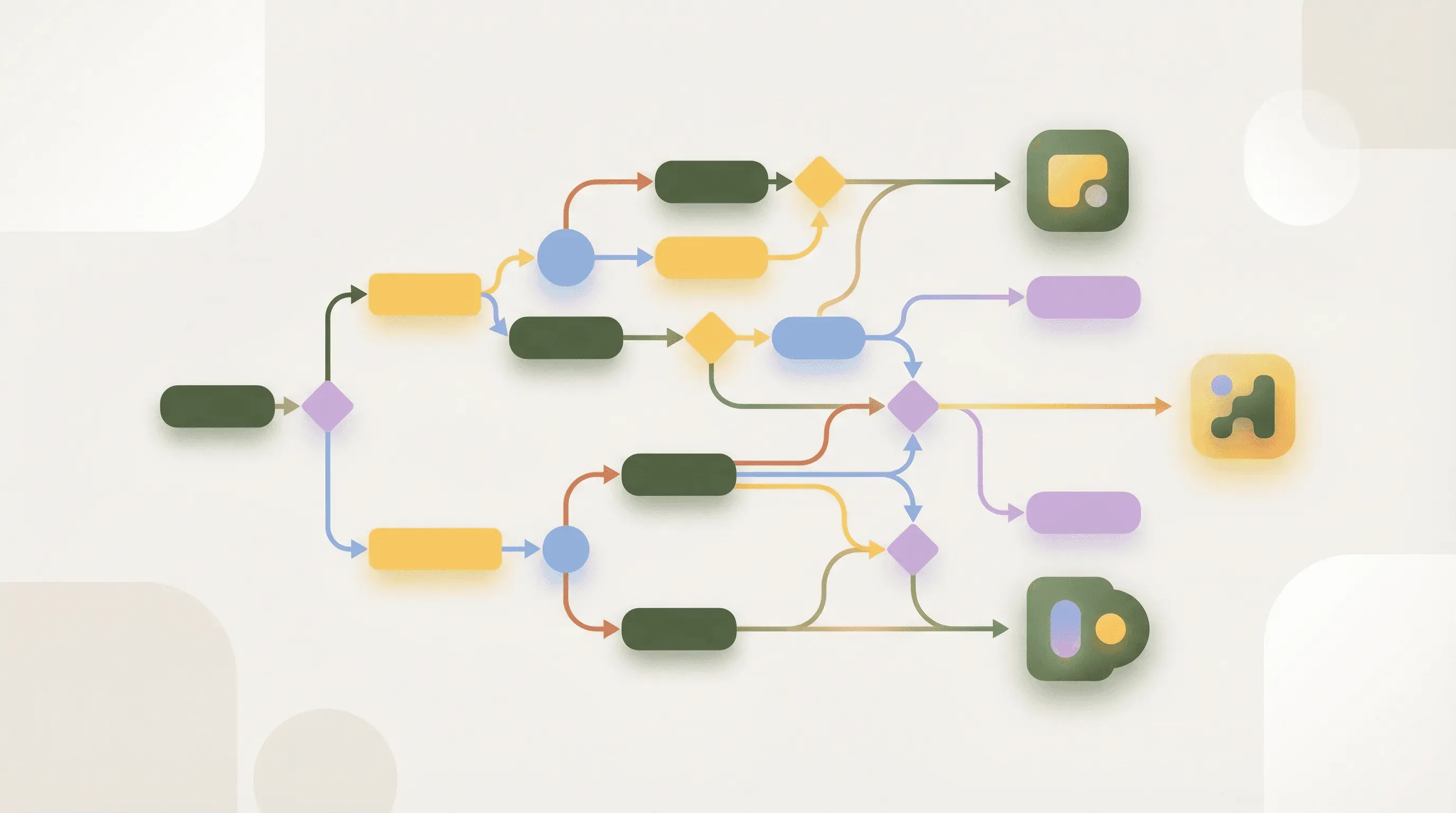 Branching narratives with multiple endings are 2x more likely to achieve high player ratings
Start with your core premise. Define the genre (romance, mystery, horror, sci-fi), setting (modern, fantasy, historical), and central conflict. For example: "A college student discovers they can see ghosts, and must help a spirit solve their own murder while navigating campus life."
Map your branching structure. Use YouWare's Plan mode to organize your narrative into structured chapters before execution. Most successful visual novels follow these patterns:
- Linear with branches: A main storyline with occasional choice points that affect outcomes
- Route-based: Different character paths that diverge early and provide distinct experiences
- Hub structure: A central location players return to, with multiple investigations or relationships to pursue
Design meaningful choices. According to Game Analytics' guide on dialogue trees, the best choices offer distinct, interesting options where players can anticipate different outcomes. Avoid "false choices" that don't meaningfully impact the story.
Track variables that matter. Decide what player decisions you'll track: relationship points with characters, moral alignment, collected evidence, or unlocked secrets. YouWare's YouBase database module stores these variables and retrieves them when needed for branching logic.
Step 2: Creating Character Art and Backgrounds with AI
Visual novels live or die by their artwork. Fortunately, AI image generation has revolutionized this aspect of development.
 AI image generators create consistent character art and backgrounds in minutes
YouWare integrates multiple AI image generation models, including Midjourney, GPT-image-1, and Gemini Imagen 4. You can create character sprites directly within your project by describing what you need: "Create an anime-style young detective with short black hair, wearing a tan trenchcoat, with expressions: neutral, surprised, suspicious, and determined."
Character design best practices:
- Maintain consistency: Use the same prompt structure and style descriptors for all characters to ensure visual cohesion
- Create expression sheets: Generate 4-6 facial expressions per character for emotional range during dialogue
- Design distinctive silhouettes: Each character should be recognizable from outline alone
- Consider pose variations: Standing, sitting, and action poses add visual variety to scenes
Background creation:
Use AI to generate environments that match your story's tone. For a mystery visual novel set in Victorian England, you might prompt: "Moody Victorian mansion library interior, gas lamps, floor-to-ceiling bookshelves, leather armchairs, foggy window view, anime visual novel background style."
YouWare's asset management automatically saves generated images to your project's Assets folder, keeping your visual novel organized as you build.
Step 3: Writing Dynamic Dialogue with AI Assistance
Great visual novel dialogue balances character voice, plot advancement, and emotional resonance. AI tools can accelerate this process while maintaining quality.
YouWare supports multi-model switching between OpenAI GPT-4o, Claude Sonnet 4.5, Gemini 2.5 Pro, and DeepSeek V3. For nuanced character dialogue, Claude Sonnet excels at capturing distinct voices and emotional subtlety. For technical implementation of dialogue systems, GPT-4o provides excellent code generation.
Dialogue writing workflow with YouWare:
First, establish character voice profiles by describing each character's speech patterns, vocabulary level, and personality traits in your project notes. Then use conversational prompts to generate dialogue: "Write a scene where the nervous freshman meets the confident upperclassman for the first time. The freshman speaks hesitantly with lots of ellipses, while the upperclassman is casual and uses slang."
For branching dialogue, describe the decision point and possible outcomes: "Create a choice where the player decides whether to confront the suspect directly or gather more evidence first. Each choice should lead to different information being revealed and affect the suspect's trust level."
Implementing dynamic narrative: Research published on arXiv demonstrates systems like "WHAT-IF" that use GPT-4 to generate coherent alternate storylines from player decisions. With YouWare's MCP integrations, you can connect to external AI services for truly dynamic dialogue that respondsto accumulated player choices.
Step 4: Building the Visual Novel Interface with YouWare
This is where YouWare truly shines. Instead of coding dialogue systems, sprite positioning, and UI elements manually, you describe what you want and the platform builds it.
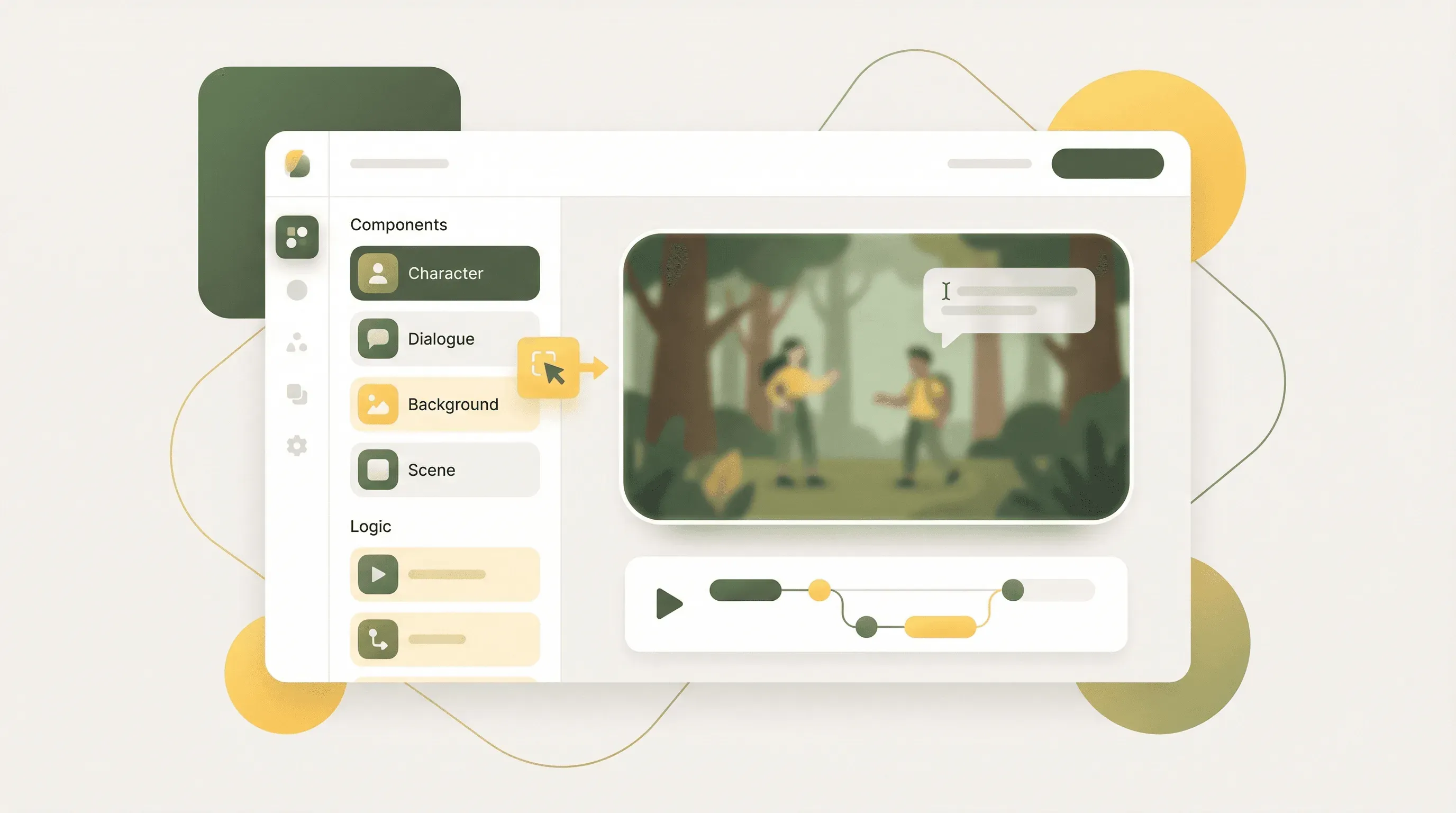 YouWare's visual editing mode lets you build visual novel interfaces without writing code
Creating your visual novel structure:
Start by describing your project to YouWare's AI: "Create a visual novel web app with a dialogue box at the bottom of the screen, character sprites that can appear on the left, center, or right, a background image layer, and choice buttons that appear when the player reaches a decision point."
The AI generates the foundational structure, including:
- HTML layout for all visual novel components
- CSS styling for dialogue boxes, buttons, and transitions
- JavaScript logic for advancing dialogue and processing choices
Refining with visual editing:
Switch to YouWare's visual editing mode to fine-tune without AI credits. Click directly on elements to:
- Adjust font sizes, colors, and styles for dialogue text
- Modify spacing and positioning of UI elements
- Replace placeholder images with your generated character art
- Customize button appearances for choice selections
Adding character and scene management:
Use chat-based prompts to add features: "Add a character that can fade in from the left, display different expressions, and shake when surprised" or "Create scene transitions with fade-to-black effects between locations."
Implementing the dialogue system:
Describe your dialogue data structure: "Store dialogue as a JSON array where each entry has speaker name, dialogue text, character expression, background image, and optional choices array." YouWare generates the data structure and the rendering logic to display it.
Step 5: Implementing Save Systems and Player Progress
Player progress tracking separates hobby projects from polished visual novels. YouWare's YouBase provides everything you need.
Setting up authentication:
YouWare's built-in Users & Authentication module supports email login with password management, Google OAuth integration, and temporary accounts for frictionless access. Prompt: "Add user authentication so players can create accounts and access their saved games across devices."
Creating the save system:
Use YouBase's database module to store player progress. Describe your needs: "Create a save system that stores the current scene ID, all relationship variables, collected items, and which endings have been unlocked. Allow three save slots per user."
YouBase automatically handles:
- Data persistence with enterprise-grade encryption
- Time Travel for restoring database states (useful during development)
- Bookmarks to mark important database states for recovery
Tracking achievements and unlockables:
"Add an achievement system that tracks: completing each character route, finding all secret scenes, and achieving the true ending. Display locked achievements as silhouettes until unlocked."
Step 6: Adding Sound, Music, and Special Effects
Audio transforms a good visual novel into an immersive experience.
Background music implementation:
Describe your audio needs: "Add a background music system that plays different tracks for day scenes, night scenes, and tense moments. Include volume controls and the ability to fade between tracks."
YouWare generates the audio management code, and you can upload your music files (royalty-free options are available from sites like Incompetech or Free Music Archive) or describe music generation needs.
Sound effects:
"Add sound effects for: dialogue appearing letter by letter, choice selection, scene transitions, and dramatic reveals." These small touches significantly enhance player engagement.
Visual effects:
Request screen effects to heighten emotional moments: "Add screen shake for shocking revelations, a rain overlay effect for sad scenes, and sparkle particles for romantic moments."
Step 7: Testing and Publishing Your Visual Novel
Before sharing your creation, thorough testing ensures players enjoy a polished experience.
Testing checklist:
- Play through every branching path to verify logic
- Check all character expressions display correctly
- Verify save/load functionality across sessions
- Test on different browsers (Chrome, Firefox, Safari) and screen sizes
- Confirm audio plays correctly with proper volume levels
- Ensure all choices lead to intended outcomes
Publishing with YouWare:
When ready, click Publish to generate a shareable link for your visual novel. YouWare handles hosting, so your visual novel is instantly accessible worldwide. Configure sharing settings to control:
- Privacy (public or password-protected)
- Remix permissions (allow others to learn from your project)
- Fullscreen mode for cleaner presentation without the YouWare header
For professional releases, Pro and Ultra plans support custom domains, letting you deploy under your own URL like "yourgame.com" instead of a YouWare subdomain.
Monetization Strategies for Web-Based Visual Novels
Creating a visual novel is an accomplishment; sustaining your creative work requires revenue strategies.
Free-to-play with premium content: According to Zipdo, 60% of new visual novel releases use free-to-play models. Offer the first few chapters free, then charge for the complete experience or premium routes.
Crowdfunding: Visual novel developers enjoy a 65% Kickstarter success rate. Build a demo with YouWare, showcase it to potential backers, and fund full development.
Patreon/Subscription model: Offer early access to new chapters, behind-the-scenes content, and exclusive side stories to subscribers.
In-app purchases: Sell cosmetic items like alternative character outfits, bonus scenes, or art galleries.
Commercial release: For polished projects, consider releasing on Steam (which hosts 70% of VN players) or itch.io (15% of players) alongside your web version.
Success Stories: Indie Visual Novels That Made It Big
The visual novel space has produced numerous indie success stories that started with limited resources:
Doki Doki Literature Club began as a free psychological horror visual novel that subverted genre expectations. It achieved over 10 million downloads and spawned merchandise, a premium edition, and massive cultural impact—all created by a small team using Ren'Py.
Coffee Talk combined visual novel storytelling with barista simulation, finding success on multiple platforms and spawning a sequel. Its cozy atmosphere and diverse cast resonated with players seeking relaxing narrative experiences.
VA-11 Hall-A blended cyberpunk aesthetics with bartending gameplay, proving that innovative mechanics combined with strong writing can create cult classics.
These successes share common elements: distinctive art styles, memorable characters, and stories that resonated emotionally with players. With AI tools and platforms like YouWare lowering the technical barrier, the next indie visual novel success story could be yours.
FAQ: Common Questions About Building Visual Novels with AI
Do I need to know how to code to build a visual novel with YouWare?
No coding knowledge is required. YouWare allows you to describe your visual novel in natural language, and the AI generates all necessary code. You can refine elements using visual editing mode, which lets you click and modify components directly without touching code. For advanced customization, Pro subscribers can access and edit the generated code directly.
How long does it take to create a visual novel using AI tools?
A short visual novel (30 minutes of playtime with minimal branching) can be created in a few days to a week. Medium-length projects with multiple routes typically take 2-4 weeks. This compares favorably to the 6-9 month average for traditional indie development, according to Zipdo.
Can AI-generated art match professionally commissioned artwork?
AI art has improved dramatically and can produce high-quality, consistent character sprites and backgrounds suitable for commercial visual novels. Many successful indie developers use AI art as a foundation and refine specific details. YouWare integrates Midjourney, GPT-image-1, and Gemini Imagen 4 for flexible style options.
How do I handle save data for players across devices?
YouWare's YouBase includes built-in authentication (email, Google OAuth, or temporary accounts) and database functionality. Player progress, choices, and unlocked content sync automatically across any device where they log in.
What's the best way to structure branching narratives?
Start with 3-5 major decision points that lead to distinct endings. Zipdo research shows visual novels with multiple endings are 2x more likely to receive high ratings. Use YouWare's Plan mode to map your narrative structure before building.
Conclusion: Your Visual Novel Journey Starts Now
The visual novel market exceeds $1.2 billion and continues growing, indie developers represent over 30% of new releases, and AI tools have reduced production time by 20% for nearly half of all indie creators. The barriers that once made visual novel development the domain of programmers and professional artists have fallen.
With YouWare, you can transform your story idea into a playable visual novel web app using nothing but natural language descriptions. Create character art with integrated AI image generation, build branching dialogue systems with conversational prompts, implement save systems with YouBase, and publish to a shareable link with one click.
Whether you're a writer expanding into interactive formats, a VTuber creating story content for your audience, or a game developer exploring the visual novel genre, the tools have never been more accessible.
Ready to bring your visual novel to life? Get started with YouWare today and join the new wave of AI-empowered storytellers.
References
- Zipdo Visual Novel Industry Statistics
- Ren'Py Visual Novel Engine
- Visual Novel Database (VNDB)
- WebGAL - Web Visual Novel Engine
- WHAT-IF: Branching Narrative Generation with AI - arXiv
- OpenPR Visual Novel Market Report
- Game Analytics - Writing Dialogue Trees
- WN Hub - Visual Novel Development Costs
- No-Code Development Platforms Market Report