Vibe Coding with GLM-5: How Natural Language is Replacing Traditional Programming

TL;DR
Vibe coding—describing what you want in plain language and letting AI generate the code—is fundamentally transforming who can build software. According to Wikipedia, the term was coined by AI pioneer Andrej Karpathy in February 2025 and became Collins Dictionary's Word of the Year. With GLM-5 achieving 77.8% on the SWE-bench benchmark and tools like YouWare enabling complete app creation through natural language, non-programmers can now build production-ready applications. The global developer shortage of 4 million positions makes this democratization not just convenient, but essential.
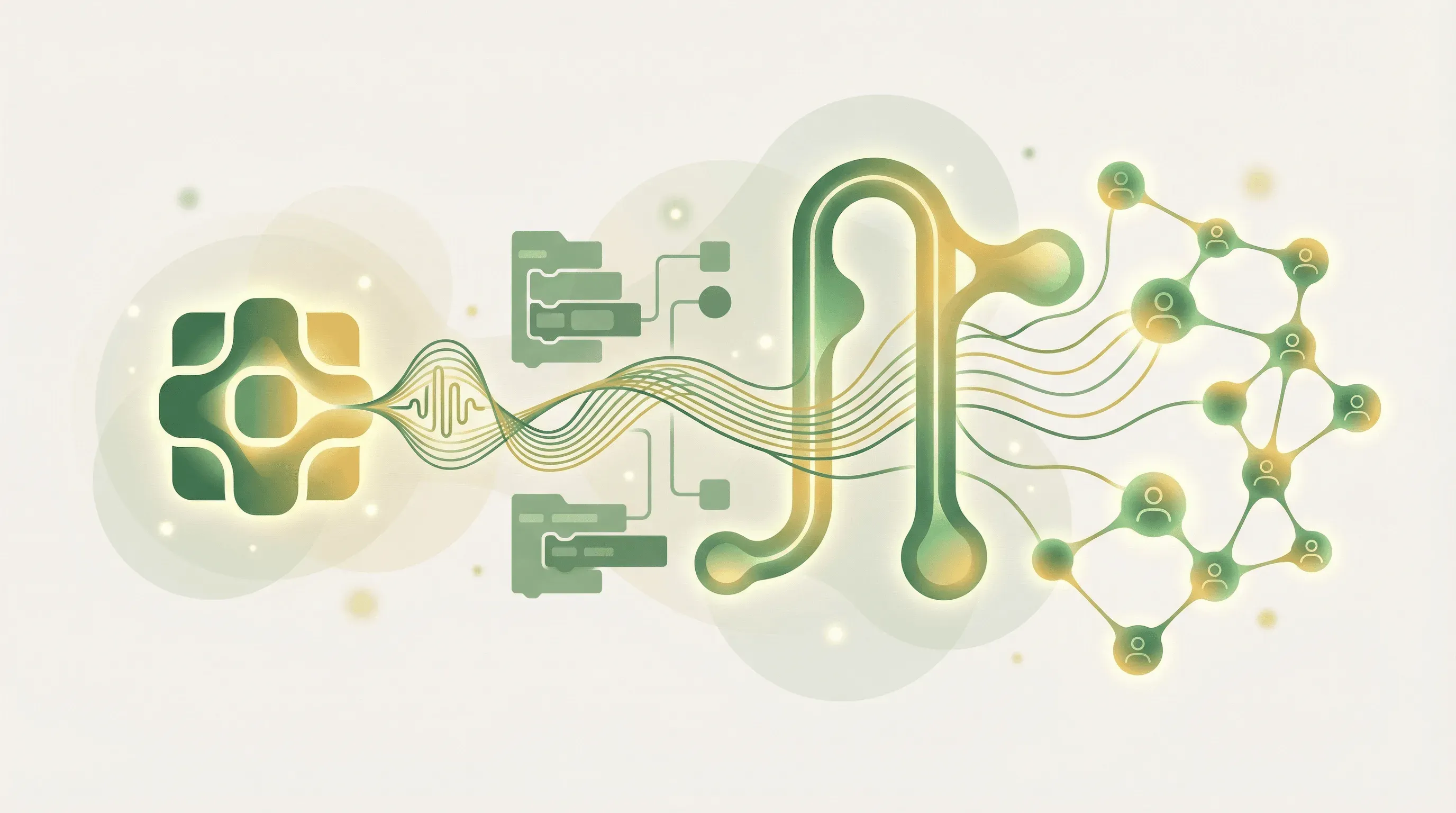 Vibe coding transforms software development by letting anyone describe ideas in natural language
Introduction: The End of Code as We Know It
Software development has always been gatekept by syntax. Learning to code meant memorizing curly braces, debugging semicolons, and understanding why your Python script fails because of an invisible tab character. But what if you could simply describe what you want and have AI build it for you?
This is vibe coding—a paradigm shift that's making programming accessible to entrepreneurs, designers, product managers, and anyone with an idea. With models like Zhipu AI's GLM-5 demonstrating competitive coding capabilities and platforms like YouWare translating natural language into functional applications, the barrier to building software is dissolving rapidly.
According to Y Combinator, 25% of startups in their Winter 2025 batch had codebases that were 95% AI-generated. This article explores how vibe coding works, why GLM-5 is a significant player in this space, and how you can start building software today without writing a single line of code.
What is Vibe Coding? The Natural Language Programming Revolution
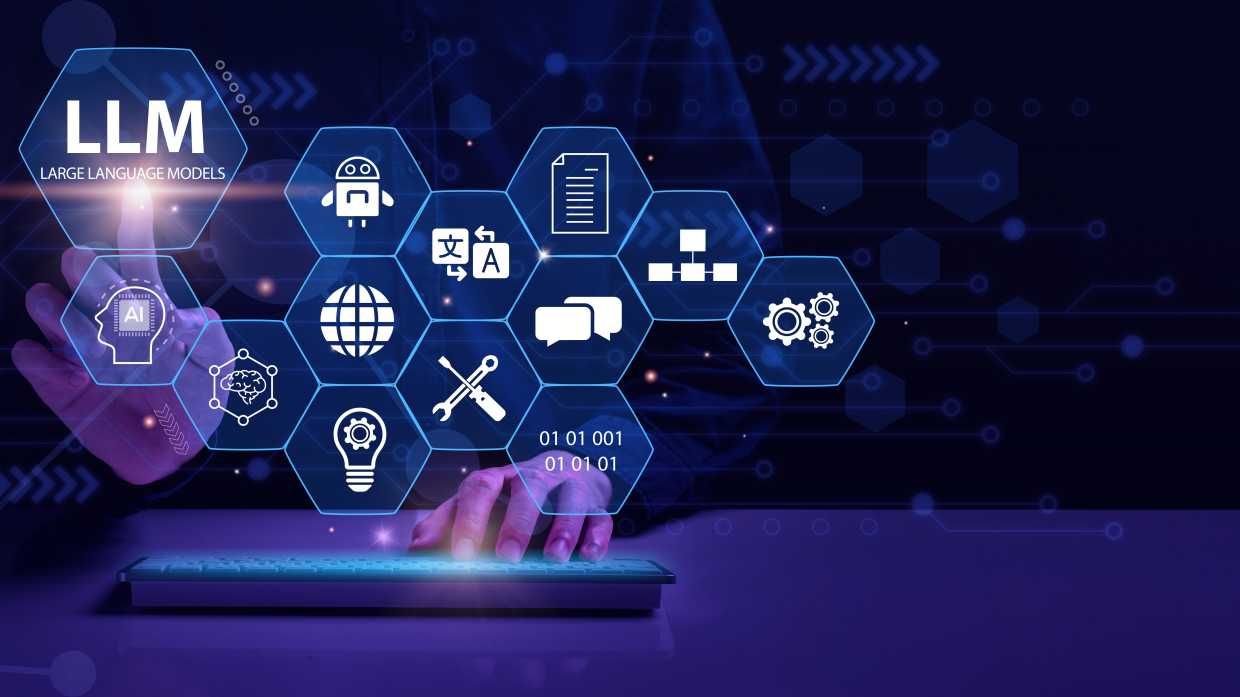 Large language models power the natural language programming revolution — Source: InfoWorld
Vibe coding represents a fundamental shift in how humans interact with computers to create software. According to Wikipedia, Andrej Karpathy—former director of AI at Tesla and co-founder of OpenAI—coined the term in February 2025, describing an approach where developers "fully give in to the vibes, embrace exponentials, and forget that the code even exists."
Unlike traditional programming where you must specify exact instructions in precise syntax, vibe coding lets you communicate your intent in natural language. You describe the feeling, the user experience, the outcome you want—and AI translates that into working code. The recognition of this shift was so significant that Collins English Dictionary named "vibe coding" the Word of the Year for 2025.
The approach works because modern large language models have been trained on billions of lines of code alongside natural language. They understand both what you're trying to say and how to express it in programming languages. When you tell an AI "create a landing page with a warm, welcoming feel and a signup form that validates emails," it can interpret the aesthetic intent ("warm, welcoming"), the functional requirements (landing page, signup form), and the technical specifications (email validation)—then generate the corresponding HTML, CSS, and JavaScript.
This isn't about AI replacing programmers entirely. Rather, it's about expanding who can participate in software creation. Product managers can prototype features directly. Designers can build functional mockups. Entrepreneurs can validate ideas without hiring development teams. The code still exists—it's just that you no longer need to write it yourself.
GLM-5: China's Answer to Frontier AI Coding Models
 GLM-5 represents China's advancement in frontier AI coding capabilities — Source: Zhipu AI
Zhipu AI's GLM-5, released in February 2026, represents a significant milestone in AI-powered coding capabilities. According to GLM5.net, the model features approximately 745 billion parameters using a Mixture of Experts (MoE) architecture, with 44 billion parameters activated per inference—making it efficient while maintaining powerful performance.
What makes GLM-5 particularly interesting for vibe coding is its benchmark performance. Digital Applied reports that GLM-5 achieved 77.8% on the SWE-bench Verified benchmark, placing it competitively alongside Claude Opus 4.5 (80.9%) and ahead of GPT-5.2 (76.2%). This benchmark measures an AI's ability to solve real-world software engineering tasks—exactly what vibe coding requires.
GLM-5 is notable for another reason: it was trained entirely on Huawei Ascend chips using the MindSpore framework, according to GLM5.net. This demonstrates China's growing independence in AI hardware infrastructure and suggests that frontier AI capabilities will increasingly come from diverse global sources rather than a single dominant ecosystem.
For vibe coders, GLM-5's strong performance on coding tasks means more accurate code generation from natural language prompts. When you describe a feature you want, models like GLM-5 can understand the context, generate appropriate code structures, and even anticipate edge cases—all from your plain-language description. The competition between models ultimately benefits users, as each advancement pushes the others to improve.
The Rise of Citizen Developers: 69 Million Strong
 Citizen developers collaborate on projects without traditional coding expertise — Source: IBM
The democratization of software development isn't a theoretical possibility—it's already happening at massive scale. According to Zipdo, the number of citizen developers reached 69 million by 2025, more than doubling from 32 million in 2021. These are professionals without formal programming training who build applications using visual tools, low-code platforms, and increasingly, AI-powered vibe coding interfaces.
This growth addresses a critical shortage in the technology workforce. Second Talent reports that the global software developer shortage reached 4 million positions by 2025. Traditional computer science education simply cannot produce enough graduates to meet demand—but citizen developers can fill the gap by building the internal tools, prototypes, and specialized applications that don't require deep technical expertise.
The enterprise adoption statistics are striking. According to ByteIota, 70% of new enterprise applications in 2025 were developed using low-code or no-code platforms, up from just 25% in 2020. Organizations using these platforms report 56% faster application development and 70% reduction in development costs, per Index.dev.
The financial opportunity is equally compelling. The low-code/no-code market, valued at $12 billion in 2020, is expected to reach $187 billion by 2030, according to AppMySite. This fifteen-fold growth reflects both enterprise adoption and the expanding capabilities of these platforms.
How AI Code Generation is Transforming Enterprise Development
 Enterprise development teams increasingly rely on AI code generation — Source: InfoWorld/B2B ContentHub
Vibe coding isn't limited to solo entrepreneurs—major enterprises are embracing AI-generated code at scale. According to Konceptual.ai, Microsoft reports that 20-30% of their codebases are now AI-generated. The company leads the cloud AI market with 45% of new cloud AI case studies, demonstrating that they're not just building AI tools but actively using them internally.
GitHub Copilot, one of the most widely adopted AI coding assistants, has achieved remarkable penetration. TechCrunch reports that Copilot surpassed 20 million all-time users by July 2025, adding 5 million users in just three months. According to Dataconomy, 90% of Fortune 100 companies now use GitHub Copilot, with over 50,000 organizations employing the tool.
The productivity gains are measurable. Index.dev reports that developers using AI coding assistants complete tasks 55% faster, while AboutChromebooks notes that Cisco reported a 50% reduction in code review times after deploying AI-assisted tools.
Looking ahead, ITPro projects that over 80% of developers will be using or planning to use AI tools regularly by 2026. The global AI code tools market, valued at $7.37 billion in 2025, is projected to reach $23.97 billion by 2030—a 26.60% compound annual growth rate, according to AboutChromebooks.
How YouWare Enables Vibe Coding for Everyone
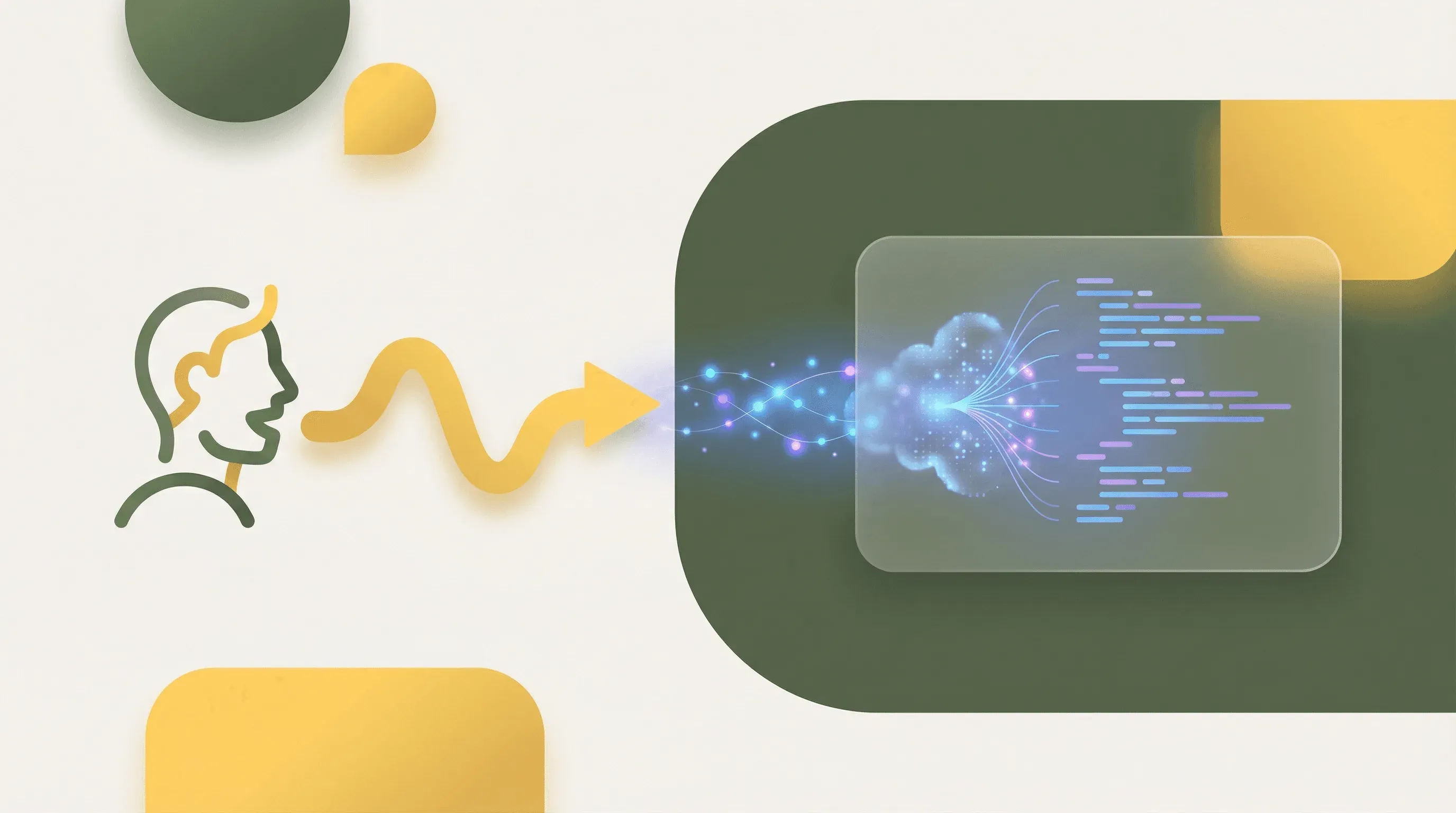 YouWare embodies the vibe coding philosophy with natural language app creation
YouWare exemplifies how vibe coding can work in practice, enabling anyone to build complete web applications through natural language descriptions. The platform's approach directly embodies Karpathy's vision: describe an idea, and AI generates a functional application.
With YouWare, you create projects by simply describing what you want in conversational language. Rather than specifying technical details, you communicate the feeling and purpose of your application. YouWare's Prompt Craft methodology structures this approach around three principles: feeling (the vibe you want), story (the narrative flow of user experience), and sculpture (iterative refinement through conversation).
The platform addresses several key challenges that make vibe coding practical for non-technical users. YouWare's multi-model switching feature lets you choose between AI models including Claude Sonnet 4.5, GPT-4o, Gemini 2.5 Pro, and DeepSeek V3 based on your specific task. For cost-conscious projects, this flexibility means you can optimize for different requirements without understanding the technical differences between models.
YouWare's visual editing mode solves the "last mile" problem of AI-generated code. When the AI creates something close but not quite right, you can click directly on elements to modify text, images, colors, and spacing without touching code. This visual refinement layer means you maintain creative control without needing to understand CSS properties or JavaScript functions.
For applications requiring user accounts and data storage, YouWare's YouBase provides built-in backend infrastructure. The database module lets you create tables and store data through simple prompts, while the Users & Authentication module handles login functionality with email and Google OAuth options. Importantly, YouBase includes a Secrets module with enterprise-grade encryption for storing API keys securely—addressing one of the major security concerns with AI-generated code.
YouWare's integration capabilities extend vibe coding to professional workflows through MCP (Model Context Protocol) tools. You can connect Figma designs for pixel-perfect code conversion, pullcontent from Notion, sync with GitHub repositories, and integrate external databases through Supabase. These connections mean vibe-coded projects can participate in existing professional toolchains rather than remaining isolated prototypes.
The History feature with version control addresses maintainability concerns inherent to AI-generated code. You can browse your project's complete timeline, preview any previous version, and restore earlier states when experiments don't work out. Credit Care provides monthly credit restores for failed attempts, encouraging the iterative experimentation that vibe coding requires.
Security and Quality Concerns in AI-Generated Code
The rapid adoption of vibe coding raises legitimate concerns about code quality and security. According to research cited by Wikipedia, AI co-authored code contains approximately 1.7 times more "major" issues and 2.74 times higher security vulnerabilities compared to human-written code. A TechRadar report on a Veracode study found that 45% of AI-generated code contains security flaws.
These statistics warrant careful consideration, but they don't invalidate vibe coding—they highlight the importance of appropriate tooling and oversight. Human-written code also contains bugs and vulnerabilities; the question is whether the productivity gains justify the tradeoffs and whether proper safeguards can mitigate the risks.
One counterintuitive finding comes from a METR randomized controlled trial in July 2025: experienced open-source developers were actually 19% slower when using AI coding tools, despite believing they were 20% faster. This suggests that AI coding tools may benefit non-experts more than experts—exactly the audience for vibe coding.
For non-technical vibe coders, platforms like YouWare address security concerns by handling backend infrastructure through YouBase. Rather than requiring users to implement secure authentication or data storage themselves, YouWare provides pre-built, professionally-secured modules. API keys stored in the Secrets module use enterprise-grade encryption and are never exposed to frontend code.
The key is matching the tool to the task. Vibe coding excels for MVPs, prototypes, internal tools, and applications where speed matters more than perfection. For mission-critical systems handling sensitive data or life-safety applications, professional development with rigorous review remains essential.
The Future of Programming Education in the AI Era
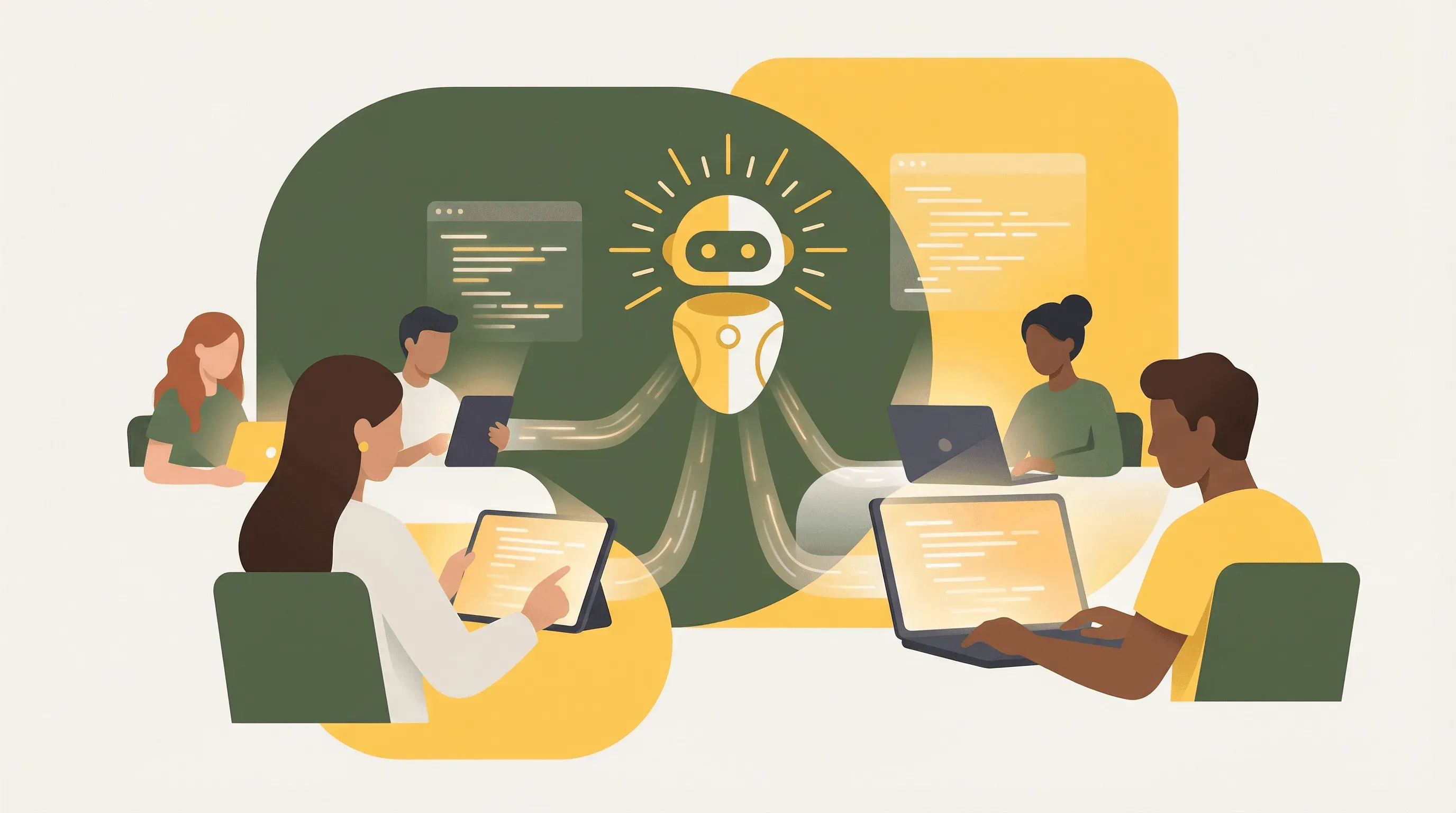 The future of programming education balances AI tools with foundational skills
As vibe coding becomes mainstream, questions arise about whether traditional programming education remains relevant. Bill Gates weighed in on this debate in February 2025, emphasizing that foundational coding skills remain essential for understanding AI operations—comparing it to learning multiplication despite the existence of calculators.
The analogy is instructive. Calculators didn't eliminate the need to understand mathematics; they changed how mathematics is taught and practiced. Similarly, AI coding tools won't eliminate the value of understanding programming concepts—but they will change who needs deep expertise and for what purposes.
For most knowledge workers, vibe coding represents sufficient capability. A marketing manager building an internal dashboard doesn't need to understand JavaScript closures. A startup founder validating an idea doesn't need to master database normalization. These users benefit from treating software development as a communication challenge rather than a technical one.
For professional developers, AI tools become amplifiers rather than replacements. Understanding code helps you prompt AI more effectively, recognize when generated code is problematic, and debug issues when they arise. The developers who thrive will be those who leverage AI to handle routine implementation while focusing their expertise on architecture, security, and complex problem-solving.
Educational institutions are beginning to adapt. Rather than spending semesters on syntax, curricula increasingly emphasize computational thinking, system design, and effective AI collaboration. The goal shifts from "learn to write code" to "learn to build software"—with coding as one tool among many.
Best Practices for Natural Language Programming Success
Effective vibe coding requires developing new skills in communication rather than syntax. Based on patterns observed across successful projects, several practices consistently improve results.
Start with the feeling, not the features. YouWare's Prompt Craft methodology emphasizes beginning with the vibe you want. Instead of listing technical requirements, describe the experience: "a warm, welcoming signup page that feels trustworthy and professional." AI models trained on millions of examples can translate emotional intent into appropriate visual and functional choices.
Tell a story with your prompts. Structure your descriptions as narratives with a hook (what grabs attention), why (the purpose), proof (supporting elements), and invitation (call to action). This narrative structure gives AI context for making coherent design decisions across your entire application.
Iterate through conversation. Vibe coding works best as dialogue rather than one-shot prompts. Start with a broad description, review what AI generates, then refine through specific requests: "make the header more prominent," "add more whitespace between sections," "change the button color to something warmer." Each iteration builds on the last.
Use visual editing for final polish. When AI gets you 90% of the way there, switch to visual editing for the remaining adjustments. Tools like YouWare's visual mode let you click directly on elements to tweak text, colors, and spacing without crafting new prompts.
Understand your tools' capabilities. Different AI models excel at different tasks. Some handle complex logic better; others produce more aesthetic designs. YouWare's multi-model switching lets you optimize for specific needs, but you need to experiment to learn which models work best for your use cases.
Plan for data and users early. If your application needs to store information or handle logins, build these capabilities from the start. Retrofitting authentication into a vibe-coded project is harder than including it initially. YouWare's YouBase modules make this straightforward when you specify these requirements upfront.
FAQ
Can I build a real business using vibe coding?
Absolutely. According to Y Combinator, 25% of startups in their Winter 2025 batch had codebases that were 95% AI-generated. These aren't toy projects—they're venture-backed companies building products for real customers. The key is choosing appropriate use cases. Vibe coding excels for web applications, internal tools, MVPs, and content-driven sites. For specialized applications requiring deep technical optimization, you may eventually need professional development support as you scale.
How does GLM-5 compare to other AI models for coding?
GLM-5's 77.8% score on the SWE-bench Verified benchmark places it competitively among frontier models, according to Digital Applied. Claude Opus 4.5 leads at 80.9%, while GPT-5.2 scores 76.2%. For practical vibe coding purposes, all these models deliver capable code generation. The differences matter more for specialized tasks than for typical application development. Platforms like YouWare offer multi-model switching so you can experiment with different options.
Is AI-generated code secure enough for production use?
Security is a legitimate concern. Studies show AI-generated code has higher vulnerability rates than human-written code, according to TechRadar. However, platforms designed for vibe coding address this by providing secure infrastructure. YouWare's YouBase handles authentication, data storage, and secrets management with enterprise-grade encryption, removing the most security-sensitive code from your hands. For applications handling particularly sensitive data, consider professional security review before launch.
Do I still need to learn programming if I use vibe coding?
It depends on your goals. For building applications to solve problems, vibe coding provides sufficient capability without traditional programming knowledge. However, as Bill Gates noted, foundational coding understanding helps you work more effectively with AI tools and recognize when something isn't working correctly. Think of it like knowing how cars work—you don't need to be a mechanic to drive, but some mechanical knowledge helps you maintain your vehicle and recognize problems early.
What makes YouWare different from other vibe coding tools?
YouWare combines AI-powered code generation with visual editing, built-in backend infrastructure through YouBase, and extensive integrations through MCP tools. This combination means you can go from idea to published application without leaving the platform. The visual editing mode lets you refine AI-generated designs without understanding code, while YouBase provides database, authentication, and storage capabilities that would normally require backend development expertise. History tracking and version control address maintainability concerns specific to AI-generated projects.
Conclusion
Vibe coding represents more than a new programming technique—it's a fundamental expansion of who can participate in building software. With AI models like GLM-5 demonstrating strong coding capabilities and platforms like YouWare making these capabilities accessible through natural language, the barriers to software creation are lower than ever.
The statistics tell a compelling story: 69 million citizen developers, 70% of enterprise apps built with low-code tools, 90% of Fortune 100 companies using AI coding assistants. This isn't a future possibility—it's the current reality of software development.
For entrepreneurs, product managers, designers, and anyone with ideas they want to build, vibe coding offers a practical path forward. You don't need to spend months learning syntax. You don't need to hire expensive development teams. You need to clearly communicate what you want and iterate through conversation with AI.
The code still matters—but you no longer need to write it yourself.
Ready to build your first application through natural language? Get started with YouWare today and experience how vibe coding transforms ideas into reality.
References
- Wikipedia - Vibe Coding
- GLM-5 Official Documentation
- Digital Applied - Zhipu AI GLM-5 Release Analysis
- TechCrunch - GitHub Copilot Crosses 20 Million Users
- Dataconomy - GitHub Copilot Statistics
- Index.dev - AI Pair Programming Statistics
- Index.dev - No-Code Low-Code Statistics
- Zipdo - No-Code Industry Statistics
- ByteIota - Low-Code Platforms Enterprise Adoption
- AppMySite - Low-Code No-Code Market Size
- Second Talent - Tech Talent Shortage Statistics
- Axios - Bill Gates on Coding and AI
- TechRadar - AI-Generated Code Security Flaws
- ITPro - AI Software Development 2026
- Konceptual.ai - Microsoft Cloud AI Market Share
- AboutChromebooks - AI Code Tools Market Statistics