How to Build a Full-Stack Web App Using Claude Sonnet 4.6's 1M Context Window

Key Takeaways
Claude Sonnet 4.6's 1 million token context window, released February 17, 2026, allows AI to process 100,000-200,000 lines of code simultaneously—enabling full codebase understanding for the first time in AI-assisted development. According to Crypto Briefing, early users preferred Sonnet 4.6 over its predecessor 70% of the time, citing fewer hallucinations and reduced overengineering. For non-technical builders, combining this massive context capability with YouWare's no-code platform creates unprecedented opportunities to build full-stack web applications without writing a single line of code.
 Claude Sonnet 4.6's 1 million token context window enables developers to load entire codebases at once for contextually-aware AI-assisted development
Introduction
Building a full-stack web application traditionally requires years of programming experience, deep knowledge of multiple languages, and the patience to debug countless dependency conflicts. For non-technical founders and indie hackers, this barrier has kept many brilliant ideas trapped on whiteboards and in pitch decks.
That changed on February 17, 2026, when Anthropic released Claude Sonnet 4.6 with a groundbreaking 1 million token context window in beta. According to SiliconANGLE, this massive context capacity allows the AI to ingest entire codebases, understand full dependency chains, and make modifications that account for every file in your project.
But here's what most coverage misses: the real revolution isn't just for professional developers. When combined with no-code platforms like YouWare, this technology democratizes full-stack development entirely. This article explains what the 1 million token context window actually means, how it transforms AI-assisted development, and how you can leverage it—even without coding experience—to build production-ready web applications.
What Is a 1 Million Token Context Window (And Why It Changes Everything)
 Understanding context windows is key to leveraging AI-assisted development effectively — Source: Unsplash
A "context window" is essentially an AI's working memory—the amount of text it can consider at once when generating a response. Previous AI models were limited to 8,000-200,000 tokens, forcing developers to feed code in fragments and losing critical context between interactions.
Claude Sonnet 4.6's 1 million token window changes the fundamental dynamics of AI-assisted development. According to LinkedIn analysis by Andrew Ciccarelli, 1 million tokens translates to approximately 100,000-200,000 lines of code—enough to hold an entire production application in memory simultaneously.
This matters because modern web applications aren't just single files. A typical full-stack app includes frontend components that call backend APIs, which query databases, which trigger authentication checks, which log to analytics services. When an AI only sees fragments, it can't understand these relationships—leading to hallucinated function names, broken imports, and duplicated logic.
According to SiliconANGLE, Sonnet 4.6 addresses this by "seeing the entirety of extremely large horizons at once to understand full scopes of dependencies" and "follow flow paths at longer depths." Early testers reported the model reads context before modifying code, consolidates logic instead of duplicating it, and avoids the "laziness" that plagued earlier models.
The Traditional Full-Stack Development Challenge
 Traditional full-stack development requires mastery of multiple programming domains — Source: Unsplash
Building a full-stack web application has historically required mastery of multiple domains. You need frontend skills (HTML, CSS, JavaScript, React or Vue), backend knowledge (Node.js, Python, databases), infrastructure expertise (hosting, deployment, security), and the integration knowledge to connect everything together.
According to WeWeb, up to 82% of companies report difficulty hiring the software engineers they need to achieve their digital transformation goals. For solo founders and small teams, this talent shortage translates directly into either massive development costs or indefinitely delayed projects.
The fragmented nature of development compounds the problem. A developer working on a user authentication flow might need to modify the login component, update the API endpoint, adjust the database schema, configure session management, and add proper error handling—all while ensuring each change doesn't break existing functionality. This requires holding complex mental models of how different systems interact, and even experienced developers struggle with applications that grow beyond a certain size.
AI coding assistants promised to help, and they have. According to GitHub Research, developers using GitHub Copilot completed tasks 55% faster, with code 53.2% more likely to pass all unit tests. By mid-2025, TechCrunch reported Copilot had surpassed 20 million users, with 90% of Fortune 100 companies adopting the tool.
But traditional AI assistants still suffer from limited context. They excel at autocompleting individual functions but struggle when changes need to ripple across multiple files. Enter the 1 million token context window—and no-code platforms that eliminate the coding requirement entirely.
How Claude Sonnet 4.6 Transforms AI-Assisted Development
 Claude Sonnet 4.6 represents a transformational leap in AI-assisted coding capabilities — Source: Unsplash
The leap from previous context windows to 1 million tokens isn't incremental—it's transformational. According to Mashable, Sonnet 4.6 achieved 79.6% on SWE-bench Verified (a benchmark for solving real GitHub issues), 89.9% on GPQA Diamond (graduate-level reasoning), and 58.3% on ARC-AGI-2 (abstract reasoning).
What do these benchmarks mean practically? According to SiliconANGLE, Box's CTO evaluated Sonnet 4.6 on "deep reasoning and complex agentic tasks across real enterprise documents" and found it "outperforming Claude Sonnet 4.5 in heavy reasoning Q&A by 15 percentage points."
For developers, this translates to AI that actually understands your codebase. When you ask Sonnet 4.6 to "add a user notification system," it can see your existing authentication logic, understand your database schema, identify the appropriate API patterns you're already using, and generate code that integrates seamlessly—rather than creating isolated functions that require extensive manual integration.
According to Crypto Briefing, early users even preferred Sonnet 4.6 over the more expensive Claude Opus 4.5 in 59% of tests, citing better instruction following and reduced overengineering. At $3/$15 per million input/output tokens—one-fifth the cost of Opus—this represents both capability and cost advantages.
YouWare: The No-Code Path to Full-Stack Applications
 YouWare provides complete backend infrastructure for building production-ready applications — Source: Unsplash
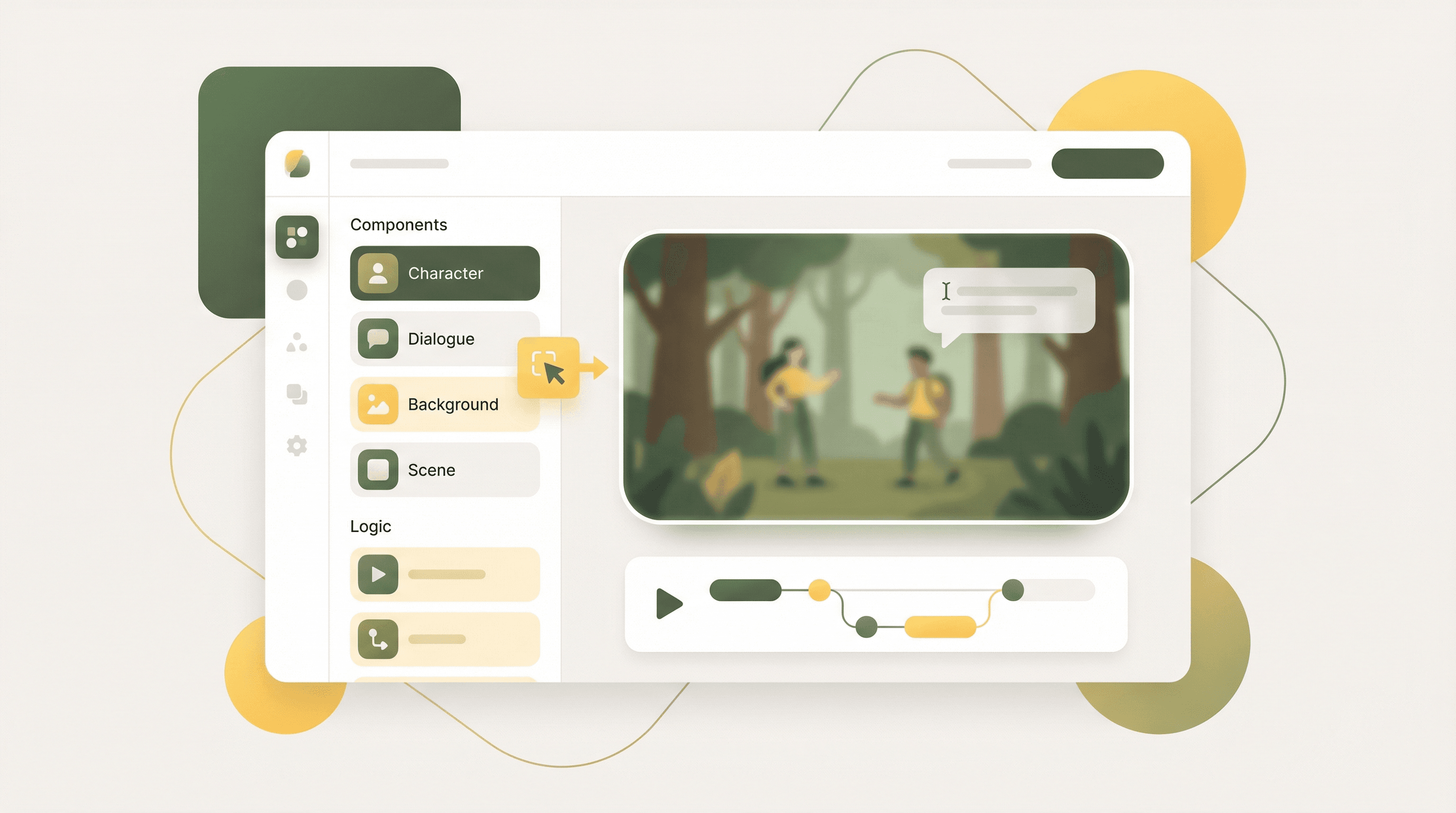
While Claude Sonnet 4.6 revolutionizes AI-assisted coding, YouWare eliminates the coding requirement entirely. YouWare enables users to build, customize, and deploy full-stack web applications through natural language prompts—generating complete web applications in approximately 30 seconds from plain English descriptions.
YouWare's AI-powered development approach complements Claude's massive context capabilities perfectly. When you describe your application idea—"Create a recipe sharing app with search, user profiles, and save favorites"—YouWare's AI generates the complete frontend and backend infrastructure without requiring you to understand the underlying code. For non-technical founders, this removes the traditional learning curve while delivering production-ready applications.
The platform's YouBase backend infrastructure provides everything a full-stack application needs. The Database module creates tables and stores data through natural language prompts, with Time Travel features to restore to any previous state. The Users & Authentication module implements login systems with email, Google OAuth, and temporary account options—without backend setup. The Storage module handles file uploads, while the Secrets module securely stores API keys with enterprise-grade encryption, ensuring sensitive credentials never reach frontend code.
YouWare's MCP (Model Context Protocol) integrations extend capabilities further. Figma connections convert designs to pixel-perfect code section by section. GitHub connections enable version control and context-aware code generation. Notion connections pull dynamic content into applications. These integrations mirror how Claude's large context enables understanding of multiple interconnected systems—but without requiring users to manage those connections manually.
For visual refinements, YouWare offers point-and-click editing for text, images, colors, and layout adjustments. Users who want deeper control can access the full code editor, but this remains optional. The Boost feature provides one-click AI optimization that analyzes and enhances page structure, content quality, and user experience while preserving the original design.
Building Your First Full-Stack App: A Practical Workflow
Whether you're a developer leveraging Claude's context window or a non-technical builder using YouWare, the workflow for creating full-stack applications has fundamentally changed. Here's how to approach it:
Step 1: Define Your Application Scope Clearly. Start with a detailed description of what you want to build. Instead of "build me a website," specify "create a task management application where teams can create projects, assign tasks to members, set due dates, track progress with status updates, and receive email notifications for approaching deadlines." The more specific your description, the more accurate the AI's initial generation.
Step 2: Generate the Initial Structure. With YouWare, click "Create" and paste your description. The platform generates a complete application in roughly 30 seconds. With Claude Sonnet 4.6 and Claude Code, load your existing project files (or start from a template) and describe the features you need. The AI will generate code that accounts for your entire codebase structure.
Step 3: Enable Backend Infrastructure. In YouWare, navigate to the YouBase tab and enable the modules you need. For the task management example, you'd enable Database (for storing projects and tasks), Users & Authentication (for team member accounts), and potentially Storage (for file attachments on tasks). Describe your data structure in natural language: "Create a database table for tasks with title, description, assignee, due date, status, and project ID."
Step 4: Iterate Through Natural Language. Both approaches excel at iterative refinement. Ask for specific modifications: "Add a calendar view that shows all tasks by due date," "Implement drag-and-drop to change task status," or "Send an email notification when a task is assigned to someone." Claude's context window ensures each modification accounts for everything already built.
Step 5: Test and Refine. Before publishing, test all user flows. Create accounts, add data, verify authentication works correctly, check that permissions function as expected. YouWare's visual editing mode allows quick adjustments without returning to prompts.
Step 6: Deploy. YouWare provides one-click publishing with shareable URLs and optional custom domains on Pro and Ultra plans. Your full-stack application goes live immediately, complete with database persistence, user authentication, and file storage.
Token Economics: What 1 Million Tokens Actually Handles
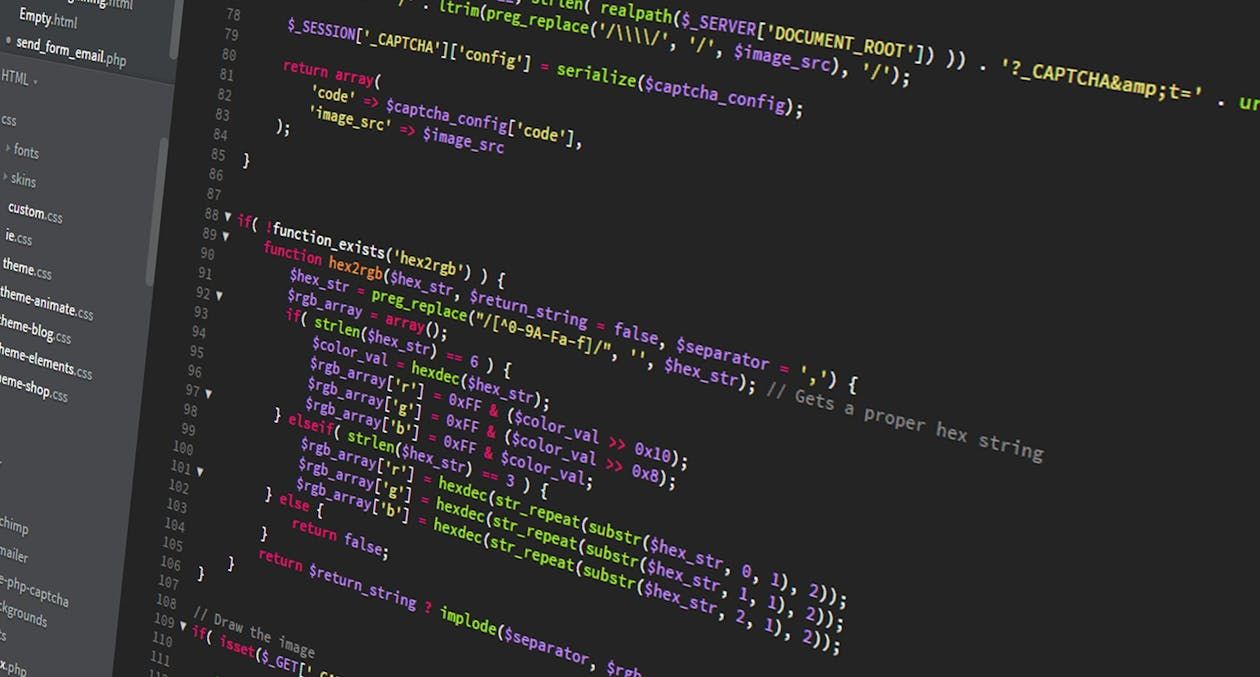 Understanding token economics helps developers leverage Claude's massive context window effectively — Source: Unsplash
Understanding token economics helps you leverage Claude's context window effectively. A token roughly corresponds to 3-4 characters or 0.75 words in English. Code is typically more token-dense than prose due to special characters and formatting.
According to LinkedIn analysis, a 50,000-line codebase translates to approximately 150,000 tokens. This means Claude Sonnet 4.6's 1 million token window can comfortably handle codebases of 200,000+ lines while leaving room for conversation history, instructions, and generated output.
| Codebase Size | Approximate Tokens | Context Usage |
|---|---|---|
| 10,000 lines | 30,000 tokens | 3% of window |
| 50,000 lines | 150,000 tokens | 15% of window |
| 100,000 lines | 300,000 tokens | 30% of window |
| 200,000 lines | 600,000 tokens | 60% of window |
This capacity enables entirely new workflows. Legacy code migration becomes tractable when the AI can see both the old system and the target architecture simultaneously. Dependency upgrades become safer when the AI understands every usage of a library before suggesting changes. Cross-cutting concerns like logging, error handling, and authentication can be implemented consistently across an entire application.
For non-technical builders using YouWare, token economics matter less directly—the platform handles context management automatically. But understanding that the underlying AI can now "see" your entire application helps explain why natural language prompts produce increasingly coherent results.
Real-World Use Cases for Extended Context Development
The combination of massive context windows and no-code platforms enables use cases that were previously impractical or impossible:
SaaS Application Development represents the most immediate opportunity. Non-technical founders can describe complex software-as-a-service products—customer relationship management tools, project management platforms, booking systems—and receive functional prototypes within minutes. YouWare's authentication, database, and storage infrastructure provides everything needed for user accounts, data persistence, and subscription management.
Internal Business Tools often languish in spreadsheet purgatory because custom development is too expensive. A founder can now describe "an inventory management system that tracks stock levels across our three warehouses, alerts when items fall below reorder points, and generates purchase orders automatically" and receive a working application same-day.
Customer-Facing Portals require careful attention to user experience and security—both areas where AI excels with sufficient context. Client portals, member dashboards, and self-service support systems become accessible to businesses that couldn't justify traditional development costs.
Legacy System Modernization becomes tractable when AI can understand entire aging codebases simultaneously. While this requires developer involvement, Claude's context window enables analysis and migration planning that previously required teams of consultants.
Rapid Prototyping for Validation allows founders to test market demand before committing to full development. Build a minimum viable product, gather user feedback, iterate—all within days rather than months.
Best Practices for AI-Assisted Full-Stack Development
Whether you're using Claude directly or building through YouWare, certain practices maximize success:
Start with comprehensive descriptions. The AI performs better when it understands not just what you want built, but why. Include information about your target users, key workflows, and business goals. "Build a booking system" produces generic results. "Build a booking system for a yoga studio where students can view class schedules, book spots in advance, purchase class packages, and receive reminder notifications—the studio owner needs to manage instructor schedules and track attendance" produces targeted solutions.
Iterate incrementally rather than requesting everything at once. Even with 1 million tokens of context, complex systems benefit from staged development. Build the core user flow first, then add features, then refine the user experience. This approach produces more coherent architectures and makes debugging easier.
Leverage existing patterns whenever possible. In YouWare, the Remix feature lets you copy and modify public projects rather than starting from scratch. This accelerates development and provides proven structures to build upon. When using Claude directly, reference popular frameworks and patterns—the AI's training includes extensive knowledge of best practices.
Secure sensitive data from the start. YouWare's Secrets module ensures API keys and credentials never appear in frontend code. When building with Claude, explicitly request server-side handling for anything sensitive. Security retrofits are expensive; building securely from the beginning costs nothing extra.
Plan for data persistence and backup. YouWare's database export and Time Travel features protect against data loss. Establish backup routines before your application accumulates critical information. The Database module's bookmark system helps track important changes for potential restoration.
The Future of Full-Stack Development
According to Gartner, 70% of new applications developed by enterprises will utilize low-code or no-code technologies by 2025—up from less than 25% in 2020. According to AppMySite, the low-code/no-code platform market reached $11.9 billion in 2024 and is projected to hit $187 billion by 2030.
The convergence of massive AI context windows and mature no-code platforms suggests this growth will only accelerate. Claude Sonnet 4.6's ability to understand entire codebases makes AI assistance genuinely useful for complex applications. YouWare's abstraction of backend infrastructure removes the steepest learning curves. Together, they represent a fundamental shift in who can build software and how quickly.
For non-technical founders, the calculus has changed permanently. The question is no longer "can I find developers to build this?"—it's "what do I want to build first?"
Frequently Asked Questions
Do I need any coding experience to build a full-stack web app?
With platforms like YouWare, you need zero coding experience. The platform generates complete applications from natural language descriptions and provides visual editing for refinements. YouBase handles databases, authentication, and file storage automatically. For those who want to learn, the code editor provides access to the underlying HTML, CSS, and JavaScript—but it's entirely optional.
How does the 1 million token context window compare to previous AI models?
Previous models typically supported 8,000 to 200,000 tokens, forcing developers to fragment their codebases during AI interactions. Claude Sonnet 4.6's 1 million tokens can hold 100,000-200,000 lines of code simultaneously—enabling the AI to understand complete applications and make changes that account for all dependencies, imports, and interactions.
What's the cost of using Claude Sonnet 4.6 for development?
According to Mashable, Claude Sonnet 4.6 costs $3 per million input tokens and $15 per million output tokens—the same as Sonnet 4.5 and one-fifth the cost of Claude Opus. For YouWare users, platform pricing starts with a free tier and scales based on AI generation and advanced features used.
Can I migrate existing applications to use these AI capabilities?
Yes, but approaches differ. YouWare's Remix feature works best for adapting existing YouWare projects. For traditional codebases, Claude Sonnet 4.6's extended context allows comprehensive analysis—you can load your entire application and request modernization plans, refactoring suggestions, or feature additions that account for your specific architecture.
How does YouWare handle security for sensitive applications?
YouWare's Secrets module stores API keys and credentials with enterprise-grade encryption. These secrets are accessible only from server-side code and never exposed to the frontend. The Users & Authentication module includes email verification options and user management dashboards. All data transmission uses encryption in transit and at rest.
Conclusion
Claude Sonnet 4.6's 1 million token context window represents a genuine paradigm shift in AI-assisted development. For the first time, AI can understand entire codebases simultaneously—tracking dependencies, following data flows, and generating modifications that integrate seamlessly with existing systems. According to user testing reported by Crypto Briefing, developers prefer this model 70% of the time over its predecessor and even favor it over more expensive alternatives in 59% of comparisons.
For non-technical builders, this breakthrough matters most when combined with platforms that eliminate coding requirements entirely. YouWare transforms natural language descriptions into complete full-stack applications with database infrastructure, user authentication, file storage, and secure API integrations—all deployable with a single click.
The barrier between idea and implementation has never been lower. Whether you're validating a startup concept, building internal tools, or creating customer-facing applications, the technology exists today to move from description to deployment in hours rather than months.

References
- Anthropic debuts Sonnet 4.6, a highly capable creative and coding AI model - SiliconANGLE
- Claude Sonnet 4.6 Enhanced Features - Crypto Briefing
- Anthropic Claude Sonnet 4.6 Benchmark Performance - Mashable
- Research: Quantifying GitHub Copilot's Impact on Developer Productivity - GitHub
- GitHub Copilot Crosses 20 Million Users - TechCrunch
- Enterprise Application Development Practical Guide - WeWeb
- Claude Code with 50K Line Codebases - LinkedIn
- Low-Code/No-Code Development Platforms Market - AppMySite
- Gartner Low-Code Development Forecast - Gartner
- Anthropic Claude Code - Anthropic