5 Business Applications for Legged Robots That Don't Require a Six-Figure Budget

Key Takeaways
Quadruped "robot dogs" have dropped from $74,500 to $1,600-$2,800, making enterprise-grade robotics accessible to small and medium businesses for the first time. According to Market Research Future, the quadruped robot market reached $2.2 billion in 2024 with an 18.41% CAGR through 2034. Five proven business applications—security patrol, industrial inspection, agriculture monitoring, construction safety, and education—deliver ROI within 12-18 months. YouWare enables businesses to build custom robot control dashboards and monitoring interfaces without coding, dramatically reducing software development costs that traditionally accompany robotics deployments.
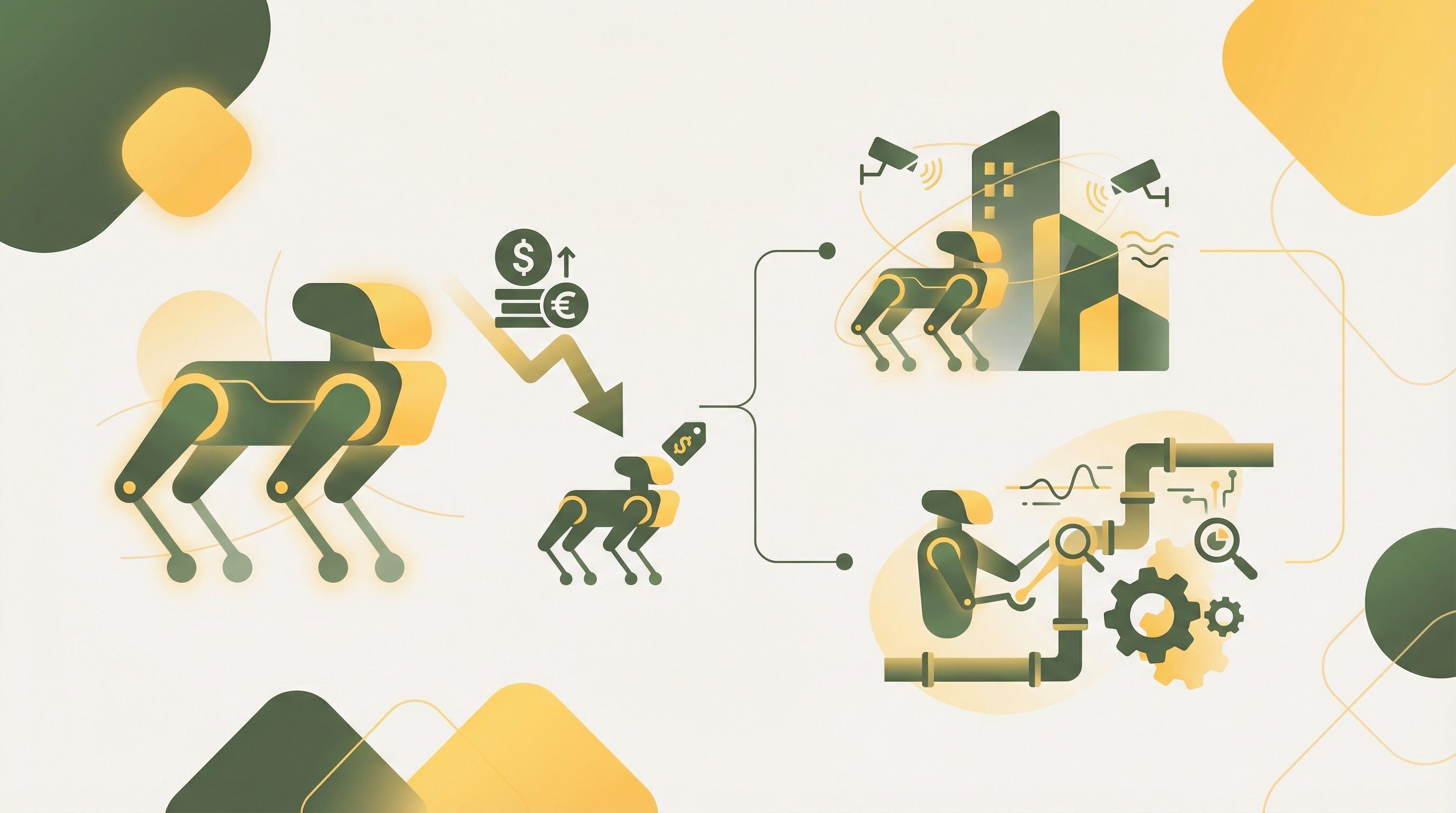 Quadruped robot dogs have become accessible to SMBs at price points starting from $1,600
The Democratization of Legged Robotics
Enterprise robotics has undergone a remarkable transformation. When Boston Dynamics launched Spot in 2020, the Boston Globe reported a price tag of $74,500—putting quadruped robots firmly in the domain of Fortune 500 companies and well-funded research institutions. That landscape has fundamentally changed.
The Unitree Go2, launched in 2023-2024, delivers comparable mobility and sensor capabilities at $1,600-$2,800 depending on configuration. This represents a 96% cost reduction that opens entirely new possibilities for small business owners, facility managers, and agricultural operations. According to Manufacturing.net, small manufacturers adopting robotics report 10-40% maintenance cost reductions and 3-5% productivity increases.
The economics become even more compelling when you consider the operational savings. A single robotic installation can replace 3-5 full-time employees for specific tasks, generating $75,000-$120,000 in annual labor savings according to industry analysis. With collaborative robot adoption surging 35% in 2024, MANTEC reports that average ROI achievement occurs within 12-18 months.
Application 1: Autonomous Security Patrol and Facility Monitoring
Security represents the most mature and immediately deployable application for affordable quadruped robots. The combination of autonomous navigation, thermal imaging, and AI-powered anomaly detection creates a compelling alternative to traditional security guard services.
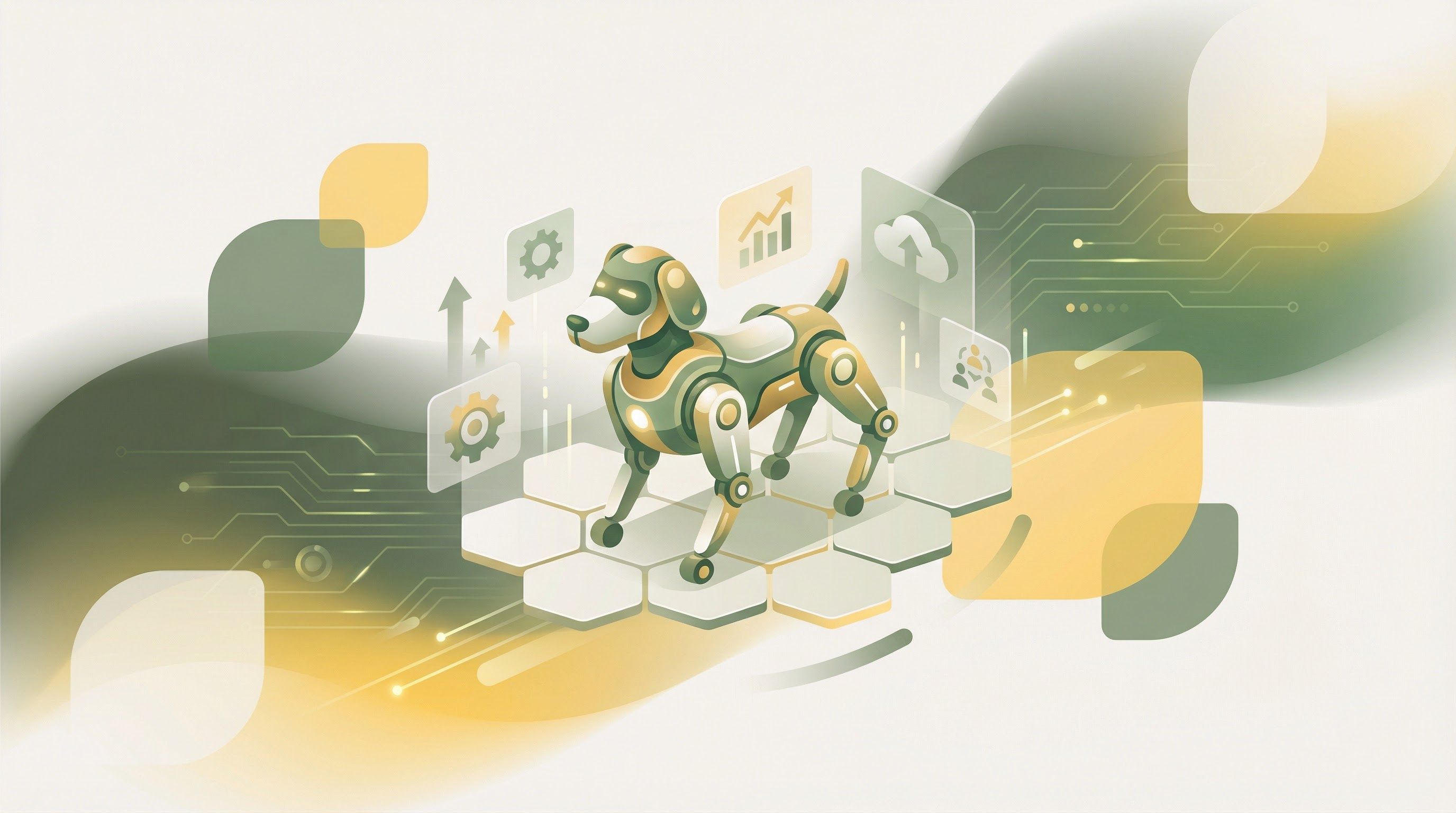 Robot dogs can perform autonomous security patrols, conducting over 12,000 missions in enterprise deployments
GXO Logistics provides the most documented enterprise deployment case study. According to ASIS Security Management Magazine, their DroneDog robot systems have completed over 12,000 patrols and first-responder missions, handling perimeter checks, alarm investigation, and video-verified security audits. The system operates autonomously while human operators monitor from a central command center.
For smaller operations, an Atlanta construction company implemented a robot security dog named "Oppy" to patrol premises after hours. WEAU News reported that the LiDAR and AI-equipped robot significantly reduced burglaries by providing consistent 24/7 coverage that human guards cannot economically deliver.
The financial case is straightforward: with average security guard wages at $15-$20 per hour according to the Bureau of Labor Statistics, 24/7 coverage costs approximately $131,000-$175,000 annually per post. A $2,800 robot with annual maintenance and software costs under $5,000 delivers payback in under four months for after-hours coverage.
Application 2: Industrial Inspection and Predictive Maintenance
Industrial facilities face constant pressure to reduce unplanned downtime while controlling inspection costs. Quadruped robots excel in environments that are dangerous, difficult to access, or require consistent monitoring schedules.
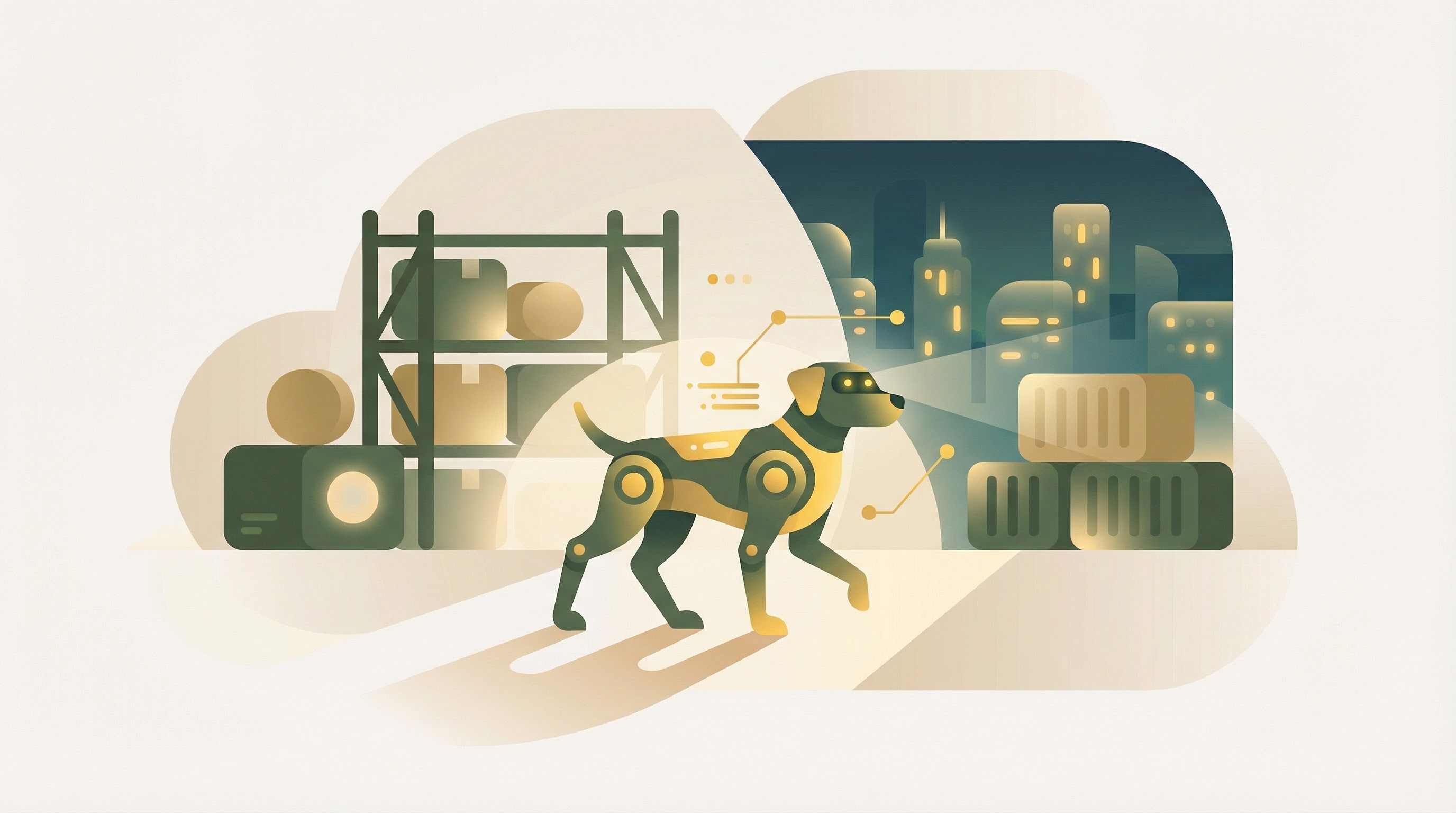 Industrial inspection applications leverage 3D LiDAR for 95% obstacle detection accuracy
According to Top3DShop's technical specifications, the Unitree Go2-W wheeled variant demonstrates the technical capabilities available at accessible price points: 3D LiDAR with 360°×90° field of view, 40-meter range, and ±2cm accuracy delivers 95% obstacle detection accuracy within 30 meters. The hybrid wheel-leg design reduces energy consumption by 40% on flat terrain while maintaining the ability to navigate stairs and uneven surfaces.
Singapore's SBS Transit has deployed robot dogs at the Sengkang MRT Depot to inspect train undercarriages, as VN Express reported. The robots navigate beneath railcars to capture visual data and detect anomalies that would require significant manual effort to identify through traditional inspection methods.
For manufacturing SMBs, the application translates to automated thermal imaging of electrical panels, visual inspection of production equipment, and environmental monitoring. Organizations adopting such automation report average 22% cost reduction within three years according to Iron River's analysis.
Application 3: Agriculture and Livestock Monitoring
Agricultural applications represent an emerging frontier where quadruped robots offer unique advantages over wheeled or aerial alternatives. Their ability to navigate uneven terrain, operate in all weather conditions, and move at animal-compatible speeds makes them ideal for livestock and crop monitoring.
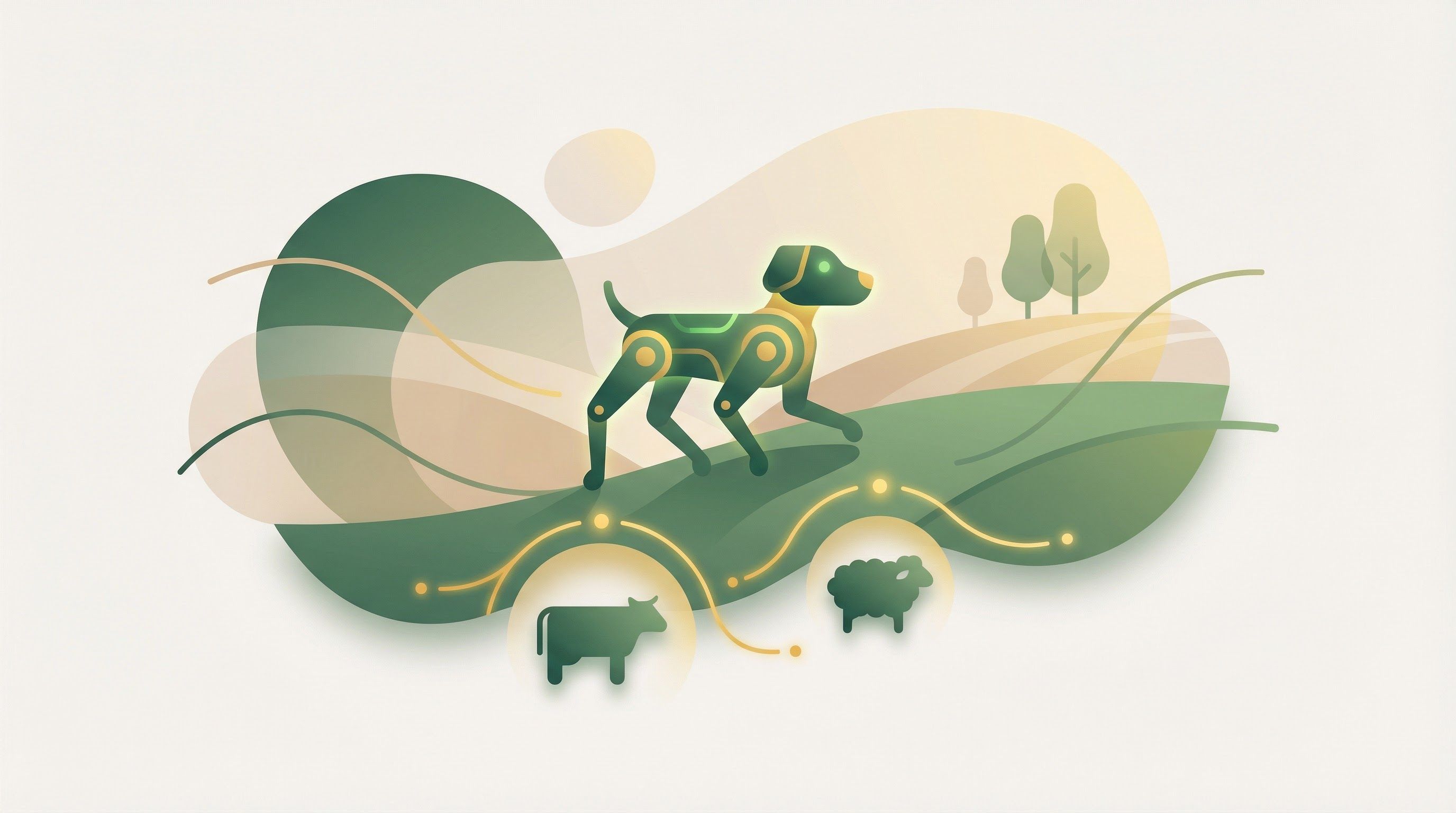 Quadruped robots enable autonomous livestock monitoring and health assessment
The Vinum project, documented in peer-reviewed research on arXiv, demonstrates agricultural viability using the HyQReal quadruped robot. The system autonomously navigates vineyards and performs winter pruning using Mask-RCNN computer vision—a task traditionally requiring extensive skilled labor during a narrow seasonal window.
Livestock monitoring has seen significant advancement through AI integration. Research published in ScienceDirect describes MASM-YOLO models that enable quadruped robots to recognize multiple cattle behaviors in open grazing environments. The system provides health monitoring, estrus assessment, and disease early warning—capabilities that can significantly impact herd management efficiency and animal welfare.
For small farm operations, the practical applications include automated fence-line inspection, water trough monitoring, and livestock head counts. A robot can cover ground that would take a human worker hours to traverse on foot, freeing agricultural labor for higher-value tasks.
Application 4: Construction Site Safety and Progress Tracking
Construction sites present challenging environments that benefit from robotic monitoring: uneven terrain, constantly changing layouts, valuable equipment, and significant safety hazards. Quadruped robots navigate these conditions effectively while providing consistent documentation.
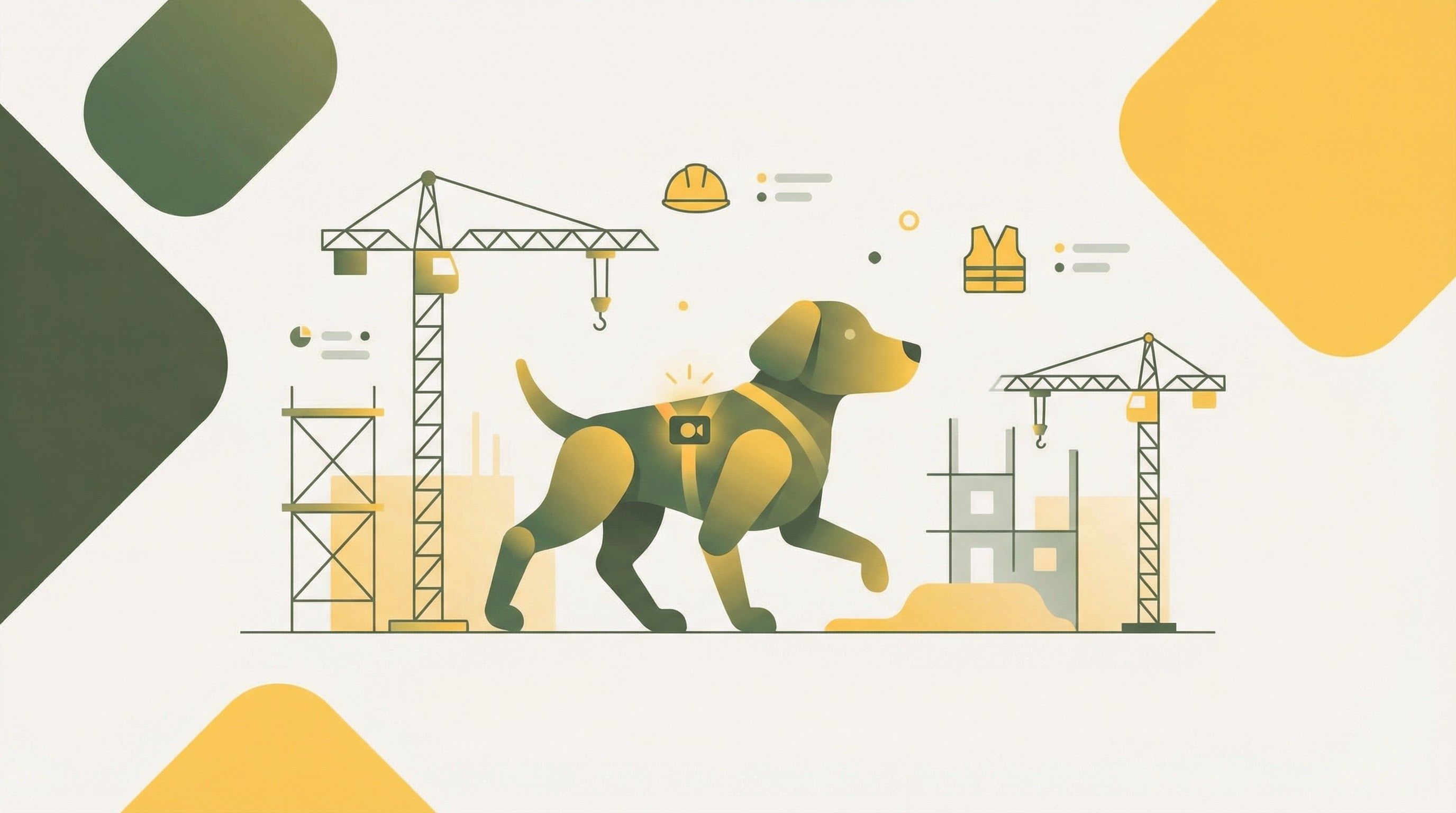 Construction sites deploy robot dogs for after-hours safety patrols and hazard detection
Hyundai Engineering & Construction has integrated Boston Dynamics Spot into safety management operations. According to Smart Today, the deployment enables real-time monitoring and proactive hazard detection that traditional manual inspections cannot match in frequency or consistency.
For smaller contractors, the value proposition centers on documentation and liability protection. A robot can perform daily site walks capturing timestamped photographic records of progress, safety compliance, and material inventory. This documentation proves invaluable for client reporting, insurance claims, and dispute resolution.
The after-hours security application described earlier applies particularly well to construction sites, where theft of materials and equipment represents a persistent challenge. Combined with progress tracking, a single robot deployment addresses multiple operational needs simultaneously.
Application 5: Education, Training, and Research Platforms
Educational institutions have emerged as significant adopters of affordable quadruped robots, using them to teach robotics, programming, and AI concepts through hands-on experience.
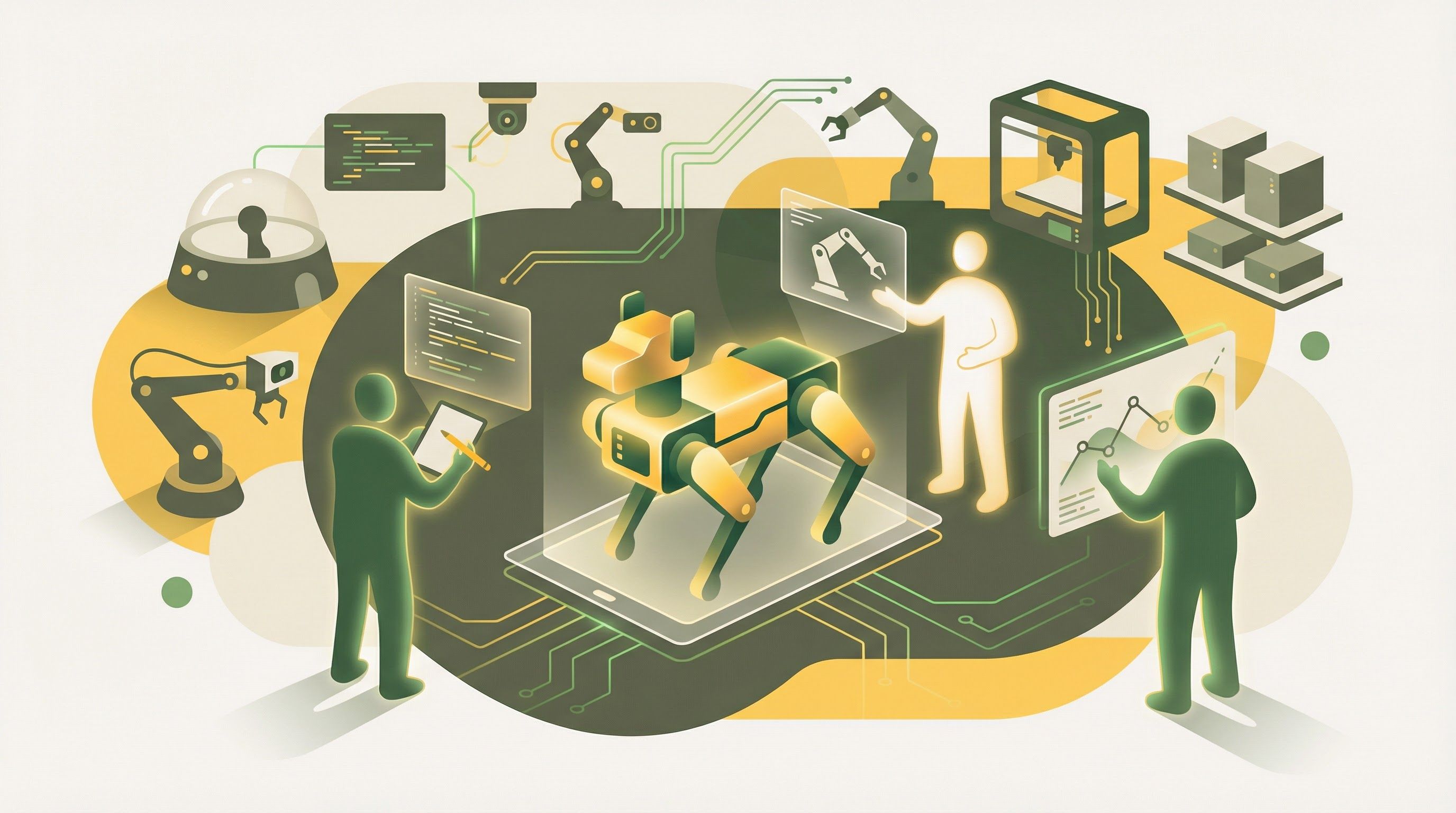 Universities use robot dogs to teach engineering students programming in Python and C++
Austin Peay State University purchased a robot dog specifically to enhance engineering and computer science education. Students program the robot in C++ and Python, gaining practical experience with real-world robotics systems rather than simulations alone.
Carnegie Mellon's Robomechanics Lab has released the Unitree Go2W Agent SDK on GitHub, providing a unified AI-agent-friendly interface that integrates perception, planning, and control through a single API. This open-source resource dramatically lowers the barrier to developing custom applications.
For businesses, the educational application extends to workforce training. Companies in security, inspection, and facility management can use robot platforms to train operators before deploying systems in production environments—reducing risk and accelerating adoption.
Building Your Robot Software Stack with YouWare
The hardware cost breakthrough solves only half the challenge. Traditional robotics deployments require substantial software development: custom dashboards, data management systems, integration with existing business tools, and user interfaces for operators. This software layer often costs more than the robot itself.
YouWare provides a no-code solution that addresses these software challenges directly. Using natural language prompts, businesses can build complete robot control dashboards and monitoring interfaces without writing code—generating functional web applications in approximately 30 seconds.
YouWare's capabilities map directly to robotics software requirements. The YouBase database integration stores patrol logs, inspection data, and anomaly reports with built-in user authentication for access control. The Storage module handles robot-captured images, video recordings, and sensor data exports for compliance and analysis. The Secrets module securely stores robot API keys and authentication credentials with enterprise-grade encryption.
The MCP (Model Context Protocol) integrations extend functionality further: connect robot systems with Notion for documentation, GitHub for version control of robot scripts, or build customer-facing dashboards showing patrol status, inspection reports, and real-time feeds. Visual editing mode enables non-technical staff to customize monitoring interfaces without developer involvement.
For security companies deploying robot patrols for multiple clients, YouWare enables creating branded client portals showing patrol completion, incident reports, and video footage—transforming a hardware deployment into a software-differentiated service offering.
ROI Analysis: When Robot Dogs Make Financial Sense
Understanding the true cost of robotics deployment requires looking beyond hardware prices to total cost of ownership and expected returns.
| Cost Category | Traditional Approach | Robot + YouWare |
|---|---|---|
| Hardware | $74,500 (Spot) | $1,600-$2,800 (Go2) |
| Custom Software Development | $50,000-$150,000 | Under $1,000 (YouWare subscription) |
| Annual Labor Replaced | $75,000-$120,000 | Same savings potential |
| Maintenance | $5,000-$15,000/year | $2,000-$5,000/year |
| Payback Period | 2-4 years | 12-18 months |
The most favorable deployments share common characteristics: repetitive tasks performed on predictable schedules, environments that can be mapped and don't change frequently, and applications where consistent performance matters more than human judgment. Security patrol, routine inspection, and environmental monitoring fit these criteria well.
Less favorable scenarios include highly variable environments, tasks requiring frequent human intervention, or applications where the robot would only operate a few hours weekly. The economics work best with high utilization rates—ideally running multiple shifts across a 24-hour period.
Choosing the Right Quadruped Platform
The Unitree Go2 dominates the affordable segment, but several configuration options and alternatives deserve consideration:
Unitree Go2 Pro ($1,600-$2,800): Best value for most business applications. Includes 4D LiDAR, programmable through SDK, suitable for indoor and outdoor operation. The wheeled Go2-W variant adds hybrid locomotion at higher price points.
Boston Dynamics Spot ($74,500+): Remains the gold standard for industrial applications requiring maximum reliability and payload capacity. Justified for mission-critical deployments where downtime costs exceed the price premium.
Deep Robotics Lite3 ($4,000-$8,000): Middle-ground option with stronger industrial focus than Go2. Worth considering for demanding environmental conditions.
For most SMB applications, the Go2 Pro provides sufficient capability at transformative price points. The key is matching robot specifications to actual requirements rather than over-specifying based on enterprise case studies using more expensive platforms.
Getting Started: A Practical Roadmap
Deploying quadruped robots successfully requires systematic planning rather than impulse purchases:
Phase 1: Use Case Definition (2-4 weeks) Identify specific tasks, map the operating environment, calculate current costs for those tasks, and define success metrics. Document shift patterns, coverage areas, and integration requirements with existing systems.
Phase 2: Pilot Deployment (4-8 weeks) Start with a single robot in a controlled area. Build monitoring dashboards using YouWare, train operators, and document lessons learned. Measure actual versus projected performance.
Phase 3: Production Expansion (ongoing) Scale based on pilot results. Add robots incrementally, expand coverage areas, and integrate with additional business systems. Refine software interfaces based on operator feedback.
The companies achieving fastest ROI treat robotics deployment as organizational change management, not just technology procurement. Operator buy-in, clear processes, and iterative refinement matter as much as hardware specifications.
FAQ
What is the minimum budget needed to deploy a quadruped robot for business use?
A functional business deployment starts at approximately $3,000-$5,000 total: $1,600-$2,800 for a Unitree Go2, plus software tools, accessories, and initial training. This compares to $75,000 or more for enterprise-grade alternatives. The affordability gap has closed dramatically since 2020, making quadruped robots accessible to businesses that previously couldn't consider robotics at any price point.
How difficult is it to program and operate a robot dog without robotics expertise?
Modern platforms like the Unitree Go2 include user-friendly interfaces and SDKs that reduce programming complexity significantly. Carnegie Mellon's open-source Agent SDK provides high-level abstractions, and YouWare enables building control interfaces without coding at all. Most businesses can achieve basic autonomous operation within weeks, with advanced customization requiring modest programming skills in Python or C++.
Can robot dogs operate outdoors in rain, snow, and extreme temperatures?
The Unitree Go2 carries IP54 water resistance ratings suitable for light rain and dust exposure. Operation in heavy rain, deep snow, or extreme temperatures (below -10°C or above 40°C) requires additional precautions or may not be advisable depending on the specific model and payload configuration. Boston Dynamics Spot offers higher environmental ratings for demanding industrial applications.
What ongoing costs should businesses expect after purchasing a robot dog?
Annual operating costs typically include software subscriptions ($500-$2,000), maintenance and repairs ($1,000-$3,000), battery replacements every 2-3 years ($300-$800), and connectivity/hosting for monitoring systems. Total annual cost of ownership runs $2,000-$5,000 for affordable platforms—roughly 2-5% of the savings from labor displacement.
How does YouWare help with robot deployment specifically?
YouWare enables building custom dashboards for robot monitoring, data logging systems using YouBase, secure credential storage for robot APIs, and client-facing portals—all without coding. This addresses the software development gap that traditionally makes robotics deployments expensive beyond the hardware itself. Integration with external services through MCP connections extends functionality to include documentation, version control, and third-party data sources.
Conclusion
The quadruped robot industry has reached an inflection point where small and medium businesses can deploy sophisticated robotics for under $5,000 total investment. The five applications explored—security patrol, industrial inspection, agriculture monitoring, construction safety, and education—represent proven use cases with documented ROI in enterprise deployments, now accessible at SMB budgets.
The remaining barrier isn't hardware cost but software development complexity. Building monitoring dashboards, data management systems, and operator interfaces traditionally requires custom development that can cost more than the robot itself. YouWare eliminates this barrier by enabling no-code creation of complete robotics software stacks through natural language prompts.
For facility managers evaluating after-hours security, warehouse operators considering inspection automation, or agricultural businesses exploring livestock monitoring, the question has shifted from "can we afford robotics?" to "which application delivers fastest payback?" The answer increasingly favors deployment over delay.

References
- Market Research Future - Quadruped Robot Market Report
- ASIS Security Management - Lessons Learned from DroneDogs
- Boston Globe - Boston Dynamics Spot Robot Launch
- Manufacturing.net - SMB Robotics Business Case
- Carnegie Mellon Unitree Go2W Agent SDK
- arXiv - Vinum Project Vineyard Robotics
- MANTEC - Robotics ROI Calculator
- Top3DShop - Unitree Go2-W Technical Specifications
- Bureau of Labor Statistics - Security Guard Wages
- Austin Peay State University - Robot Dog Education
- VN Express - Singapore Robot Dog Deployments
- ScienceDirect - MASM-YOLO Livestock Monitoring
- Iron River - SMB Automation Statistics
- Used Industrial Robots - Low Cost Robot Benefits
- Smart Today - Hyundai E&C Robot Deployment
- WEAU News - Atlanta Construction Robot Dogs