Softr AI App Builder: What It Is, Features, Pricing, and Alternatives (2026)

AI app builders are changing how software is created. Instead of writing code or configuring complex development environments, teams can now build applications using no-code app builders and AI tools.
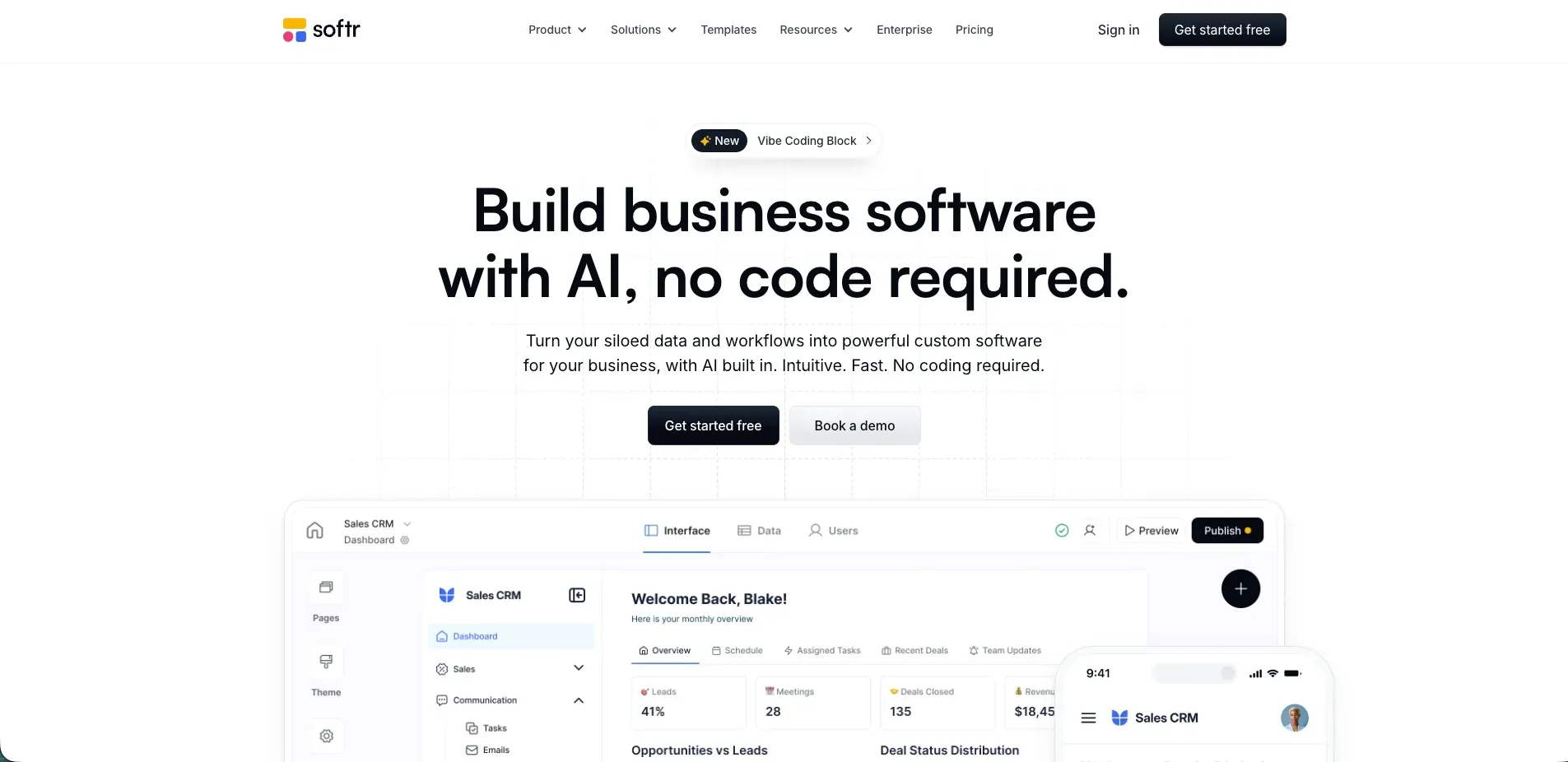
The Softr AI app builder is one example of this shift. It combines a visual builder with database integrations and AI-powered app generation, allowing users to turn structured data into working applications such as portals, dashboards, and internal tools.
Summary
The Softr AI app builder is a no-code platform designed to turn structured data into working applications. It allows users to build internal tools, dashboards, and client portals without writing code. By combining database integrations, templates, and an AI app generator, Softr helps teams transform data sources such as Airtable into functional web applications. This guide explains what the Softr AI app builder is, what you can build with it, how it works, its pricing, and what alternatives exist.
What Is the Softr AI App Builder?
The Softr AI app builder is a no-code platform that allows users to create applications from existing data sources. Instead of writing code, builders connect a database and design an interface using visual components and templates.
Softr is best known for turning structured data into working applications. Many projects start with tools such as Airtable or other databases, which Softr transforms into dashboards, portals, or internal tools through its visual builder and AI-powered app generation features.
What Can You Build With Softr?
One of the main reasons Softr has become popular is its focus on data-driven applications. Many businesses already store structured information in databases or spreadsheets. Softr allows them to convert that data into usable applications without building custom software.
A common use case is internal tools. Companies often build admin dashboards, internal CRM systems, or operational panels where teams can manage records, update workflows, or track business data. Because Softr connects directly to databases, it can display and edit structured information through a web interface.
Another popular category is client portals and membership platforms. Businesses use Softr to create secure portals where clients or members can log in, view personalized content, or access private dashboards. This makes it useful for agencies, online communities, and service businesses that need user-specific content.
Softr is also used to build employee portals and internal company tools. Teams can create internal knowledge bases, onboarding portals, or company dashboards that display data from Airtable or other sources.
Some users build business applications such as directories, marketplaces, or lightweight SaaS products. While Softr is not designed for highly complex software, it works well for structured applications that rely heavily on database records and user interfaces.
These use cases are supported by several core features. Softr includes an AI app generator that helps create an initial application structure. It also offers templates, database integrations, and automation capabilities that allow users to turn data into functional apps quickly.
How Softr AI App Builder Works
The Softr AI app builder typically follows a workflow centered around data and visual customization.
The process usually begins by connecting a data source. Many users start with Airtable, but Softr can also connect to other databases and structured data platforms. This data acts as the foundation of the application.
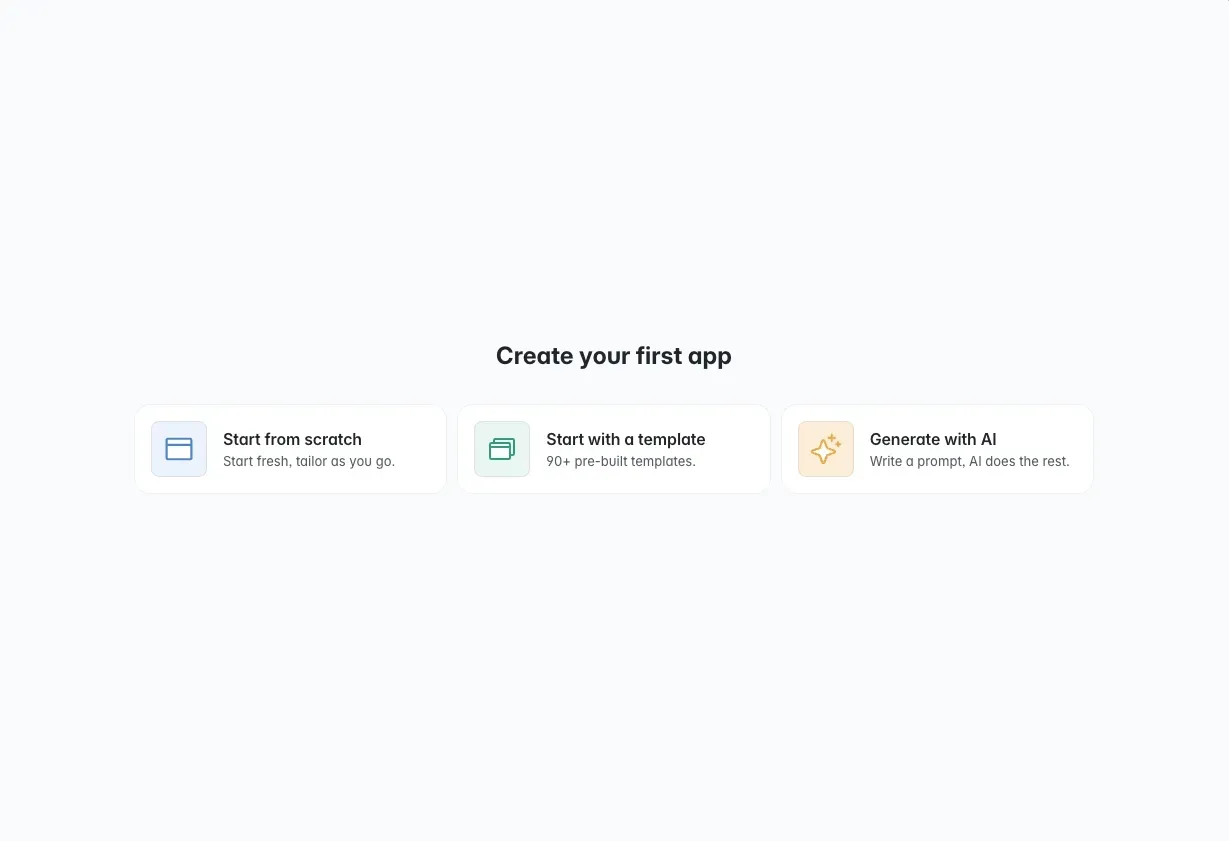
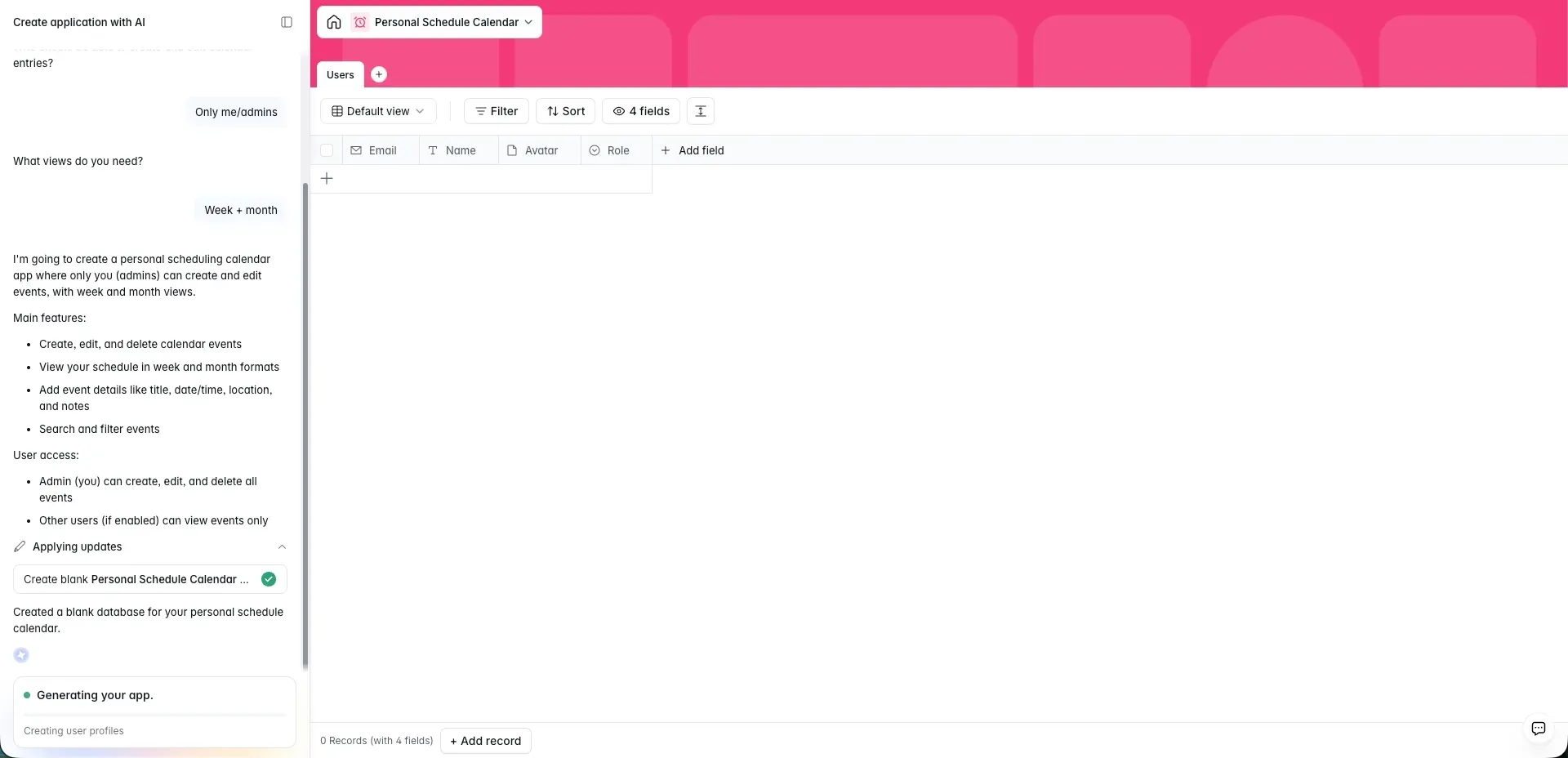
Next, users can generate an initial application using AI. The AI app generator creates a basic project structure based on the connected data and the type of app being built. This step helps users move quickly from raw data to a working interface.
After the app structure is created, users customize the interface using Softr's block-based page builder, which provides modular UI components for building dashboards, portals, and data-driven pages. These blocks allow builders to design pages, create dashboards, and control how data appears to users.
Finally, the application can be published and shared. Softr provides hosting and deployment tools that allow the app to go live as a web application. Teams can then control access through authentication, user roles, and permissions.
This workflow makes Softr especially useful for teams that already manage structured data and want to turn that data into usable tools or portals.
Softr Pricing
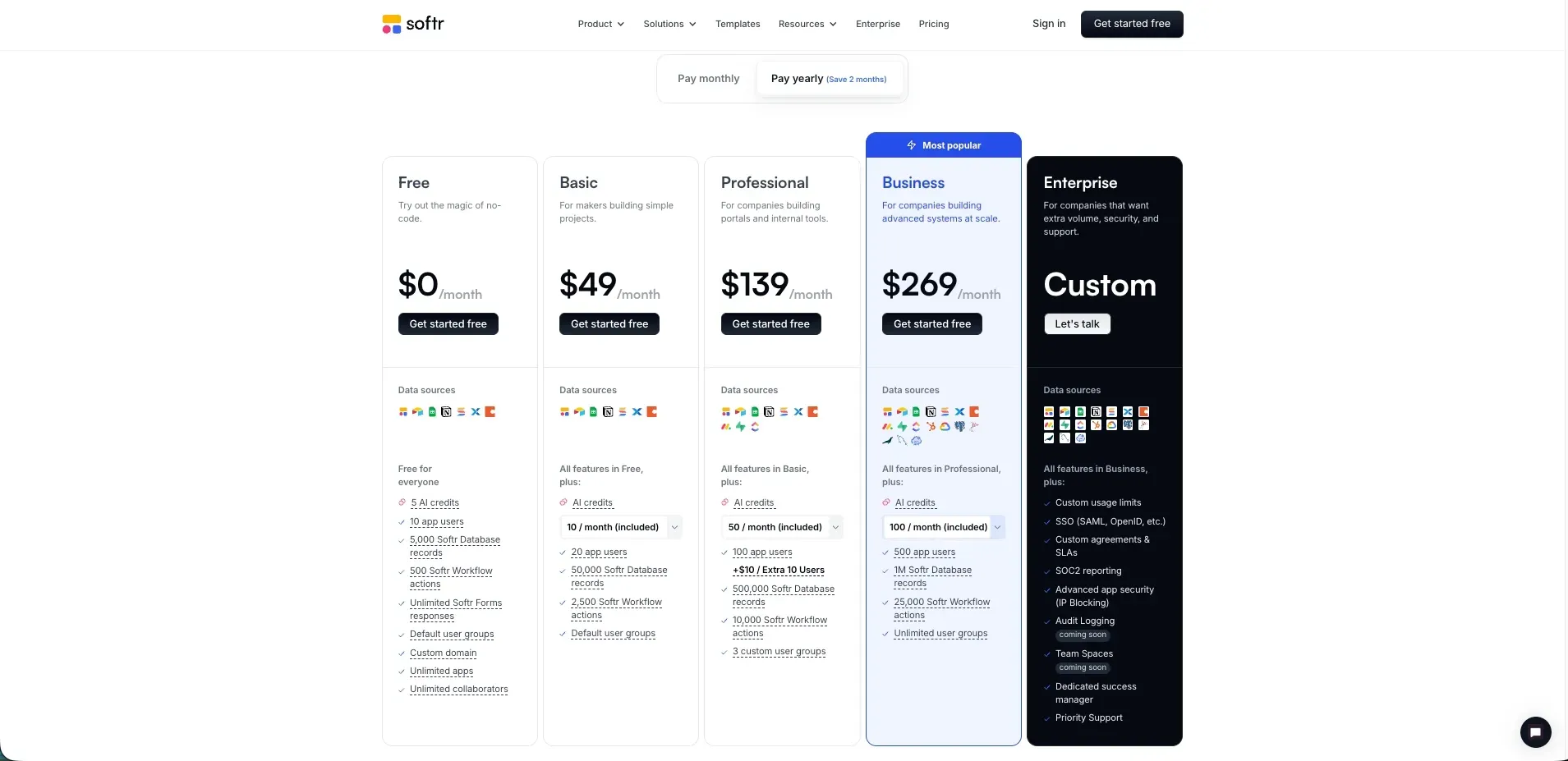
Softr offers a tiered pricing structure designed for individuals, startups, and larger organizations. The platform includes a free plan as well as several paid plans that scale with usage and features.
The free plan starts at $0 per month and is suitable for testing ideas or building simple applications. It includes basic features, limited user access, and Softr branding on published apps.
Paid plans begin with the Basic tier at around $49 per month (when billed yearly), which increases app limits and unlocks more advanced features. The Professional plan, priced at approximately $139 per month, supports more users, higher data limits, and additional capabilities such as APIs, charts, and workflows.
For teams building more complex applications, the Business plan is typically priced around $269 per month and includes higher user limits, advanced data features, and support for larger-scale use cases. Enterprise plans are custom-priced and designed for organizations that need advanced security, compliance, and dedicated support.
Overall, Softr's pricing is based on feature access, user limits, and application scale, making it suitable for both small projects and growing business applications.
Limitations of Softr
Like most no-code platforms, Softr works best for specific types of projects.
One limitation is its dependency on structured data sources. Since many Softr applications rely on tools like Airtable, the design and functionality of the app often depend on how the underlying database is structured.
Another consideration is customization flexibility. While Softr offers a large set of blocks and templates, highly customized applications or advanced user interfaces may require additional tools or custom development.
Scaling can also become a factor as applications grow more complex. Projects that require highly dynamic logic, complex workflows, or deep backend control may eventually outgrow the typical no-code architecture.
These limitations do not make Softr unsuitable for most use cases. Instead, they reflect the platform's focus on rapid application development for data-driven tools and portals.
Alternatives to Softr AI App Builder: YouWare
Some teams exploring no-code platforms eventually look for alternatives that provide a different building workflow.
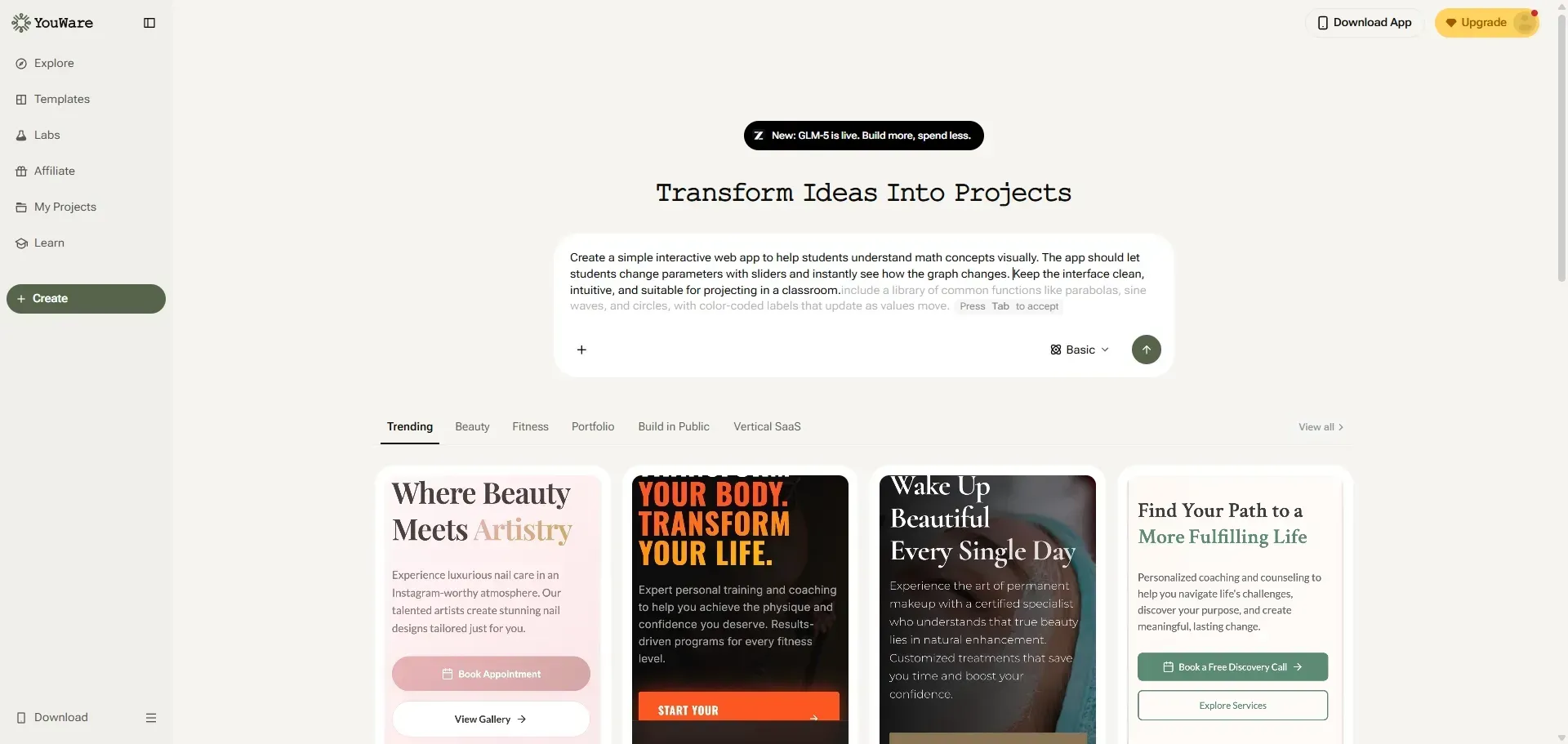
While Softr focuses on turning structured data into applications, YouWare takes an AI-first approach to building software. Instead of starting with a database or visual builder, users describe the application they want and the platform generates the project structure automatically.
YouWare includes a built-in backend system called YouBase, which handles infrastructure such as databases, authentication, and storage. This allows many applications to run without requiring an external database connection or manual configuration.
For builders who prefer prompt-driven development, this approach can feel faster and more flexible than configuring a traditional no-code builder. Teams experimenting with AI app builders often compare platforms like Softr with tools such as YouWare to decide which workflow fits their projects best.

Build websites in seconds with AI vibe coding
Try YouWare FreeFAQ About Softr AI App Builder
Can I make an app on Softr?
Yes. Softr allows users to build web applications such as internal tools, dashboards, and client portals without writing code. Most apps are built by connecting a database and designing the interface with visual components. The platform supports connections to Airtable and other structured data sources, so you can get started without building a backend from scratch.
Is Softr completely free?
Softr offers a free plan that allows users to experiment with the platform and publish basic applications. However, advanced features, higher user limits, and additional integrations typically require a paid plan. The free tier is useful for testing ideas, but growing projects will generally need one of Softr's paid tiers starting at around $49 per month when billed annually.
What is Softr AI?
Softr AI refers to the platform's AI app generator, which helps create application structures automatically. It can generate an initial project based on data and templates, allowing users to start building more quickly. The AI feature is designed to reduce the manual work involved in connecting data sources and assembling the initial interface of an application.
Which AI app builder is best?
The best AI app builder depends on the type of project. Platforms like Softr work well for data-driven applications, internal tools, and portals built on top of structured data. Other tools take a more AI-first approach. For example, builders like YouWare focus on generating applications directly from prompts, allowing users to create working apps without configuring databases or workflows manually. In practice, the choice depends on whether you prefer building around existing data or generating an app from scratch using AI.